Emergency responders load patient into ambulance outside Life Care Center in Kirkland, Washington
Nations are closing borders, stocks are plummeting and a New York Times headline reads: “The Coronavirus Has Put the World’s Economy in Survival Mode.” Both political parties have realized the crisis could severely impact the November elections — House, Senate, presidency. And sacré bleu, they’ve even shuttered the Louvre!
Some of these reactions are understandable, much of it pure hysteria. Meanwhile, the spread of the virus continues to slow.
More than 18,000 Americans have died from this season’s generic flu so far, according to the latest data from the Centers for Disease Control and Prevention. In 2018, the CDC estimated, there were 80,000 flu deaths. That’s against 19 coronavirus deaths so far, from about 470 cases.
Worldwide, there have been about 3,400 coronavirus deaths, out of about 100,000 identified cases. Flu, by comparison, grimly reaps about 291,000 to 646,000 annually.
China is the origin of the virus and still accounts for over 80 percent of cases and deaths. But its cases peaked and began declining more than a month ago, according to data presented by the Canadian epidemiologist who spearheaded the World Health Organization’s coronavirus mission to China. Fewer than 200 new cases are reported daily, down from a peak of 4,000.
Subsequent countries will follow this same pattern, in what’s called Farr’s Law. First formulated in 1840 and ignored in every epidemic hysteria since, the law states that epidemics tend to rise and fall in a roughly symmetrical pattern or bell-shaped curve. AIDS, SARS, Ebola — they all followed that pattern. So does seasonal flu each year.
Clearly, flu is vastly more contagious than the new coronavirus, as the WHO has noted. Consider that the first known coronavirus cases date back to early December, and since then, the virus has afflicted fewer people in total than flu does in a few days. Oh, and why are there no flu quarantines? Because it’s so contagious, it would be impossible.
As for death rates, as I first noted in these pages on Jan. 24, you can’t employ simple math — as everyone is doing — and look at deaths versus cases because those are reported cases. With both flu and assuredly with coronavirus, the great majority of those infected have symptoms so mild — if any — that they don’t seek medical attention and don’t get counted in the caseload.
Furthermore, those calculating rates ignore the importance of good health care. Given that the vast majority of cases have occurred in a country with poor health care, that’s going to dramatically exaggerate the death rate.
The rate also varies tremendously according to age, with a Chinese government analysis showing 0.2 percent deaths below age 40 but 14.8 percent above 80. A study published last month in the Journal of the American Medical Association found zero deaths worldwide among children 9 and under. Zero.
Like the flu, the coronavirus is afflicting high-risk groups: the elderly, those with underlying health conditions like diabetes or heart disease and those with compromised immune systems. Are there exceptions? Sure. But that’s the case with almost every complex biological phenomenon of the kind.
More good news. This month, the Northern Hemisphere, which includes the countries with the most cases, starts heating up. Almost all respiratory viruses hate warm and moist weather. That’s why flu dies out in America every year by May at the latest and probably why Latin America has reported only 25 coronavirus cases. The Philippines, where I live, has about a third of the US population, but it’s so damned hot and humid here, so far we have had no confirmed cases of internal transmission.
A member of a medical team wears a protective face mask, following the coronavirus outbreak, as he prepares disinfectant liquid to sanitize public places in Tehran, Iran, March 5, 2020. Photo: WANA (West Asia News Agency) / Nazanin Tabatabaee via Reuters.
CTech – Nobel laureate Michael Levitt, an American-British-Israeli biophysicist who teaches structural biology at Stanford University and spends much of his time in Tel Aviv, unexpectedly became a household name in China, offering the public reassurance during the peak of the country’s coronavirus (Covid-19) outbreak. Levitt did not discover a treatment or a cure, just did what he does best: crunched the numbers. The statistics led him to the conclusion that, contrary to the grim forecasts being branded about, the spread of the virus will come to a halt.
The calming messages Levitt sent to his friends in China were translated into Chinese and passed from person to person, making him a popular subject for interviews in the Asian nation. His forecasts turned out to be correct: the number of new cases reported each day started to fall as of February 7. A week later, the mortality rate started falling as well.
He might not be an expert in epidemiology, but Levitt understands calculations and statistics, he told Calcalist in a phone interview earlier this week.
The interview was initially scheduled to be held at the fashionable Sarona complex in Tel Aviv, where Levitt currently resides. But after he caught a cold — “not corona,” he jokingly remarked — the interview was rescheduled to be held over the phone. Even though he believes the pandemic will run its course, Levitt emphasizes his support of all the safety measures currently being taken and the need to adhere to them.
Levitt received his Nobel prize for chemistry in 2013 for “the development of multiscale models for complex chemical systems.” He did not in any way intend to be a prophet foretelling the end of a plague; it happened by accident. His wife Shoshan Brosh is a researcher of Chinese art and a curator for local photographers, meaning the couple splits their time between the US, Israel, and China.
When the pandemic broke out, Brosh wrote to friends in China to support them. “When they answered us, describing how complicated their situation was, I decided to take a deeper look at the numbers in the hope of reaching some conclusion,” Levitt explained. “The rate of infection of the virus in the Hubei province increased by 30 percent each day — that is a scary statistic. I am not an influenza expert but I can analyze numbers and that is exponential growth.” At this rate, the entire world should have been infected within 90 days, he said.
But then, the trend changed. When Levitt started analyzing the data on February 1, Hubei had 1,800 new cases each day and within six days this number reached 4,700, he said. “And then, on February 7, the number of new infections started to drop linearly and did not stop. A week later, the same happened with the number of the deaths. This dramatic change in the curve marked the median point and enabled better prediction of when the pandemic will end. Based on that, I concluded that the situation in all of China will improve within two weeks. And, indeed, now there are very few new infection cases.”
Levitt compared the situation to bank interest — if on the first day a person receives an interest rate of 30 percent on their savings, the next day of 29 percent, and so forth, “you understand that eventually, you will not earn very much.”
The messages his friends translated quickly made waves in China and people wanting to make sure he did indeed write the information attributed to him started contacting Levitt. “That is how I knew I needed to continue,” he said. “I could have said, yes, that’s what I said,’ and left it at that.”
New numbers were being reported every day by various entities, such as the World Health Organization (WHO). Levitt started sending regular reports to his Chinese friends, and their popularity led to interviews on Chinese television, for example on CNN-equivalent CGTN. Based on the diminishing number of infection cases and deaths, he said, the virus will probably disappear from China by the end of March.
Initially, Levitt said, every coronavirus patient in China infected on average 2.2 people a day — spelling exponential growth that can only lead to disaster. “But then it started dropping, and the number of new daily infections is now close to zero.” He compared it to interest rates again: “even if the interest rate keeps dropping, you still make money. The sum you invested does not lessen, it just grows more slowly. When discussing diseases, it frightens people a lot because they keep hearing about new cases every day. But the fact that the infection rate is slowing down means the end of the pandemic is near.”
There are several reasons for this, according to Levitt. “In exponential growth models, you assume that new people can be infected every day, because you keep meeting new people. But, if you consider your own social circle, you basically meet the same people every day. You can meet new people on public transportation, for example; but even on the bus, after some time most passengers will either be infected or immune.”
Another reason the infection rate has slowed has to do with the physical distance guidelines. “You don’t hug every person you meet on the street now, and you’ll avoid meeting face to face with someone that has a cold, like we did,” Levitt said. “The more you adhere, the more you can keep infection in check. So, under these circumstances, a carrier will only infect 1.5 people every three days and the rate will keep going down.”
Quarantine makes a difference, according to Levitt, but there are other factors at work. “We know China was under almost complete quarantine, people only left home to do crucial shopping and avoided contact with others. In Wuhan, which had the highest number of infection cases in the Hubei province, everyone had a chance of getting infected, but only 3 percent caught it,” he explained. “Even on the Diamond Princess (the virus-stricken cruise ship), the infection rate did not top 20 percent.” Based on these statistics, Levitt said, he concluded that many people are just naturally immune to the virus.
The explosion of cases in Italy is worrying, Levitt said, but he estimates it is a result of a higher percentage of elderly people than in China, France, or Spain. “Furthermore, Italian culture is very warm, and Italians have a very rich social life. For these reasons, it is important to keep people apart and prevent sick people from coming into contact with healthy people.”
China did great work and managed to gain complete control of the virus, Levitt said. “Currently, I am most worried about the US. It must isolate as many people as possible to buy time for preparations. Otherwise, it can end up in a situation where 20,000 infected people will descend on the nearest hospital at the same time and the healthcare system will collapse.”
Israel currently does not have enough cases to provide the data needed to make estimates, Levitt said, but from what he can tell, the Ministry of Health is dealing with the pandemic in a correct, positive way. “The more severe the defensive measures taken, the more they will buy time to prepare for needed treatment and develop a vaccine.”
Levitt avoids making global forecasts. In China, he said, the number of new infections will soon reach zero, and South Korea is past the median point and can already see the end. Regarding the rest of the world, it is still hard to tell, he said. “It will end when all those who are sick will only meet people they have already infected. The goal is not to reach the situation the cruise ship experienced.”
The Diamond Princess was the worst case scenario, according to Levitt. “If you compare the ship to a country — we are talking 250,000 people crowded into one square kilometer, which is horribly crowded. It is four times the crowding in Hong Kong. It is as if the entire Israeli population was crammed into 30 square kilometers.” Furthermore, he said, the ship had a central air conditioning and heating system and a communal dining room. “Those are extremely comfortable conditions for the virus and still, only 20 percent were infected. It is a lot, but pretty similar to the infection rate of the common flu.”
As with the flu, most of those dying as a result of coronavirus are over 70 years old, Levitt said. “It is a known fact that the flu mostly kills the elderly — around three-quarters of flu mortalities are people over 65.” To put things in proportion: “there are years when flu is raging, like in the US in 2017, when there were three times the regular number of mortalities. And still, we did not panic. That is my message: you need to think of corona like a severe flu. It is four to eight times as strong as a common flu, and yet, most people will remain healthy and humanity will survive.”
By now, if you’re a regular reader here, you know I have to occasionally rant about the state of Amairikuhn Edgykayshun. But today I’m not going to rant, because the article that V.T. sent along (and my thanks!) is more properly greeted with tears than anger. The statistics it cites are sobering reading:
Amairikuhn edgykayshun is a microcosm of the country as a (w)hole: nothing works; the system is not designed to reflect the vast majority of people, or for that matter, any sort of traditional culture as might have thus far survived. The progressive movement that began first in education in the nineteenth century, and then later captured large swaths of both political parties, is triumphant. It has completed its march through the institutions, and captured the academy. And the result, in the latter, is abject failure, and Amairikuh is completely “enstupidated”; consider just these entries from the article:
#1 One recent survey found that 74 percent of Americans don’t even know how many amendments are in the Bill of Rights.
#2 An earlier survey discovered that 37 percent of Americans cannot name a single right protected by the First Amendment.
#3 Shockingly, only 26 percent of Americans can name all three branches of government.
#4 During the 2016 election, more than 40 percent of Americans did not know who was running for vice-president from either of the major parties.
#5 North Carolina is considering passing a law which would “mean only scores lower than 39 percent would qualify for an F grade” in North Carolina public schools.
#6 30 years ago, the United States awarded more high school diplomas than anyone in the world. Today, we have fallen to 36th place.
#7 According to the Pentagon, 71 percent of our young adults are ineligible to serve in the U.S. military because they are either too dumb, too fat or have a criminal background.
…
#18 Today, the average college freshman in the United States reads at a 7th grade level.
I can attest to similar experiences. And forgive me if I’ve mentioned these personal experiences before in my “edykayshunal rants,” but they bear repeating. Back when I was teaching college in the late 1990s, I once began a Modern European History examination with a question that ran something like this: “Name five provisions of the Treaty of Versailles and discuss their implications.” One student – an “edgykayshun” student incidentally – answered that question by beginning “The treaty of Versigh…” Yes. It’s that bad, and students are that stupid and oblivious. And that was the 1990s, so I can readily believe the points in this article. And it’s worth mentioning that during my time teaching in college, I learned many things from my students, namely, that Ulysses Grant commanded the Army of Northern Virginia, that Germany won World War One (in 1914, no less!), and that, as one snowflake put it on her examination, “Hitler had some personal issues,” and with that bit of pop psychology, all the crimes of the Nazi regime were “explained.”
Perhaps I was simply a bad professor, but I don’t think so.
One reason I don’t think so is that as an adjunct, I was not allowed to pick my own textbooks in some cases. This was done by the tenured faculty at the main campuses of the institutions I taught for. In one case, the textbook I was required to use for Russian History actually referred to Stalin as a “great statesman,” with but passing glosses on the Stalinist purges, and an almost total mangling of the effects of collectivization. More recently, Diana West, in her important book The Red Thread: A Search for Ideological Drivers Inside the Anti-Trump Conspiracy, noted that Nellie Ohr, when reviewing a book about Stalin, wrote the following:
The opening of Ohr’s review of the … book, written while she was teaching Russian history at Vassar in 1995, is worth quoting, not for what it tells us about the book, but what it tells us about the reviewer. Ohr writes:
“To introduce students to the Stalin era can be a frustrating task. To convey the terror and excitement of the period, one can assign a memoir of a prison camp victim or an observer such as John Scott or Maurice Hindus.” (West, op. cit., p. 9)
There it is… it was exciting, a ride on the Stalinroller coaster at Six Flags Over Novosibirsk.
So what’s to be done? If you’re a parent, and have children being victimized by this abominable system – and there are no other words for it than those – one place to start would be to research your local colleges of education, read their texts, find out how much time future teachers spend in education classes versus learning the actual subjects they want to teach. Attend a few of those teacher “continuing education” seminars, or a few education classes, and find out for yourself just how looney and loopy those classes really are. Talk with teachers who think that all that claptrap is… well, claptrap, and have brainstorming and strategy sessions in what to do about it.
And if you’re a teacher who is fed up with the childish games being played in methodology or pedagogy courses, or have an anecdote on the latest silliness you had to undergo at your last “continuing education” seminars, please share them in the comments, or if you have a mind, write a guest blog about it.
A local article shows Florida is even worse than NC.
The proposed grading scale for North Carolina public schools
• A: 100 to 85 percent
• B: 84 to 70 percent
• C: 69 to 55 percent
• D: 54 to 40 percent
• F: Anything below 40 percent
Walmart Pork Found To Have “Superbug” Bacteria Resistant To Antibiotics
A new study published by animal-welfare group World Animal Protection has arrived at some stunning findings about pork products begin sold at Walmart.
The report , published by FoodDive, found that pork samples purchased from Walmart contained “superbug” antibiotic-resistant bacteria. 80% of samples tested from Mid-Atlantic Walmart stores were resistant to at least one antibiotic. Additionally, 37% of the bacteria in the Walmart samples were resistant to three or more classes of antibiotics.
In sum, about 27% of the resistant bacteria found on Walmart’s pork were resistant to classes categorized as Highest Priority Critically Important Antimicrobials by the World Health Organization.
160 samples of pork were tested by researchers at Texas Tech University: 80 were from Walmart and 80 were from a competing national retail chain in the Mid-Atlantic region. The samples were tested in 32 batches for E. coli, salmonella, enterococcus and listeria. Researchers said they found enterococcus in 13 batches, E. coli in 10 batches, salmonella in 6 and listeria in 3 batches.
Alesia Soltanpanah, executive director of World Animal Protection U.S., said: “The presence of multidrug-resistant bacteria on pork products illustrates the role the pork supply chain plays in the global health crisis caused by antibiotic-resistant bacteria. The fact that pork from one of the nation’s largest retailers contains bacteria resistant to antibiotics critically important to human health is particularly alarming and should raise concerns.”
In addition to Walmart, researchers also tested pork sample from another national retail chain and also found antibiotic-resistant bacteria. However, the second batch tested did not contain two strains of multidrug-resistant bacteria in a single batch (as the Walmart batch did) and none of the samples were resistant to antibiotics considered “critically important to human health”.
The report didn’t name the second retailer, but FoodDive speculates that it is Costco, Kroger or Target, based on the report noting that the second retailer has “has committed to strengthen its animal welfare policies for its pork suppliers, including working towards a commitment to complete elimination of gestation crates for breeding sows.”
Walmart has not yet made this commitment, while Target and Costco have committed to the initiative by 2022 and Kroger by 2025. In 2016, however, Walmart partnered with IBM and Tsinghua University to track the movement of pork in China using blockchain.
As FoodDive notes, consumers are now challenging major food companies for more transparency with their manufacturing processes:
Food companies are being challenged by consumers demanding more transparency and checking manufacturing processes to make sure the products they buy reflect their values. Younger consumers responding to surveys note how they’re willing to pay premium prices for organic, natural and cruelty-free foods. Both Perdue and Tyson have attracted negative publicity involving animal welfare in recent years and had to change their practices as a result.
Antibiotic-free has become more prevalent as a label claim. Giant Food, a unit of Ahold Delhaize, debuted a private-label pork brand in 2017 with no antibiotics or hormones and 100% vegetarian-fed. And major poultry producers such as Tyson Foods, Pilgrim’s Pride and Perdue have committed to reducing or removing antibiotics from their chicken.
Soltanpanah said the WAP was in contact with Walmart about the results but that the company was “not responsive” to the concerns. Walmart has not acknowledged the problem as of November 26.
These antibiotics – called Highest Priority Critically Important Antimicrobials – are the ones where there are few, or sometimes no, alternatives to treat people with serious infections. The Food and Agriculture Organization of the United Nations has said “antimicrobial resistance poses a serious threat to the safety and quality of feed and food, especially in food-producing animals.”
The Centers for Disease Control calls antibiotic resistance “one of the biggest public health challenges of our time.”
Japan Leading the World in Exposing Fraud with Gardasil HPV Vaccine Injuries and Deaths
In Japan, young women and girls suffering from severe chronic generalized pain following vaccination with Merck’s Gardasil® or GSK’s Cervarix®, have organized and are speaking out.
The issues are being debated at public hearings, at which scientific presentations have been made by independent medical experts who validated the women’s suffering with documented evidence of the severe nature of the pain related to the HPV vaccine.
The opposing view, presented by scientists aligned with the vaccine establishment, disregarded the scientific plausibility of the evidence and declared the pain was a “psychosomatic reaction.”[1]
Such public debates do not take place where vaccine stakeholders are in full control of vaccine safety information. (Like in the U.S., for example.)
Following a public hearing (February 2014), at which scientific evidence was presented by independent scientists [2], the Japanese government, not only rescinded its recommendation that girls receive the HPV vaccine, but established guidelines and special clinics for evaluating and treating illnesses caused by the vaccine.
It is a scenario that Merck, GSK, and vaccine stakeholders globally are extremely anxious to suppress.
The Merck-commissioned, CSIS report, co-authored by Dr. Larson, paints a picture of an all-out war over media coverage – not over the high rate of serious adverse reactions.
The authors resort to the usual tactic of discrediting vaccine-injured individuals; they dismissed the serious health effects suffered by girls and young women following vaccination, as trivial.
The CSIS report presents the entire issue as an epidemic fueled by Internet rumors and “vaccine hesitators.”
“Over the last year, controversy within the Japanese medical and political arenas over the HPV vaccine has touched the public at large. Through social media and highly publicized events, anti-vaccine groups have gained control of the narrative surrounding the HPV vaccine.”
Global Collaborators in Action: Trash Honest Scientists to Suppress Inconvenient Evidence
The following case demonstrates how the global network of government/academic and industry stakeholders suppresses information about genuine scientific findings and, when needed, is engaged in corrupt practices to thwart the airing of information about vaccine safety issues.
This case involves inconvenient scientific laboratory findings in post-mortem tissue samples, showing that the HPV vaccine was contaminated with foreign HPV DNA fragments. The case also involves evidence (contained in internal correspondence) of deceptive practices by officials of “authoritative” international public health institutions.
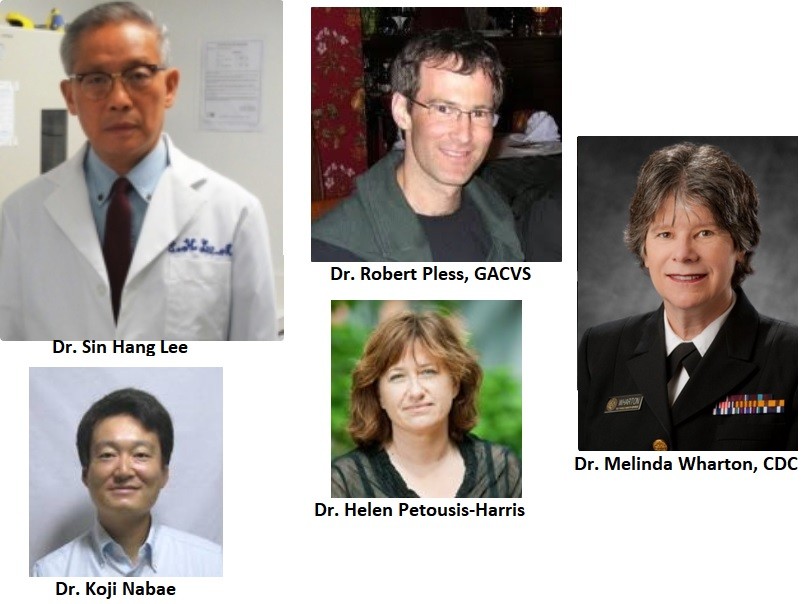
In January 2016, pathologist Dr. Sin Hang Lee, MD, Director of Milford Medical Laboratory, sent an open letter of complaint to the Director-General of the World Health Organization (WHO), Dr. Margaret Chan, in which he challenges the integrity of the GACVS Statement on the Continued Safety of HPV Vaccination (issued March 2014), and charges professional misconduct on the part of the following individuals (and suggests that others may have also been actively involved) in a scheme to deliberately mislead the Japanese Expert Inquiry on human papillomavirus (HPV) vaccine safety before, during and after the February 2014 public hearing in Tokyo.
Dr. Lee challenged the integrity of the GACVS Statement on the Continued Safety of HPV Vaccination written by Dr. Pless, accusing him of deliberately misrepresenting his scientific findings in order to mislead non-scientific readers and those who set vaccination policies.
Dr. Pless is accused of deliberately conflating two unrelated articles, dealing with two different chemicals, written by different authors “apparently to create a target to attack.” Furthermore, Dr. Lee notes that the GACVS Statement relied on an unpublished 12-year-old “Technical Report” written by an unofficial, unnamed “group of participants” (according to CDC’s disclaimer).
These are the facts:
In 2011, Dr. Lee found that every one of the 13 Gardasil samples that he examined contained HPV L1 gene DNA fragments.
He also found that the HPV DNA fragments were not only bound to Merck’s proprietary aluminum adjuvant but also adopted a non-B conformation, thereby creating a new chemical compound of unknown toxicity.
This non-B conformation, Dr. Lee believes, is responsible for the array of autoimmune illnesses experienced by children and young women following vaccination with Gardasil.
In 2012, Dr. Lee testified at a coroner’s inquest of the death of a New Zealand teenager, 6 months after receiving 3 Gardasil vaccine injections.
Dr. Lee was a presenter at the Tokyo hearing (2014), at which he disputed those who claimed the young women weren’t really suffering severe pain; they were having “psychosomatic reactions.” He stated:
“I do not believe psychosomatic reactions can cause sudden unexpected death in sleep, or inflammatory lesions in the brain as demonstrated by the MRI images and the brain biopsy histopathology with perivascular lymphocytes and macrophages and demyelination.”
Following the public hearing, GAVC issued a statement (March 12, 2014) aimed at discrediting Dr. Lee’s research by conflating his research with the research of other scientists who presented at the Tokyo hearing.
This case should have been prominently reported in the medical journals and by the mass media, and the allegation should have been investigated.
Mainstream publications have been silent; the case was reported only in alternative news outlets. [3]
In July 2016, a victims’ group filed a multi-plaintiff lawsuit in the district courts of Tokyo, Nagoya, Osaka, and Fukuoka against the Japanese government and the two pharmaceutical companies that had produced these vaccines.
Furthermore, in December of the same year, additional victims joined the multi-plaintiff lawsuit, bringing the total number of plaintiffs to 119 (Indian Journal of Medical Ethics, 2017).
The Hazards of Aluminum in Vaccines Is the Focus Of Intense Research
Of note: the placebo comparator in (most) vaccine clinical trials is not inert, it contains aluminum.
Several independent teams of international autoimmune experts have investigated this, led by the internationally recognized authority of autoimmune diseases, Dr. Yehuda Shoenfeld of Tel Aviv University, Israel, and another group by Dr. Christopher Exley, Professor of Bioinorganic Chemistry, Keele University in the UK.
However, studies that document the hazards of aluminum in vaccines are not published in major influential medical journals.
In two cases, journal editors received over $1 million from industry sources. (Ed Silverman, STAT, 2017.)
The following case is an example of how science is subverted by tightly controlled journal gatekeepers. Journal editors who have sold their integrity by accepting industry kickbacks block publication of reports that might pose a financial threat to an intricate web of government and non-government institutions and professional associations – all of whom are financially tied to the pharmaceutical industry.
The case demonstrates the great difficulty encountered by independent scientists who have not sold their integrity to the highest bidder.
Publication Saga: Case Examples of Harassment Aimed At Suppressing Harmful Findings Regarding the HPV-Gardasil Vaccine
Indeed, Dr. Shoenfeld identified a new syndrome ASIA (Autoimmune/Inflammatory Syndrome Induced by Adjuvants).
“The idea of ASIA as a new syndrome developed after some studies on Gulf War syndrome reported that soldiers who had not been deployed to the Gulf area were suffering from symptoms such as severe fatigue, cognitive impairment, myalgias and arthralgias. This raised the question of whether it was the vaccines administered to the soldiers that induced these syndromes. The most common adjuvants are silicone implants and aluminum in vaccines.” [4]
The focus of the research seeks to shed light on “the roles and mechanisms of action of different adjuvants which lead to autoimmune/ inflammatory response.”
Prof. Shoenfeld encountered blockades from journal editors who attempted to suppress the findings of neuroinflammation and “behavioral abnormalities following administration of aluminum adjuvants and the HPV vaccine Gardasil.”
Those editors have financial stakes in the business of vaccines.
Dr. Michael Racke
The HPV-mouse study was first submitted to for publication to the Journal of Human Immunology where it was shelved for 8 months and was then rejected by that journal’s Editor-in-Chief, Dr. Michael Racke.
“Dr. Racke has received personal compensation for activities with EMD Serone, Novartis, Roche Diagnostics Corporation, Genentech, and Amarantus as a consultant.”
EMD Serono, Inc. is a subsidiary of Merck KGaA, Darmstadt, Germany.
The HPV-mouse study was published in the journal Vaccine in January 2016.
It was summarily withdrawn a month later following orders by the Editor-in-Chief, Gregory Poland. [5]
Dr. Poland’s direct conflicts of interest [5] include those disclosed on the Mayo Clinic website:
“Dr. Poland is the chairman of a safety evaluation committee for investigational vaccine trials being conducted by Merck Research Laboratories. Dr. Poland offers consultative advice on new vaccine development to Merck & Co., Inc. [Dr. Robert Chen is an Associate Editor of Vaccine.]”
How is it that this incestuous relationship did not raise loud cries of foul play? Those rejections by editors who had deeply vested financial interest in protecting vaccination rates, whose own financial interest was intertwined with vaccine manufacturers, elicited no protest from the scientific academic community.
Instead, these rejections were followed by vicious attacks against two of the scientists by industry’s cyber hit-squads that are hired to attack independent scientists whose honest research contradicts vaccine orthodoxy. That is viewed as a heresy inasmuch as it poses a financial threat. [6]
The study was revised, again peer-reviewed, and published in the journal Immunological Research (Nature-Springer) (2017). [7]
The reported findings remained the same:
“Vaccine adjuvants and vaccines may induce autoimmune and inflammatory manifestations in susceptible individuals. To date most human vaccine trials utilize aluminum (Al) adjuvants as placebos despite much evidence showing that Al in vaccine-relevant exposures can be toxic to humans and animals…It appears that Gardasil via its Al adjuvant and HPV antigens has the ability to trigger neuroinflammation and autoimmune reactions, further leading to behavioral changes…”
“In light of these findings, this study highlights the necessity of proceeding with caution with respect to further mass-immunization practices with a vaccine of yet unproven long-term clinical benefit in cervical cancer prevention.”
The basis for those findings was deemed to be scientifically sound by three sets of peer-reviewers, at three different journals.
You may recall that yesterday I blogged about an allegedly successful experiment in the “freezing”, or at least, “extreme cooling” of a human being, and his or her successful “reanimation.” The key to the allegedly successful experiment was, you might also recall, the removal of the patient’s blood and its replacement by an “ice-cold saline solution.” And I speculated that the whole procedure, since it was performed with the consent of the government, might have had as a hidden goal to discover what happened to that individual’s consciousness while undergoing the “procedure.” We may now also wonder if, indeed, the removal of the individual’s blood was part of my hypothesized “consciousness experiment”; was the individual’s own blood even restored to him or her? Or was it someone else’s?
We don’t know, because there was scanty information provided about the whole alleged success; we were told only that its performer, Dr. Samuel Tisherman, promises to deliver a paper on the whole thing in 2020.
But in that respect, there’s another odd story that was spotted by M.C., who is due a big thank you for sending it along:
Now, this is not exactly new; I have in fact blogged about the unusual nature of this “heart-brain” idea before; neurons are not confined merely to the brain, but appear in the heart as well. There was, however, something that caught my eye in this article, and I rather suspect it’s what caught M.C.’s eye as well and compelled M.C. to send the article along; you’ll note that the article enumerates various cases of individuals who have received heart transplants, and whose behavior suddenly changes to embrace habits and behaviors associated with the donor of the heart. While the article does not mention them, similar experiences have been recorded for other types of organ transplants. One wonders if a similar phenomenon can be associated with blood transplants.
But in any case, what caught my attention in this article was this statement:
Neurologist Dr. Andrew Armour from Montreal in Canada discovered a sophisticated collection of neurons in the heart organised into a small but complex nervous system. The heart’s nervous system contains around 40,000 neurons called sensory neurites that communicate with the brain. Dr. Armour called it “the Little Brain in the Heart”. It has been known for many years that memory is a distributive process. You can’t localize memory to a neuron or a group of neurons in the brain. The memory itself is distributed throughout the neural system. So why do we draw a line at the brain? (Emphasis added)
This idea of distributed memory sounds a bit like a hologram, and the article quickly proceeds to try to avoid the unpleasant aspects of that by quickly trying to tie it all to good-old-fashioned-and-purely-materialistic speculations:
Other medical experts offer different explanations, but all agree that it is not so much mystical as it is science, and a science that needs further exploration.Professor Pr Paul Pearsall and Pr Gary Schwarz got together.
Professor Gary Schwartz says that “Feedback mechanisms are involved in learning. When we talk, for example, about how the brain learns, we talk about what we call neural networks in the brain. It turns out that the way a neural network works is that the output of the neurons feeds back into the input of the neurons. And this process goes over and over again. So long as the feedback is present the neurons will learn. If you cut the feedback, there is no learning in the neurons.”
The Mind is Not Just in the Brain
Dr. Candace Pert, a pharmacologist at Georgetown University believes that the mind is not just in the brain, but also exists throughout the body. This school of thought could explain such strange transplant experiences. “The mind and body communicate with each other through chemicals known as peptides. These peptides are found in the brain as well as in the stomach, in muscles and in all of our major organs. I believe that memory can be accessed anywhere in the peptide/receptor network. For instance, a memory associated with food may be linked to the pancreas or liver and such associations can be transplanted from one person to another”.
Now I’m all for feedback loops as I’ve talked about them in all sorts of contexts. And for that matter, the idea of the heart being part of a kind of “distributed brain” also appeals to me; for one thing, octopuses appear to have this type of structure to their nine brains. But more importantly, I’ve always been an advocate of the more ancient idea that human reason is not mere ratiocination, but incorporates and includes what the ancients would have called the passions, a deeper word than “emotions.” So it appeals to me for this reason as well.
But it’s that “distributed memory” idea and its “holographic” overtones that really appeals, for lurking deeply within that idea is the idea that memory is not local, existing or concentrated in this or that area of the brain, or the body. It rather as if what is implied by that idea is the opposite: that the body exists within a memory, and is imprinted with it like a psychotronic object. If it’s distributed, and non-local, then perhaps it’s also an indicator that the body, in order to be a body, is integrated at the quantum level, by quantum tunneling, perhaps, and that memory may be a function of this somehow. Whatever one makes of my speculations here, I strongly suspect that this idea of distributed memory means that those old Cartesian dualisms and epiphenomena are, like all over-simplified dualisms, going to go the way of the dodo bird, and that the relationship between the tangible physical body and the immaterial intangible world of things like memory are going to turn out to be far more complex than we imagined, and that those “feedback loops” between the two are the key.
Enjoy the silence. It’s hard to find these days. It really does seem like you need to go up a mountain and climb into a cave to find silence. Even then, you will have the intruding sounds of airplanes overhead. What is a person seeking relief from this loud, loud world to do?
Would Siddhartha Gautama have been able to spend several weeks alone in the forest meditating without being bothered by the sounds of modern industry and crowds flocking to him and building a village around him, as happened to Ram Bahadur Bomjon, aka the Buddha Boy, in the mid-2000s?
Silence is more precious than ever today, and also more needed. Look around you. Most people seem to be stressed and anxious about something. About 43% of Americans are on mood-altering prescription drugs, which is not counting those who are going the route of plant-derived substances to get help with relaxing and just being in silent presence. There’s lots of doing, but hardly any being.
This is unfortunate, since silence awakens your world. People oftentimes find it difficult to just sit in silence, with themselves and with others. However, when you are utterly silent, a wave of peace washes over you. The secrets of the universe open up to you because you have become quiet enough to be aware of them. You connect with your inner being that connects with the Source Supermind of Reality.
How to Practice Silence
In today’s demanding and noisy world, it can be difficult to get truly silent and be at peace. Here are some tips on how you can cultivate silence for yourself.
Find a Place to Retreat Into Silence
Come up with a place outside, or a location within your home, where you can retreat to and become silent. You can consider this a sacred space where you will come to specifically practice silence. Make sure to leave your technology behind, or at least turn it off. Do what you can to make sure any intrusive sounds are not going to distract you.
If you hear the various modes of noisy transportation, incessant leaf blowers, or people shouting, you should probably find another space. If this is simply too difficult for you to do, get yourself a pair of noise-canceling headphones and put those on.
Set a Time for Silence
It may seem strange to schedule quiet time, but it really does help make this a new habit for you. Set a calendar reminder on your phone or write it down somewhere in an agenda so you will remember to go into silence at the same time, every day.
Close your Eyes and Listen
When you finally sit (this will help you avoid falling asleep), get comfortable and close your eyes. This is when you start the practice of silence awakening your world. Become open and receptive to the subtle voice of your inner being and the all-permeating field of consciousness that is All that Is.
You may find it difficult to get silent initially It may take you 15, 20, or 30 minutes at first to get to that place of inner calm, especially if you had a long day and are busy rehashing everything that happened to you that day. If you have difficulty breaking free from the distracting thoughts, focus on your breath or on peace. You can even visualize a calm lake with gentle ripples. Whatever works for you will work best, so just take these as suggestions.
Once you become truly silent, your world becomes alive in a way that brings you the clarity of insight, as well as a profound sense of inner peace. In a world which is becoming increasingly loud, it is imperative to give ourselves the gift of silence.
About the author:
Paul Lenda is a conscious evolution guide, founder & director of SHIFT, author, writer, speaker, meditation teacher, life coach, and ambassador for the New Paradigm wishing to provide an integral role in personal transformation and the collective social transformation of humanity. Paul offers private one-on-one holistic life counseling & conscious evolution sessions, via Skype or phone. Paul takes into account all aspects of the hyperdimensional matrix when providing guidance, counseling, and coaching.
There are three types of stress—physical, chemical, and emotional. Each of these stressors knocks the physical body out of its natural state of balance, otherwise known as homeostasis. Likewise, these three types of stress can be countered by balancing the physical, chemical, and emotional states back into order.
For years we’ve been teaching people how to shorten their emotional reactions by pausing between the stimulus and the response. When done effectively, this should diminish the very hormones of stress that push the genetic buttons which create disease. The problem is, many people get stuck in emotional states, and 70% of the time these states are derived from the hormones of stress. The longer one remains in these emotional states, the more the long-term effects of stress push the buttons of genetic disease.
One of our most popular and powerful meditations for bringing balance to the body is the Blessing of the Energy Centers, the purpose of which is to program the autonomic nervous system back into order. This series of meditations helps bring balance to people by having them rest their attention in each one of the energy centers of the body. Each of these centers has its own energy and frequency, and frequency carries information. Each center also has its own hormones, glands, chemicals, and plexuses of clustered neurons that are under the control of the autonomic nervous system. Essentially, each center is its own individual mini brain.
When the brain gets out of balance due to the hormones of stress, it creates incoherence, and as a result, each one of these little brains sends very incoherent messages to the cells, tissues, and organs in the body. By practicing a convergent focus, however, which means resting your attention in these centers – if where you place your attention is where you place your energy – you’re directing your energy to bring balance and order to the very center you are focusing on.
As you tune into the energy around these centers, you begin to create coherence in each of these little brains; that’s how people in our workshops have been responding to—and healing from—all sorts of medical conditions. Every time you create balance in each one of these centers, a coherent message is being sent to all the cells, tissues, and organs of the body.
The Value of Nutrition
Despite the fact that I have a background in nutrition, over the years I had been hesitant to talk about it, even though I have always provided nutritional consulting in my practices. The reason is that people tend to move to the extremity, believing that to change their inner state they need to make changes outside of them. The fact of the matter is, when we are less dependent on conditions in our outer world, we have more power and control over our lives. That’s not to undervalue the importance nutrition plays in bringing the body back to homeostasis.
In thinking about this, it occurred to me that, when we are putting our attention on each center and providing it with the proper instructions in the field, it would also be a good idea to provide the proper raw materials in the form of nutrition. As an example, a hormone is a protein made of amino acids, and amino acids—like box cars on a train—are the building blocks of complex proteins.
In addition, there are certain vitamins and minerals that are essential cofactors in helping to assemble, build, and create hormonal balance. By adding other important ingredients to help the body move back into chemical balance, and by providing more raw materials, we could say that the body is being given all the necessary components to make hormones. If we add natural herbs and plant-based products that have been clinically proven to create more hormonal balance, now we are providing the nudge of even more raw materials that the physical body is looking for.
But having all the necessary ingredients to cook a French dinner still doesn’t make the meal. We need instructions to prepare, organize, and cook the food.
And so I began researching many peer-reviewed articles to see what cofactors, vitamins, and minerals could help facilitate hormonal changes, in addition to other natural herbs and ingredients that could be beneficial in bringing more order to the body. It’s for this reason that I partnered with a company to create different amino acids that are correlated with different hormones related to each center. Thus, if you provide the raw materials to the body in the right amounts, and you provide the proper instructions in the field by blessing these energy centers, then the body has both the correct instructions and the proper nutrition to build healthy hormones.
So, while we’re teaching people how to create a high level of order and coherence in the field around each of these energy centers, we are creating very clear instructions to inform matter (chemicals and hormones). Why? Because coherent signals from coherent frequencies carry coherent information. By providing all of the raw materials to manufacture these hormones and chemicals, and teaching people how to organize energy in each energy center to instruct matter, then when the body is looking for those chemicals, they will be readily available. That being said, the thought occurred to me—why not provide the very raw materials that would help to create more hormonal and chemical balance?
Thus we are advancing the teaching of the Blessing of the Energy Centers by selecting the best ingredients for these products to help people who have health conditions—or at least want to perform better—so they can begin to program the different hormonal centers of the body into more chemical balance.
If you’d like to learn more about these products and when they will be available, please visit https://biosyntropy.com/.
Pharmaceuticals: A market for producing ‘lemons’ and serious harm, analysis finds
Date:
August 17, 2010
Source:
American Sociological Association
The pharmaceutical industry is a “market for lemons,” a market in which the seller knows much more than the buyer about the product and can profit from selling products less effective and less safe than consumers are led to believe, according to an analysis that will be presented at the 105th Annual Meeting of the American Sociological Association.
“Sometimes drug companies hide or downplay information about serious side effects of new drugs and overstate the drugs’ benefits,” said Donald Light, the sociologist who authored the study and who is a professor of comparative health policy at the University of Medicine and Dentistry of New Jersey. “Then, they spend two to three times more on marketing than on research to persuade doctors to prescribe these new drugs. Doctors may get misleading information and then misinform patients about the risks of a new drug. It’s really a two-tier market for lemons.”
Three reasons why the pharmaceutical market produces “lemons” are: Having companies in charge of testing new drugs, providing firewalls of legal protection behind which information about harms or effectiveness can be hidden, and the relatively low bar set for drug efficacy in order for a new drug to be approved, Light said.
According to his study, independent reviewers found that about 85 percent of new drugs offer few if any new benefits. Yet, toxic side effects or misuse of prescription drugs now make prescription drugs a significant cause of death in the United States.
Light’s paper, “Pharmaceuticals: A Two-Tier Market for Producing ‘Lemons’ and Serious Harm,” is an institutional analysis of the pharmaceutical industry and how it works based on a range of independent sources and studies, including the Canadian Patented Medicine Prices Review Board, the Food and Drug Administration, and Prescrire International.
The foundation for the paper is the work Light did for a forthcoming book he edited, titled ‘The Risk of Prescription Drugs,” which is scheduled for publication this fall by Columbia University Press.
In both his paper and his book, Light describes the “Risk Proliferation Syndrome” that is maximizing the number of patients exposed to new drugs that have relatively low efficacy and effectiveness but have greater risk of adverse side effects. Building on clinical trials designed to minimize evidence of harm and published literature that emphasizes a drug’s advantages, companies launch massive campaigns to sell it, when a controlled, limited launch would allow evidence to be gathered about the drug’s effects. Companies recruit leading clinicians to try using the drug for conditions other than those for which it is approved and to promote such off-label or unapproved uses. Physicians inadvertently become “double agents” — promoters of the new drug, yet trusted stewards of patients’ well-being, said Light. When patients complain of adverse reactions, studies show their doctors are likely to discount or dismiss them, according to Light.
Despite the extensive requirements for testing the efficacy and safety of each new drug, companies “swamp the regulator” with large numbers of incomplete, partial, substandard clinical trials, Light said. For example, in one study of 111 final applications for approval, 42% lacked adequately randomized trials, 40% had flawed testing of dosages, 39% lacked evidence of clinical efficacy, and 49% raised concerns about serious adverse side effects, said Light.
“Just recently, major reports have come out about biased, poor trials for Avandia and Avastin,” Light said, who noted that orphan drugs are tested even less well.
“The result is that drugs get approved without anyone being able to know how effective they really are or how much serious harm they will cause,” Light said. The companies control the making of scientific knowledge and then control which findings will go to the FDA or be published.
“A few basic changes could improve the quality of trials and evidence about the real risks and benefits of new drugs,” Light said. “We could also increase the percentage of new drugs that are really better for patients.”
The paper, “Pharmaceuticals: A Two-Tier Market for Producing ‘Lemons’ and Serious Harm,” was presented on Aug. 17 in Atlanta at the American Sociological Association’s 105th Annual Meeting.
American Sociological Association. “Pharmaceuticals: A market for producing ‘lemons’ and serious harm, analysis finds.” ScienceDaily. ScienceDaily, 17 August 2010. <www.sciencedaily.com/releases/2010/08/100817111825.htm>.





A local article shows Florida is even worse than NC.
The proposed grading scale for North Carolina public schools
• A: 100 to 85 percent
• B: 84 to 70 percent
• C: 69 to 55 percent
• D: 54 to 40 percent
• F: Anything below 40 percent
Florida’s school grading scale
• A = 62% of points or greater
• B = 54% to 61% of points
• C = 41% to 53% of points
• D = 32% to 40% of points
• F = 31% of points or less
https://www.wtsp.com/article/news/local/verify/verify-no-nc-isnt-making-40-a-passing-grade-for-students/67-eef220a7-8877-413b-869c-cc57a89acc28