By now, if you’re a regular reader here, you know I have to occasionally rant about the state of Amairikuhn Edgykayshun. But today I’m not going to rant, because the article that V.T. sent along (and my thanks!) is more properly greeted with tears than anger. The statistics it cites are sobering reading:
Amairikuhn edgykayshun is a microcosm of the country as a (w)hole: nothing works; the system is not designed to reflect the vast majority of people, or for that matter, any sort of traditional culture as might have thus far survived. The progressive movement that began first in education in the nineteenth century, and then later captured large swaths of both political parties, is triumphant. It has completed its march through the institutions, and captured the academy. And the result, in the latter, is abject failure, and Amairikuh is completely “enstupidated”; consider just these entries from the article:
#1 One recent survey found that 74 percent of Americans don’t even know how many amendments are in the Bill of Rights.
#2 An earlier survey discovered that 37 percent of Americans cannot name a single right protected by the First Amendment.
#3 Shockingly, only 26 percent of Americans can name all three branches of government.
#4 During the 2016 election, more than 40 percent of Americans did not know who was running for vice-president from either of the major parties.
#5 North Carolina is considering passing a law which would “mean only scores lower than 39 percent would qualify for an F grade” in North Carolina public schools.
#6 30 years ago, the United States awarded more high school diplomas than anyone in the world. Today, we have fallen to 36th place.
#7 According to the Pentagon, 71 percent of our young adults are ineligible to serve in the U.S. military because they are either too dumb, too fat or have a criminal background.
…
#18 Today, the average college freshman in the United States reads at a 7th grade level.
I can attest to similar experiences. And forgive me if I’ve mentioned these personal experiences before in my “edykayshunal rants,” but they bear repeating. Back when I was teaching college in the late 1990s, I once began a Modern European History examination with a question that ran something like this: “Name five provisions of the Treaty of Versailles and discuss their implications.” One student – an “edgykayshun” student incidentally – answered that question by beginning “The treaty of Versigh…” Yes. It’s that bad, and students are that stupid and oblivious. And that was the 1990s, so I can readily believe the points in this article. And it’s worth mentioning that during my time teaching in college, I learned many things from my students, namely, that Ulysses Grant commanded the Army of Northern Virginia, that Germany won World War One (in 1914, no less!), and that, as one snowflake put it on her examination, “Hitler had some personal issues,” and with that bit of pop psychology, all the crimes of the Nazi regime were “explained.”
Perhaps I was simply a bad professor, but I don’t think so.
One reason I don’t think so is that as an adjunct, I was not allowed to pick my own textbooks in some cases. This was done by the tenured faculty at the main campuses of the institutions I taught for. In one case, the textbook I was required to use for Russian History actually referred to Stalin as a “great statesman,” with but passing glosses on the Stalinist purges, and an almost total mangling of the effects of collectivization. More recently, Diana West, in her important book The Red Thread: A Search for Ideological Drivers Inside the Anti-Trump Conspiracy, noted that Nellie Ohr, when reviewing a book about Stalin, wrote the following:
The opening of Ohr’s review of the … book, written while she was teaching Russian history at Vassar in 1995, is worth quoting, not for what it tells us about the book, but what it tells us about the reviewer. Ohr writes:
“To introduce students to the Stalin era can be a frustrating task. To convey the terror and excitement of the period, one can assign a memoir of a prison camp victim or an observer such as John Scott or Maurice Hindus.” (West, op. cit., p. 9)
There it is… it was exciting, a ride on the Stalinroller coaster at Six Flags Over Novosibirsk.
So what’s to be done? If you’re a parent, and have children being victimized by this abominable system – and there are no other words for it than those – one place to start would be to research your local colleges of education, read their texts, find out how much time future teachers spend in education classes versus learning the actual subjects they want to teach. Attend a few of those teacher “continuing education” seminars, or a few education classes, and find out for yourself just how looney and loopy those classes really are. Talk with teachers who think that all that claptrap is… well, claptrap, and have brainstorming and strategy sessions in what to do about it.
And if you’re a teacher who is fed up with the childish games being played in methodology or pedagogy courses, or have an anecdote on the latest silliness you had to undergo at your last “continuing education” seminars, please share them in the comments, or if you have a mind, write a guest blog about it.
A local article shows Florida is even worse than NC.
The proposed grading scale for North Carolina public schools
• A: 100 to 85 percent
• B: 84 to 70 percent
• C: 69 to 55 percent
• D: 54 to 40 percent
• F: Anything below 40 percent
New discoveries in the Valley of the Kings, looted art from Venezuela and evidence that humans were in Central America more than 20,000 years ago are just some of the stories Live Science will be watching out for in 2020.
Tombs of pharaohs and queens in Valley of the Kings
(Image credit: Shutterstock)
Egypt’s Valley of the Kings, which holds the tomb of King Tut and other Egyptian royalty, divulged several of its secrets in 2019, including a workshop complex, mummification cache, ostraca (pottery with writing on it) and newfound mummies. Excavations were carried out in both the east and west valleys of the Valley of the Kings and was funded in part by media companies that are paying for the right to film the excavations.
Excavations in the east and west valleys of the royal cemetery are ongoing; the artifacts found in 2019 are still being analyzed, and hieroglyphic writing on the ostraca is in the process of being deciphered. With all this work going on, it’s likely that more discoveries will be made in the Valley of the Kings in 2020. Zahi Hawass, the former Egyptian antiquities minister who is leading work in the valley, believes that several tombs built for the pharaohs and their queens have yet to be found.
Smelly problem ahead
(Image credit: Shutterstock)
The melting of permafrost in the Arctic and sub-Arctic is causing the remains of both humans and animals to thaw and decompose, giving local inhabitants a smelly problem to deal with.
The re-emergence of smallpox and other now-extinct diseases from these corpses is generally regarded by scientists as being extremely unlikely, and the World Health Organization (WHO) says that corpses don’t usually pose a major health problem. Even so, the emerging corpses bring with them some other issues. For instance, the corpses will inevitably smell and, if the dethawing corpses are underneath a building that humans still use, the corpses need to be dug up and re-interred to get rid of the smell. Additionally, if the corpses are near a water supply there is a risk of water becoming contaminated and causing illnesses such as gastroenteritis, according to the WHO.
Sweden is grappling with this problem on a growing scale. Centuries ago, there was a tradition in Sweden where people preferred to be buried under the floors of churches. However, as Earth’s temperature warms, these bodies are starting to thaw and decay. This problem can be exacerbated when churches install modern-day heating equipment that can warm a church more effectively (making it easier for corpses to thaw).
The problems associated with the thawing of long-buried bodies will likely get more attention in 2020 in the Arctic and sub-Arctic.
Archaeological treasure awaits at El-Assasif
(Image credit: Egyptian Ministry of Antiquities)
In 2019, archaeologists discovered 30 sealed wooden coffins, their mummies still intact, in the ancient necropolis of El-Assasif near Luxor, Egypt. Dating back around 3,000 years, the haul of coffins has been called a “cachette of the priests” because some of the mummies are those of priests.
The decorations on the coffins are well preserved and none of the tombs had been robbed; grave looting in Egypt has been a common occurrence in both ancient and modern times, so to find 30 coffins and their mummies all untouched by grave robbers is extremely rare.
Archaeologists are continuing their excavations at El-Assasif. They are also analyzing the cachette in greater detail, translating the hieroglyphic inscriptions on the coffins and learning more about the mummies within. In 2020, they will likely dig up even more discoveries from this necropolis. Hopefully any new finds will also be untouched by looters.
Lost art of Venezuela
(Image credit: Shutterstock)
The situation in Venezuela is dire. Lack of food, medicine and rising violence all occurring after the country’s economic collapse has left the country in a terrible state. In 2018, Nicolás Maduro, the country’s president, was re-elected in what the country’s opposition said was a fraudulent vote, leading to a standoff between Maduro and the country’s opposition parties led by Juan Guaidó. The Brookings Institute estimates that more than 4.5 million people have fled Venezuela, a number that may jump to 6 million by the end of 2020.
While the world’s attention has, understandably, being focused on the humanitarian crisis and political strife, there is evidence that Venezuela’s rich historical treasures are being lost. Live Science has monitored large shipments of art leaving Venezuela. Documents from the U.S. Census Agency showed that in 2018 more than $12 million in art and antiques were shipped from Venezuela to the United States; and there are signs that some of this was stolen.
In September 2019, the Associated Press reported that the FBI was investigating stolen art from Venezuela that is being trafficked abroad. Venezuela’s opposition, led by Guaidó, claims that members of Maduro’s government are stealing the country’s art and selling it for their own personal benefit. Whether these claims are true or not is unclear.
In 2020, we can expect to hear more about the loss of Venezuela’s heritage.
Humans in Central America more than 20,000 years ago?
(Image credit: Daniel Eskridge/Shutterstock)
Live Science is aware of new research that suggests humans reached Central America more than 20,000 years ago. This would have occurred at a time when glaciers covered much of North America.
If this research is verified, it would be the oldest evidence for humans south of Alaska in the Americas. The new evidence the scientific team found includes a sizable number of stone tools as well as organic remains found in a cave. Various dating methods are being used to determine the age of the artifacts.
Previously, claims have been made of humans venturing south of Alaska before 20,000 years ago, though these claims have been found to be false or questionable. The scientists of the new study are aware of this and are taking the time to conduct additional fieldwork and analysis before publishing or widely disseminating their results.
If all goes well, this research will be published in a peer-reviewed journal sometime in 2020, and scientists not affiliated with the project will have a chance to evaluate its accuracy.
What if I told you that our universe was flooded with hundreds of kinds of nearly invisible particles and that, long ago, these particles formed a network of universe-spanning strings?
It sounds both trippy and awesome, but it’s actually a prediction of string theory, our best (but frustratingly incomplete) attempt at a theory of everything. These bizarre, albeit hypothetical, little particles are known as axions, and if they can be found, that would mean we all live in a vast “axiverse.”
The best part of this theory is that it’s not just some physicist’s armchair hypothesis, with no possibility of testing. This incomprehensibly huge network of strings may be detectable in the near future with microwave telescopes that are actually being built.
If found, the axiverse would give us a major step up in figuring out the puzzle of … well, all of physics.
A symphony of strings
OK, let’s get down to business. First, we need to get to know the axion a little better. The axion, named by physicist (and, later, Nobel laureate) Frank Wilczek in 1978, gets its name because it’s hypothesized to exist from a certain kind of symmetry-breaking. I know, I know — more jargon. Hold on. Physicists love symmetries — when certain patterns appear in mathematics.
There’s one kind of symmetry, called the CP symmetry, that says that matter and antimatter should behave the same when their coordinates are reversed. But this symmetry doesn’t seem to fit naturally into the theory of the strong nuclear force. One solution to this puzzle is to introduce another symmetry in the universe that “corrects” for this misbehavior. However, this new symmetry only appears at extremely high energies. At everyday low energies, this symmetry disappears, and to account for that, and out pops a new particle — the axion.
Now, we need to turn to string theory, which is our attempt (and has been our main attempt for 50-odd years now) to unify all of the forces of nature, especially gravity, in a single theoretical framework. It’s proven to be an especially thorny problem to solve, due to a variety of factors, not the least of which is that, for string theory to work (in other words, for the mathematics to even have a hope of working out), our universe must have more than the usual three dimensions of space and one of time; there have to be extra spatial dimensions.
These spatial dimensions aren’t visible to the naked eye, of course; otherwise, we would’ve noticed that sort of thing. So the extra dimensions have to be teensy-tiny and curled up on themselves at scales so small that they evade normal efforts to spot them.
What makes this hard is that we’re not exactly sure how these extra dimensions curl up on themselves, and there’s somewhere around 10^200 possible ways to do it.
But what these dimensional arrangements appear to have in common is the existence of axions, which, in string theory, are particles that wind themselves around some of the curled-up dimensions and get stuck.
What’s more, string theory doesn’t predict just one axion but potentially hundreds of different kinds, at a variety of masses, including the axion that might appear in the theoretical predictions of the strong nuclear force.
Silly strings
So, we have lots of new kinds of particles with all sorts of masses. Great! Could axions make up dark matter, which seems to be responsible for giving galaxies most of their mass but can’t be detected by ordinary telescopes? Perhaps; it’s an open question. But axions-as-dark-matter have to face some challenging observational tests, so some researchers instead focus on the lighter end of the axion families, exploring ways to find them.
And when those researchers start digging into the predicted behavior of these featherweight axions in the early universe, they find something truly remarkable. In the earliest moments of the history of our cosmos, the universe went through phase transitions, changing its entire character from exotic, high-energy states to regular low-energy states.
During one of these phase transitions (which happened when the universe was less than a second old), the axions of string theory didn’t appear as particles. Instead, they looked like loops and lines — a network of lightweight, nearly invisible strings crisscrossing the cosmos.
This hypothetical axiverse, filled with a variety of lightweight axion strings, is predicted by no other theory of physics but string theory. So, if we determine that we live in an axiverse, it would be a major boon for string theory.
A shift in the light
How can we search for these axion strings? Models predict that axion strings have very low mass, so light won’t bump into an axion and bend, or axions likely wouldn’t mingle with other particles. There could be millions of axion strings floating through the Milky Way right now, and we wouldn’t see them.
But the universe is old and big, and we can use that to our advantage, especially once we recognize that the universe is also backlit.
The cosmic microwave background (CMB) is the oldest light in the universe, emitted when it was just a baby — about 380,000 years old. This light has soaked the universe for all these billions of years, filtering through the cosmos until it finally hits something, like our microwave telescopes.
So, when we look at the CMB, we see it through billions of light-years’ worth of universe. It’s like looking at a flashlight”s glow through a series of cobwebs: If there is a network of axion strings threaded through the cosmos, we could potentially spot them.
In a recent study, published in the arXiv database on Dec. 5, a trio of researchers calculated the effect an axiverse would have on CMB light. They found that, depending on how a bit of light passes near a particular axion string, the polarization of that light could shift. That’s because the CMB light (and all light) is made of waves of electric and magnetic fields, and the polarization of light tells us how the electric fields are oriented — something that changes when the CMB light encounters an axion. We can measure the polarization of the CMB light by passing the signal through specialized filters, allowing us to pick out this effect.
The researchers found that the total effect on the CMB from a universe full of strings introduced a shift in polarization amounting to around 1%, which is right on the verge of what we can detect today. But future CMB mappers, such as the Cosmic Origins Explorer, Lite (Light) satellite for the studies of B-mode polarization and Inflation from cosmic background Radiation Detection (LiteBIRD), and the Primordial Inflation Explorer (PIXIE) , are currently being designed. These futuristic telescopes would be capable of sniffing out an axiverse. And once those mappers come online, we’ll either find that we live in an axiverse or rule out this particular prediction of string theory.
(TMU) — Mysterious clusters of drones have been spotted over northeastern Colorado and southwest Nebraska for the past two weeks and no one has been able to figure out who they belong to.
Earlier this week, the Federal Aviation Administration (FAA) announced that they were launching an investigation into the strange occurrence after local investigations failed to produce any leads.
In a statement to Reuters, FAA spokesman Ian Gregor said “multiple FAA divisions and government agencies are investigating these reports,” but provided no other details about the investigation, stating that it is against their policy to comment on an open case. Thus far, no government agencies or private companies have claimed responsibility for the drones.
The issue was first officially recognized by law enforcement on December 20, when the Phillips County Sheriff’s Office in Colorado made a Facebook post saying that there were “multiple reports of drone sightings in the county over the last week.”
On the day that the report was made, officers from Phillips county and nearby Yuma county “tracked over 16 drones between the two counties.” The post went on to say, “we believe that the drones, though startling, are not malicious in nature.”
Phillips County Sheriff Thomas Elliot described the drone clusters to Reuters, saying that they flew in square grid patterns multiple nights in a row and usually appeared during the same times each day, between 5pm and 10pm. At night, the drones can be identified by their lights.
“They now have moved into Morgan County (Colorado) and have been spotted in Perkins County, Nebraska,” Elliot said.
Elliot suggested that it could be possible that oil or gas companies have been using the drones for land exploration, but no private companies have come forward to claim them. Local residents have attempted to track down the drones for more clues about their origin, but haven’t had any luck. In one case, Wyatt Harman and his girlfriend Chelsea Arnold chased the drones down the highway for 15 miles, driving as fast as 70mph, but they eventually lost sight of the elusive drones.
In the midst of this investigation, the FAA proposed for all drones operating in the United States to be registered and tracked.
“Remote ID technologies will enhance safety and security by allowing the F.A.A., law enforcement and federal security agencies to identify drones flying in their jurisdiction,” the federal transportation secretary, Elaine L. Chao, said in a statement to the New York Times last week.
(Natural News) Think you’re saving the planet from climate change by driving an electric vehicle and switching to a “plant-based” diet? Think again.
In a paper he recently published, Bjørn Lomborg, director of the Copenhagen Consensus Center, deconstructs the myth that lugging around reusable grocery bags and using paper straws instead of plastic have any meaningful impact on our planet’s climate.
As it turns out, all of the messaging about how to individually fight “global warming” by reducing one’s personal “carbon footprint” is a gaggle of lies and propaganda – and this from a guy who’s a vehement believer in climate change!
Switching from beef to “Impossible Whoppers” will accomplish a whole lot of nothing, as will replacing all your incandescent lightbulbs with mercury-filled compact fluorescents (CFLs). The same goes for recycling and flitting around town in a Tesla – both useless endeavors in terms of “cooling” the planet.
According to Lomborg, these and many other individual actions represent little more than virtue signaling by climate elitists who accomplish nothing beyond simply feeling better about themselves by “going green.”
Using the example of British nature-documentary presenter and environmental activist David Attenborough, Lomborg highlights how Attenborough’s promise to unplug his phone charger when it’s not in use is a laughably pointless endeavor that will have basically zero impact on the environment.
“… even if he consistently unplugs his charger for a year, the resulting reduction in carbon-dioxide emissions will be equivalent to less than one-half of one-thousandth of the average person’s annual CO2 emissions in the United Kingdom,” Lomborg points out.
“Moreover, charging accounts for less than 1% of a phone’s energy needs; the other 99% is required to manufacture the handset and operate data centers and cell towers. Almost everywhere, these processes are heavily reliant on fossil fuels.”
You might as well keep eating those steaks because livestock farts aren’t heating the globe any more than the GMOs in those “plant-based” alternatives
As for going vegetarian or vegan, this, too, is a complete waste of time if it’s being done purely for the sake of “saving the planet.” Despite all of the fear-mongering about cow flatulence “warming” the atmosphere, the fact of the matter is that eating meat has virtually the same impact on the planet as not eating meat.
“… a systematic peer-reviewed study has shown that even if they succeed, a vegetarian diet reduces individual CO2 emissions by the equivalent of 540 kilograms – or just 4.3% of the emissions of the average inhabitant of a developed country,” Lomborg notes.
“Furthermore, there is a ‘rebound effect,’ as money saved on cheaper vegetarian food is spent on goods and services that cause additional greenhouse-gas emissions. Once we account for this, going entirely vegetarian reduces a person’s total emissions by only 2%.”
In the end, even if every person were to eat entirely vegan, only drive a Tesla, and power his or her home with wind and solar exclusively, the overall reduction in emissions would be so minimal as to be statistically non-existent.
Meanwhile, nations are throwing trillions of dollars at subsidizing these worthless changes, massively reducing their own wealth while propping up the illusion of “sustainability” – and to what end?
“We already spend $129 billion per year subsidizing solar and wind energy to try to entice more people to use today’s inefficient technology, yet these sources meet just 1.1% of our global energy needs,” Lomborg concludes.
“The IEA (International Energy Agency) estimates that by 2040 – after we have spent a whopping $3.5 trillion on additional subsidies – solar and wind will still meet less than 5% of our needs.”
To keep up with the latest news about the climate change hoax, be sure to check out ClimateScienceNews.com.
Walmart Pork Found To Have “Superbug” Bacteria Resistant To Antibiotics
A new study published by animal-welfare group World Animal Protection has arrived at some stunning findings about pork products begin sold at Walmart.
The report , published by FoodDive, found that pork samples purchased from Walmart contained “superbug” antibiotic-resistant bacteria. 80% of samples tested from Mid-Atlantic Walmart stores were resistant to at least one antibiotic. Additionally, 37% of the bacteria in the Walmart samples were resistant to three or more classes of antibiotics.
In sum, about 27% of the resistant bacteria found on Walmart’s pork were resistant to classes categorized as Highest Priority Critically Important Antimicrobials by the World Health Organization.
160 samples of pork were tested by researchers at Texas Tech University: 80 were from Walmart and 80 were from a competing national retail chain in the Mid-Atlantic region. The samples were tested in 32 batches for E. coli, salmonella, enterococcus and listeria. Researchers said they found enterococcus in 13 batches, E. coli in 10 batches, salmonella in 6 and listeria in 3 batches.
Alesia Soltanpanah, executive director of World Animal Protection U.S., said: “The presence of multidrug-resistant bacteria on pork products illustrates the role the pork supply chain plays in the global health crisis caused by antibiotic-resistant bacteria. The fact that pork from one of the nation’s largest retailers contains bacteria resistant to antibiotics critically important to human health is particularly alarming and should raise concerns.”
In addition to Walmart, researchers also tested pork sample from another national retail chain and also found antibiotic-resistant bacteria. However, the second batch tested did not contain two strains of multidrug-resistant bacteria in a single batch (as the Walmart batch did) and none of the samples were resistant to antibiotics considered “critically important to human health”.
The report didn’t name the second retailer, but FoodDive speculates that it is Costco, Kroger or Target, based on the report noting that the second retailer has “has committed to strengthen its animal welfare policies for its pork suppliers, including working towards a commitment to complete elimination of gestation crates for breeding sows.”
Walmart has not yet made this commitment, while Target and Costco have committed to the initiative by 2022 and Kroger by 2025. In 2016, however, Walmart partnered with IBM and Tsinghua University to track the movement of pork in China using blockchain.
As FoodDive notes, consumers are now challenging major food companies for more transparency with their manufacturing processes:
Food companies are being challenged by consumers demanding more transparency and checking manufacturing processes to make sure the products they buy reflect their values. Younger consumers responding to surveys note how they’re willing to pay premium prices for organic, natural and cruelty-free foods. Both Perdue and Tyson have attracted negative publicity involving animal welfare in recent years and had to change their practices as a result.
Antibiotic-free has become more prevalent as a label claim. Giant Food, a unit of Ahold Delhaize, debuted a private-label pork brand in 2017 with no antibiotics or hormones and 100% vegetarian-fed. And major poultry producers such as Tyson Foods, Pilgrim’s Pride and Perdue have committed to reducing or removing antibiotics from their chicken.
Soltanpanah said the WAP was in contact with Walmart about the results but that the company was “not responsive” to the concerns. Walmart has not acknowledged the problem as of November 26.
These antibiotics – called Highest Priority Critically Important Antimicrobials – are the ones where there are few, or sometimes no, alternatives to treat people with serious infections. The Food and Agriculture Organization of the United Nations has said “antimicrobial resistance poses a serious threat to the safety and quality of feed and food, especially in food-producing animals.”
The Centers for Disease Control calls antibiotic resistance “one of the biggest public health challenges of our time.”
Many People Are Now Celebrating “Buy Nothing Day” Instead of “Black Friday”
Advocates of Buy Nothing Day say that they hope to encourage mindfulness about consumption habits.
(TT) — Each year in the United States, millions of people participate in a mass ritual in consumerism that has come to be known as Black Friday.
Less than 24 hours after people claim to contemplate on what they are thankful for, many of them engage in battle with their neighbors over discounted plastic or electronic goods. As the years go on, the scenes at Black Friday sales have become increasingly chaotic and violent, with deaths and injuries becoming commonplace.
Many people decide to stay home and shop online instead, while others have decided to boycott the sales altogether. The most popular Black Friday boycott is known as “Buy Nothing Day,” and it has been going strong for 24 years now. The boycott was initially organized by Vancouver-based artist Ted Dave, who wanted to promote a “day for society to examine the issue of over-consumption.”
The first official boycott kicked off on the same day as Black Friday in 1997, and has spread all over the world in the decades since.
The website of the UK chapter for Buy Nothing Day states that:
“The rules are simple, for 24 hours you will detox from buying stuff – anyone can take part provided they spend a day without spending! Instead of shopping, people around the world will take part in a 24-hour moratorium on consuming, either as a personal experiment or public statement. The anarchy that ensues on Black Friday has now become an absurd dystopian phenomenon … Black Friday sucks the life out of small businesses, who cannot compete against this ruthless price cutting. If you really need to shop on Buy Nothing Day, ignore the big retailers … make commitment to support local independent shops and businesses.”
Advocates of Buy Nothing Day say that they hope to encourage mindfulness about consumption habits that will last for years to come.
According to the National Retail Federation, more than 174 million Americans shopped from Thanksgiving through Cyber Monday in 2016. The average amount that each shopper spent that year was around $335.
This year, experts predict that 165 million people plan on shopping for Black Friday this year.
Japan Leading the World in Exposing Fraud with Gardasil HPV Vaccine Injuries and Deaths
In Japan, young women and girls suffering from severe chronic generalized pain following vaccination with Merck’s Gardasil® or GSK’s Cervarix®, have organized and are speaking out.
The issues are being debated at public hearings, at which scientific presentations have been made by independent medical experts who validated the women’s suffering with documented evidence of the severe nature of the pain related to the HPV vaccine.
The opposing view, presented by scientists aligned with the vaccine establishment, disregarded the scientific plausibility of the evidence and declared the pain was a “psychosomatic reaction.”[1]
Such public debates do not take place where vaccine stakeholders are in full control of vaccine safety information. (Like in the U.S., for example.)
Following a public hearing (February 2014), at which scientific evidence was presented by independent scientists [2], the Japanese government, not only rescinded its recommendation that girls receive the HPV vaccine, but established guidelines and special clinics for evaluating and treating illnesses caused by the vaccine.
It is a scenario that Merck, GSK, and vaccine stakeholders globally are extremely anxious to suppress.
The Merck-commissioned, CSIS report, co-authored by Dr. Larson, paints a picture of an all-out war over media coverage – not over the high rate of serious adverse reactions.
The authors resort to the usual tactic of discrediting vaccine-injured individuals; they dismissed the serious health effects suffered by girls and young women following vaccination, as trivial.
The CSIS report presents the entire issue as an epidemic fueled by Internet rumors and “vaccine hesitators.”
“Over the last year, controversy within the Japanese medical and political arenas over the HPV vaccine has touched the public at large. Through social media and highly publicized events, anti-vaccine groups have gained control of the narrative surrounding the HPV vaccine.”
Global Collaborators in Action: Trash Honest Scientists to Suppress Inconvenient Evidence
The following case demonstrates how the global network of government/academic and industry stakeholders suppresses information about genuine scientific findings and, when needed, is engaged in corrupt practices to thwart the airing of information about vaccine safety issues.
This case involves inconvenient scientific laboratory findings in post-mortem tissue samples, showing that the HPV vaccine was contaminated with foreign HPV DNA fragments. The case also involves evidence (contained in internal correspondence) of deceptive practices by officials of “authoritative” international public health institutions.
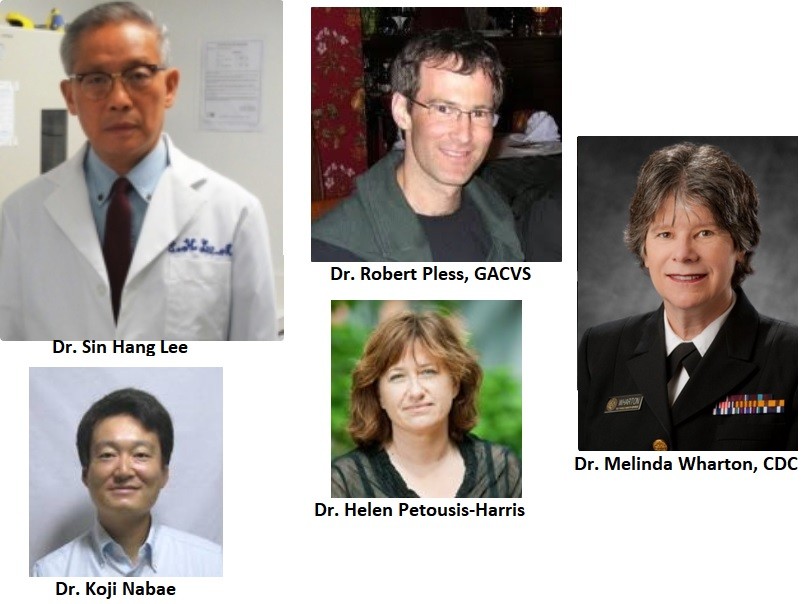
In January 2016, pathologist Dr. Sin Hang Lee, MD, Director of Milford Medical Laboratory, sent an open letter of complaint to the Director-General of the World Health Organization (WHO), Dr. Margaret Chan, in which he challenges the integrity of the GACVS Statement on the Continued Safety of HPV Vaccination (issued March 2014), and charges professional misconduct on the part of the following individuals (and suggests that others may have also been actively involved) in a scheme to deliberately mislead the Japanese Expert Inquiry on human papillomavirus (HPV) vaccine safety before, during and after the February 2014 public hearing in Tokyo.
Dr. Lee challenged the integrity of the GACVS Statement on the Continued Safety of HPV Vaccination written by Dr. Pless, accusing him of deliberately misrepresenting his scientific findings in order to mislead non-scientific readers and those who set vaccination policies.
Dr. Pless is accused of deliberately conflating two unrelated articles, dealing with two different chemicals, written by different authors “apparently to create a target to attack.” Furthermore, Dr. Lee notes that the GACVS Statement relied on an unpublished 12-year-old “Technical Report” written by an unofficial, unnamed “group of participants” (according to CDC’s disclaimer).
These are the facts:
In 2011, Dr. Lee found that every one of the 13 Gardasil samples that he examined contained HPV L1 gene DNA fragments.
He also found that the HPV DNA fragments were not only bound to Merck’s proprietary aluminum adjuvant but also adopted a non-B conformation, thereby creating a new chemical compound of unknown toxicity.
This non-B conformation, Dr. Lee believes, is responsible for the array of autoimmune illnesses experienced by children and young women following vaccination with Gardasil.
In 2012, Dr. Lee testified at a coroner’s inquest of the death of a New Zealand teenager, 6 months after receiving 3 Gardasil vaccine injections.
Dr. Lee was a presenter at the Tokyo hearing (2014), at which he disputed those who claimed the young women weren’t really suffering severe pain; they were having “psychosomatic reactions.” He stated:
“I do not believe psychosomatic reactions can cause sudden unexpected death in sleep, or inflammatory lesions in the brain as demonstrated by the MRI images and the brain biopsy histopathology with perivascular lymphocytes and macrophages and demyelination.”
Following the public hearing, GAVC issued a statement (March 12, 2014) aimed at discrediting Dr. Lee’s research by conflating his research with the research of other scientists who presented at the Tokyo hearing.
This case should have been prominently reported in the medical journals and by the mass media, and the allegation should have been investigated.
Mainstream publications have been silent; the case was reported only in alternative news outlets. [3]
In July 2016, a victims’ group filed a multi-plaintiff lawsuit in the district courts of Tokyo, Nagoya, Osaka, and Fukuoka against the Japanese government and the two pharmaceutical companies that had produced these vaccines.
Furthermore, in December of the same year, additional victims joined the multi-plaintiff lawsuit, bringing the total number of plaintiffs to 119 (Indian Journal of Medical Ethics, 2017).
The Hazards of Aluminum in Vaccines Is the Focus Of Intense Research
Of note: the placebo comparator in (most) vaccine clinical trials is not inert, it contains aluminum.
Several independent teams of international autoimmune experts have investigated this, led by the internationally recognized authority of autoimmune diseases, Dr. Yehuda Shoenfeld of Tel Aviv University, Israel, and another group by Dr. Christopher Exley, Professor of Bioinorganic Chemistry, Keele University in the UK.
However, studies that document the hazards of aluminum in vaccines are not published in major influential medical journals.
In two cases, journal editors received over $1 million from industry sources. (Ed Silverman, STAT, 2017.)
The following case is an example of how science is subverted by tightly controlled journal gatekeepers. Journal editors who have sold their integrity by accepting industry kickbacks block publication of reports that might pose a financial threat to an intricate web of government and non-government institutions and professional associations – all of whom are financially tied to the pharmaceutical industry.
The case demonstrates the great difficulty encountered by independent scientists who have not sold their integrity to the highest bidder.
Publication Saga: Case Examples of Harassment Aimed At Suppressing Harmful Findings Regarding the HPV-Gardasil Vaccine
Indeed, Dr. Shoenfeld identified a new syndrome ASIA (Autoimmune/Inflammatory Syndrome Induced by Adjuvants).
“The idea of ASIA as a new syndrome developed after some studies on Gulf War syndrome reported that soldiers who had not been deployed to the Gulf area were suffering from symptoms such as severe fatigue, cognitive impairment, myalgias and arthralgias. This raised the question of whether it was the vaccines administered to the soldiers that induced these syndromes. The most common adjuvants are silicone implants and aluminum in vaccines.” [4]
The focus of the research seeks to shed light on “the roles and mechanisms of action of different adjuvants which lead to autoimmune/ inflammatory response.”
Prof. Shoenfeld encountered blockades from journal editors who attempted to suppress the findings of neuroinflammation and “behavioral abnormalities following administration of aluminum adjuvants and the HPV vaccine Gardasil.”
Those editors have financial stakes in the business of vaccines.
Dr. Michael Racke
The HPV-mouse study was first submitted to for publication to the Journal of Human Immunology where it was shelved for 8 months and was then rejected by that journal’s Editor-in-Chief, Dr. Michael Racke.
“Dr. Racke has received personal compensation for activities with EMD Serone, Novartis, Roche Diagnostics Corporation, Genentech, and Amarantus as a consultant.”
EMD Serono, Inc. is a subsidiary of Merck KGaA, Darmstadt, Germany.
The HPV-mouse study was published in the journal Vaccine in January 2016.
It was summarily withdrawn a month later following orders by the Editor-in-Chief, Gregory Poland. [5]
Dr. Poland’s direct conflicts of interest [5] include those disclosed on the Mayo Clinic website:
“Dr. Poland is the chairman of a safety evaluation committee for investigational vaccine trials being conducted by Merck Research Laboratories. Dr. Poland offers consultative advice on new vaccine development to Merck & Co., Inc. [Dr. Robert Chen is an Associate Editor of Vaccine.]”
How is it that this incestuous relationship did not raise loud cries of foul play? Those rejections by editors who had deeply vested financial interest in protecting vaccination rates, whose own financial interest was intertwined with vaccine manufacturers, elicited no protest from the scientific academic community.
Instead, these rejections were followed by vicious attacks against two of the scientists by industry’s cyber hit-squads that are hired to attack independent scientists whose honest research contradicts vaccine orthodoxy. That is viewed as a heresy inasmuch as it poses a financial threat. [6]
The study was revised, again peer-reviewed, and published in the journal Immunological Research (Nature-Springer) (2017). [7]
The reported findings remained the same:
“Vaccine adjuvants and vaccines may induce autoimmune and inflammatory manifestations in susceptible individuals. To date most human vaccine trials utilize aluminum (Al) adjuvants as placebos despite much evidence showing that Al in vaccine-relevant exposures can be toxic to humans and animals…It appears that Gardasil via its Al adjuvant and HPV antigens has the ability to trigger neuroinflammation and autoimmune reactions, further leading to behavioral changes…”
“In light of these findings, this study highlights the necessity of proceeding with caution with respect to further mass-immunization practices with a vaccine of yet unproven long-term clinical benefit in cervical cancer prevention.”
The basis for those findings was deemed to be scientifically sound by three sets of peer-reviewers, at three different journals.
19 more galaxies mysteriously missing dark matter have been found
The newly found outliers defy ideas of how these star systems evolve
Most dwarf galaxies, like NGC 5477 seen in this image from the Hubble Space Telescope, have far more dark matter than normal everyday matter. But researchers recently found 19 dwarf galaxies that seem to be missing huge stores of dark matter. Hubble/ESA and NASA
A smattering of small galaxies appear to be missing a whole lot of dark matter.
Most of a typical galaxy is invisible. This elusive mass, known as dark matter, seems to be an indispensable ingredient for creating a galaxy — it’s the scaffolding that attracts normal matter — yet reveals itself only as an extra gravitational tug on gas and stars.
But now, researchers have found 19 dwarf galaxies — all much smaller than the Milky Way — that defy this common wisdom. These newly identified outliers have much less dark matter than expected. The finding, published November 25 in Nature Astronomy, more than quintuples the known population of dark-matter renegades, adding fuel to an already simmering mystery.
“We are not sure why and how these galaxies form,” says Qi Guo, an astrophysicist at the Chinese Academy of Sciences in Beijing. Typical dwarf galaxies concentrate dark matter far more than their larger cousins, she notes. Their smaller size leads to weaker gravity, which has trouble holding on to tenuous clouds of gas. That usually shifts the balance of mass in dwarf galaxies away from normal matter and toward dark matter.
“This new class of galaxy is straining our ability to explain all galaxies in one cohesive framework,” says Kyle Oman, an astrophysicist at Durham University in England who was not involved in this research.
In 2016, Oman and his colleagues identified two galaxies that appeared to be missing dark matter. In short order, two more oddballs turned up (SN: 3/28/18).
Guo and her colleagues wondered if these galaxies had more company. So using existing data from the Arecibo radio telescope in Puerto Rico, the team weighed dwarf galaxies by looking at how fast hydrogen whipped around each one. Higher speed means more total mass. The researchers then combined the mass of the hydrogen and of all the stars, inferred from starlight, to estimate how much of each galaxy’s mass is made up of normal matter.
For every galaxy, total mass added up to more than the mass of the gas and stars — not surprising, as that extra mass is the dark matter. But in about 6 percent of cases, there wasn’t as much extra mass as expected.
One oddball, designated AGC 213086, weighs in at around 14 billion suns. If it were typical, about 2 percent of its mass — nearly 280 million solar masses — would be gas and stars. Instead, its actual inventory of normal matter is about 3.8 billion solar masses, or about 27 percent of its total mass.
Of 324 dwarf galaxies analyzed, 19 appear to be missing similarly large stores of dark matter. Those 19 are all within about 500 million light-years of Earth, and five are in or near other groups of galaxies. In those cases, the researchers note, perhaps their galactic neighbors have somehow siphoned off their dark matter. But the remaining 14 are far from other galaxies. Either these oddballs were born different, or some internal machinations such as exploding stars have upset their balance of dark matter and everyday matter, or baryons.
It may not be a case of missing dark matter, says James Bullock, an astrophysicist at the University of California, Irvine. Instead, maybe these dwarf galaxies have clung to their normal matter — or even stolen some — and so “have too many baryons.” Either way, he says, “this is telling us something about the diversity of galaxy formation…. Exactly what that’s telling us, that’s the trick.”












A local article shows Florida is even worse than NC.
The proposed grading scale for North Carolina public schools
• A: 100 to 85 percent
• B: 84 to 70 percent
• C: 69 to 55 percent
• D: 54 to 40 percent
• F: Anything below 40 percent
Florida’s school grading scale
• A = 62% of points or greater
• B = 54% to 61% of points
• C = 41% to 53% of points
• D = 32% to 40% of points
• F = 31% of points or less
https://www.wtsp.com/article/news/local/verify/verify-no-nc-isnt-making-40-a-passing-grade-for-students/67-eef220a7-8877-413b-869c-cc57a89acc28