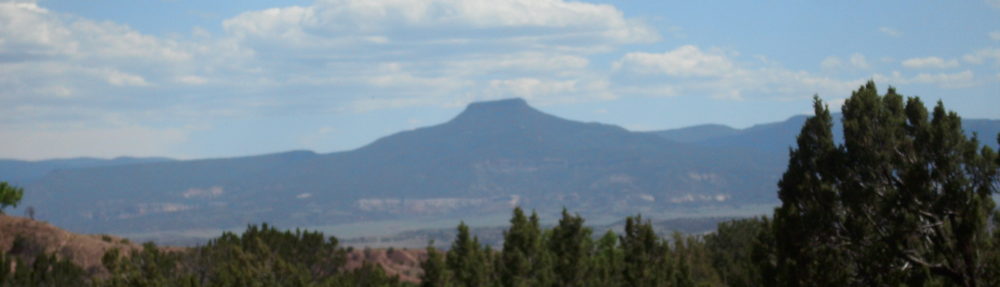
More Activity at Popocatepetl Volcano in Mexico

Explosions Continue at Popocatépetl as Mexico Prepares for an Eruption


Side by side views of Popocatépetl during the night and day on April 20, 2012. The left side shows the incandescent blocks being thrown from the summit while while the right shows the ash plume associated with this activity. Webcam captures courtesy of Eruptions reader Kirby.


Brief note about events in Mexico:

It appears that the activity at Popocatépetl has picked up, with more ash emissions and even (unconfirmed) reports of new lava at the summit. This would all suggest that the potential for a significant eruption is high. A report from the BBC says that volcanic bombs are being thrown over a kilometer from the vent and “60 opening” have appeared on the volcano. I actually have no idea what that means – are there cracks at the summit or just lots of fumarolic activity near the summit crater? The explosions from the volcano have been large enough to rattle windows in communities surrounding the volcano. CENAPRED reported over 12 explosions in two hours starting at ~5 AM on Friday (April 20). The steam-and-ash plume from Popocatépetl topped out at ~3 km / 10,000 feet while seismicity remains at elevated levels. CENAPRED currently has the warning level at Yellow Level II with a 12-km exclusion zone around the volcano – in that same report, CENAPRED geologist Roberto Quaas suggests that they are concerned about a potential cycle of dome growth and collapse at Popo, heightening the threat of pyroclastic flows. However, exactly when or if a large eruption might happen cannot be predicted.


It appears that there are some issues about people taking this activity at Popo seriously, though. In an article from USA Today, a local resident is quoted as saying “Right now we’re not scared. When it’s scary is at night, when it’s putting out lava.” (see above) Well, the lava is there when its not night, so the threat is persistent, day or night. Officially, evacuations have not been called. However, government officials are telling people to be ready to evacuate and to watch the volcano for signs of increasing activity. All this news about the reaction of people living near the volcano makes me nervous, especially when I read about people near the volcano choosing not to leave when the threat is present. Mexican president Felipe Calderon called on the populace to be prepared as well.

The plume from Popocatépetl seen on the morning of April 20. Webcam capture courtesy of CENAPRED.

NASA posted a short movie of the ash from Popocatépetl seen on April 18, 2012 – the puff from the volcano is clearly seen spreading across central Mexico.

All in all, it looks like we’re entering a period where everyone, especially those living near Popocatépetl, need to watch the volcano very closely.

from:    http://www.wired.com/wiredscience/2012/04/explosions-continue-at-popocatepetl-as-mexico-prepares-for-an-eruption/#more-107209

incoming Plasma Clouds

INCOMING PLASMA CLOUDS: On April 18th and 19th, a series of minor CMEs puffed away from the sun. Three of them are heading in our general direction. Analysts at the Goddard Space Weather Lab have prepared an animated forecast track of the ensemble:

According to the forecast, the clouds are going to hit Mercury, Earth, Mars and rover Curiosity en route to Mars. The impact on our planet, on April 22nd around 00:50 UT, is expected to be minor with auroras likely only at higher latitudes

from:   spaceweather.com

Earthquake Papua, Indonesia

Slightly damaging earthquake in Papua (former Irian Jaya), Indonesia

Last update: April 21, 2012 at 11:57 am by By 

Earthquake overview : A very shallow earthquake 10 km out of the Irian Jaya coast, Indonesia has scared people who are not panicking for a little shaking, as earthquakes are almost common as bad weather in this area of the world.

Green radius = strong shaking; yellow radius = very strong shaking, severe shaking too small to fit on this map

Most important Earthquake Data:
Magnitude : Mw6.6
UTC Time : Saturday, April 21, 2012 at 01:16:52 UTC
Local time at epicenter : Saturday, April 21, 2012 at 10:16:52 AM at epicenter
Depth (Hypocenter) : 16 km (9.9 miles)
Geo-location(s) :
10 km SE from Ransiki, Papua, Indonesia
83 km (51 miles) SSE of Manokwari, Papua, Indonesia

– Update 11:23 UTC:  It has been reported that the quake caused a bridge connecting the Ransiki-Manokwari to have minor damage. A total of 10 houses damaged moderately, and dozens of others were slightly damaged.

– Update 11:03 UTC
* As usual the local media are always focusing more on the bigger cities in the area, in this case Manokwari. In Manokwari people are saying that the strong shaking only lasted 3 seconds. People rushed out of the buildings. There was no news of any damage or injuries at Manokwari.

– The biggest city in the area is Manokwari who has experienced a strong MMI VI shaking. Manokwari has a population of 53,000 people.

– The fault who generated the earthquake is called “Ransiki fault”.  Both sides of the fault are moving approx. 8.5 mm/year.

– Local BMKG is reporting a Magnitude of 6.8 at a depth of 10 km (bot stronger than reported by USGS)

– Modified Mercalli Shaking Intensities : 4,000 people : Severe VIII shaking8,000 people : Very strong VII shaking and 169,000 people VI strong shaking.

– GDACS has calculated that the following locations might get waves of max. 0.2 meter (not a real tsunami but only strong current and waves)  :  RapaowiRansikiJali AliSisember and Robookisbia

– 160,000 people are living within a radius of 100 km. The repartition of the population is as follows :
75 km     29000 people;  50 km     16000 people; 20 km     5200 people and 10 km     less than 1000 people
Earthquake-report.com calls an area of 25 km at risk (about 7000 people – number based on GDACS data) for serious damage and injuries.

Ransiki town / village – only approx. 10 km from the epicenter – image courtesy Toto Purwanto

– Oransbari and Ransiki are 2 villages located in a radius of 25 km around the epicenter. Especially this area will get the greatest shaking impact. Based on satellite images, Ransiki seems to have a STOL airport (short take off and landing)

– The earthquake is somewhat weakened because of an epicenter just out in the sea

– Due to the Magnitude and the close distance to the beach, NOAA has published the following Tsunami statement for the Pacific region :
NO DESTRUCTIVE WIDESPREAD TSUNAMI THREAT EXISTS BASED ON HISTORICAL EARTHQUAKE AND TSUNAMI DATA.
HOWEVER
EARTHQUAKES OF THIS SIZE SOMETIMES GENERATE LOCAL TSUNAMIS THAT CAN BE DESTRUCTIVE ALONG COASTS LOCATED WITHIN A HUNDRED KILOMETERS OF THE EARTHQUAKE EPICENTER. AUTHORITIES  IN THE REGION OF THE EPICENTER SHOULD BE AWARE OF THIS POSSIBILITY AND TAKE APPROPRIATE ACTION   

http://earthquake-report.com/2012/04/21/slightly-damaging-earthquake-in-papua-former-irian-jaya-indonesia/


Dr. Jeff Masters on Hurricanes & Tropical Storms

Today is my last day in Ponte Vedra Beach, Florida, where 700 of the world’s hurricane experts are gathered to attend the 30th Conference on Hurricanes and Tropical Meteorology of the American Meteorological Society. It’s been a great week of learning and catching up with old friends, and I present below a few final summaries of talks I attended.

Impact of Tropical Cyclones on drought alleviation in the Atlantic and Gulf Coasts
Dr. Pat Fitzpatrick of the Stennis Space Center in Mississippi discussed how landfalling tropical storms and hurricanes can alleviate drought. The biggest winner tends to be the Southeast U.S. states of Florida, Georgia, South Carolina, and North Carolina, where about 20% – 50% of all droughts between 1960 – 2009 were busted by a landfalling tropical storm or hurricane. It is uncommon for Texas to see a drought busted; less than 10% of all Texas droughts have been ended by a hurricane or tropical storm. This occurs because the Southeast U.S. can receive heavy rains from hurricanes moving up the East Coast, or moving through the Gulf of Mexico, while relatively few storms track over Texas. Over the course of a year, hurricanes and tropical storms contribute 15 – 20% of rain along the Gulf Coast, and 3 – 16% along the East Coast. The length of a drought does not seem to affect whether a drought can be ended by a hurricane or not. Hurricanes have been able to end both short (< 3 month) and long (> 12 month droughts) equally well.


Figure 1. Example of a drought-busting tropical storm. Moderate drought (Palmer Drought Severity Index, PDSI, ≤ –2.0) was present in 52 percent of the Florida, Georgia, South Carolina, and North Carolina climate divisions in May 2006. The percentage decreased to 29 percent after Tropical Storm Alberto passed through on June 11 – 15, 2006. Image credit: U.S. Drought Monitor.


Figure 2. Rainfall in inches from the passage of Tropical Storm Alberto in 2006. Image credit: NOAA/HPC.

According to the U.S. drought monitor, over 90% of the area of Florida, Georgia, South Carolina, and North Carolina are currently in moderate to exceptional drought. There is 1 – 2 inches of rain coming to much of the region over the next few days, but that will not be enough to bust the drought. Based on Dr. Fitzpatrick’s research, there is a 20% – 50% chance that the drought will be broken by a tropical storm or hurricane. The first storm on the list in 2012 is Alberto again; let’s hope we get another Alberto this year that imitates the 2006 version of Alberto.

Patterns of rapid intensification
Peter Yaukey of the University of New Orleans studied patterns of hurricane rapid intensification in the Atlantic from 1950 – 2009. The Gulf of Mexico and Caribbean saw the most rapid intensification events, and the Northeast Atlantic the fewest. Interestingly, he found that rapid intensification events did not peak in September, but tended to be more common in June and July. Hurricane are less likely to intensify in the late afternoon and early evening (near 00 UTC), and more likely to intensify just after midnight, at 06 UTC.

Jeff Masters

from:    http://www.wunderground.com/blog/JeffMasters/comment.html?entrynum=2076

El Hierro Update 4/20

El Hierro Volcano : Green and Yellow – Pevolca changes alert status from Yellow to Green

Last update: April 20, 2012 at 12:23 pm by By 


Update 20/04 – 12:17 UTC
– Joke Volta’s images of today April 20. Calima (African desert dust fog) has finally gone and the pictures are getting more colorful.


Update 20/04 – 07:50 UTC
– NO listed earthquakes since midnight


Update 19/04 – 23:55 UTC
– A third El Hierro earthquake at 18:59 today. Magnitude 0.7, depth 12 km. Epicenter here.
– We have changed the title a little bit to reflect the current situation. No immediate risk to the island anymore, but still some minor volcanic activity (mainly earthquakes and a little degassing) around the main vent.

Update 19/04 – 15:21 UTC
– It looks like the volcano doesn’t like Pevolca or Mr. Armas :) !.  Almost together with Mr. Armas tweet, the ground was shaking again, a M1.2 earthquake at 13:01 UTC at a depth of 10 km, here

Update 19/04 – 14:09 UTC
– More details have been reported a little later, such as :
* the alert level of the island itself will change from Yellow to Green
* the area surrounding the main vent is downgraded from Red to Yellow (in other words, some limited vigilance remains around the volcano)
* The BIO Las Palmas (Oceanographic vessel), who made some extensive bathymetry last week, measured the depth of the cone at 86 meter.
* Today’s images of Joke Volta

Update 19/04 – 12:09 UTC
– In a short twitter message from the Cabildo de Hierro (office of Mr. Alpidio Armas),  the Green Alert of the entire island has been declared by Pevolca. Due to the very slim activity of the last couple of weeks (only faint stains and degassing), the Alert level change seems logical to Earthquake-Report.com

Update 19/04 – 11:03 UTC
– We have noticed one M2.2 earthquake at a depth of 32 km at 08:32 UTC at a very unusual place, which may explain the difference in depth.


Update 18/04 – 21:32 UTC
– ER reader John commented on our remark from this morning that we did not know where CHIE station was exactly. He said : found the location of CHIE it is Latitude 27.72700 Longitude -17.96070 . Information found athttp://www.isc.ac.uk/cgi-bin/stations?listr=Canary+Islands:Europe. Thank you John.
– 1 new earthquake at 14:37 UTC at a depth of 1 km (mostly IGN revises these shallow depths which has not been done so far)  ! Magnitude : 0.5. Epicenter here

Update 18/04 – 12:12 UTC
– Joke Volta images of today April 18, a “Calima” day (special regional weather type). Joke hasn’t seen anything special today, but nevertheless she continues to make pictures mainly to have a full series of visuals.

Update 18/04 – 10:52 UTC
– 1 earthquake since midnight. Magnitude 1.4 at a depth of 13 km. Epicenter here
– ER reader Leona has commented that it looks that the thickness of the CHIE HT line has increased since more than 24 hours now. We have the same feeling and have therefore increased the line with the same factor today and 4 days ago. Of course this should not mean anything, as it maybe temporary noise or even instrumental error margin. We neither have an idea where CHIE comes from. El Hierro has a lot of different instruments.

Comparison in amplitude of CHIE graph El Hierro


Update 17/04 – 14:40 UTC
– Both the Chile, Valparaiso Mw6.7 earthquake and the Papua New Guinea Mw6.8 earthquake can be seen on the CHIE El Hierro graph.

for more information and updates, go to:    http://earthquake-report.com/2011/09/25/el-hierro-canary-islands-spain-volcanic-risk-alert-increased-to-yellow/

Gulf Fish & Sea Life Deformities Continue —BP

Gulf Seafood Deformities Raise Questions Among Scientists And Fisherman (VIDEO)

The Huffington Post  |  By  Posted: 04/18/2012 12:59 pm Updated: 04/18/2012 5:31 pm

While the true extent of the 1989 Exxon Valdez oil spill was not known for about 4 years, as Al Jazeera notes in the video above, the repercussions of BP’s 2010 Deepwater Horizon spill in the Gulf of Mexico may become apparent more quickly.

Discovering eyeless shrimp, lesioned fish and other mutated and underdeveloped seafood, fisherman in the Gulf are pointing fingers at the BP spill. Biologist Dr. Darryl Felder told the news agency that Gulf seafood populations are dropping at alarming rates and that species richness is “diminished.”

The Gulf Restoration Network‘s Scott Eust explained the bizarre shrimp deformities. “We have some evidence of deformed shrimp, which is another developmental impact. So, that shrimp’s grandmother was exposed to oil while the mother was developing, but it’s the grandchild of the shrimp that was exposed grows up with no eyes.”

Al Jazeera reports that both the government and BP maintain that Gulf seafood is safe. BP released a statement last week, saying, “Seafood from the Gulf of Mexico is among the most tested in the world, and according to the FDA and NOAA, it is as safe now as it was before the accident.”

A study published last October in the journal Environmental Health Perspectives found that the FDA allowed “up to 10,000 times too much contamination” and didn’t identify the risks to children and pregnant women posed by contaminated seafood. Additionally, the study charged that the FDA’s “scientific standards [in 2010] were less stringent” than after the Exxon Valdez spill, reported OnEarth.

Government testing standards were questioned months after the spill. In December 2010, a toxicologist with a team challenging the FDA’s seafood testing said, the “FDA simply overlooked an important aspect of safety in their protocol,” reported MSNBC.

Despite sales dropping precipitously following the spill, the Gulf’s seafood industry was given a boost after the government’s Defense Commissary Agency began selling Gulf seafood products on 72 East Coast military bases in early 2011, reported AP.

from:   http://www.huffingtonpost.com/2012/04/18/gulf-seafood-deformities-raise-questions_n_1434268.html?ref=green

April 19 Large Earthquakes

(Major) Earthquakes list April 19, 2012

Last update: April 19, 2012 at 4:00 pm by By 

M 5.1      2012/04/19     01:58     Depth  18.8 km     TAIWAN
09:58:07 AM at epicenter
Moderate shallow earthquake felt as far as Taipei

M 4.5      2012/04/19 14:35     Depth 10.0 km      OFFSHORE OAXACA, MEXICO
169 km (105 miles) SE of Acapulco, Guerrero, Mexico
M 4.7      2012/04/19 07:42      Depth 46.8 km      IRAN-IRAQ BORDER REGION
M 4.8      2012/04/19 06:30      Depth 14.8 km      NORTH INDIAN OCEAN

M 4.7      2012/04/19 05:00      Depth 32.1 km     NEAR THE EAST COAST OF HONSHU, JAPAN
M 5.2      2012/04/19 03:33      Depth 18.0 km      NEAR THE EAST COAST OF HONSHU, JAPAN
M 4.9      2012/04/19 02:48      Depth 18.2 km      VOLCANO ISLANDS, JAPAN REGION
M 5.1      2012/04/19 01:58      Depth 18.8 km      TAIWAN
M 4.8      2012/04/19 01:41      Depth 14.9 km      NORTH OF SVALBARD
M 4.7      2012/04/19 01:14      Depth 52.3 km      COQUIMBO, CHILE
M 4.8      2012/04/19 00:24      Depth 71.8 km      KURIL ISLANDS

Label info : M = magnitude, D = depth (km), Time = UTC – Click here for conversion in your local time.
[quake date=”2012-4-19″ location=”-80,80,-179,179″ Number=”100″ magnitude=”>4.5″][/quake]
Data sources courtesy : USGS – EMSC – GFZ – GEONET

from:    http://earthquake-report.com/2012/04/18/major-earthquakes-list-april-19-2012/

Connection Sun-Moon-Earthquakes?

Earthquake Sun Moon connection

Dr A Rajagopal Kamath
Freelance researcher in Astronomy and Cosmology.
Popular Science author in Malayalam
For the last two decades I am closely monitoring the occurrence of Earthquakes and its connection with the position of astronomical bodies like Sun and moon.
The following interpretations were arrived at, based on the study.
The occurrence of earthquakes in the earthquake vulnerable areas is more during the full moon days. Mainly, areas in the Indian subcontinent, Indonesia, Andaman etc are most vulnerable for earthquake.The closeness of the moon during the lunar perigee phase ( perigee-closest to the earth ) trigger earthquakes near subduction zones. Subduction zones are areas where the tectonic plates slip under another plate thus creating a displacement. Java trench, where the boundary between Indo Australian plate and Eurasian plate is vulnerable for earthquakes. This resulted in the Sumatra earthquake.
The recent Japan earthquake occurred where the Pacific pate slips below north American plate.
Sun affects the earth in many ways. When there is full moon or lunar perigee, if a Solar flare occurs there is strong chance for an earthquake in earthquake vulnerable areas where strain is accumulated in the subduction zones where the tectonic plate boundary lies.
As I said earlier Solar flares trigger earthquakes. . A solar flare is a large explosion in theSun‘s atmosphere. Solar flares affect all layers of the solar atmosphere (photosphere,chromosphere, and corona), heating plasma to tens of millions of kelvins and acceleratingelectronsprotons, and heavier ions to near the speed of light. Sun is getting violent duc to the condition called the approach of Solar maxima which is from 2011-2013.
Please note that the 2004 Dec 26 earthquake was preceded by a prominent solar flare
Similarly the Japan earthquake of March 11 2011 was preceded by a solar flare.( report on solar flare attached. Link is given below.
The position of moon affects the formation of tides. The earth’s interior is in liquid form. That liquid is also vulnerable to the moon’s pull. This pull results in the displacement of tectonic plates, resulting in earthquakes. So if there is a full moon or new moon approaching and if a solar flare occurs then there is chance for an earthquake.
Points
Dec 26 2004 was full moon day. Sumatra earthquake( magnitude 9.3) occurred on that day.
Sept 30 1993 the day before full moon day. Deadly earthquake in Latur( magnitude 6.2)
Oct 23 1991 two days before full moon. Deadly Uttar Kasi earthquake ( magnitude 6.6)
March 27 1964 Alaska earthquake ( magnitude 9.2) occurred before the full moon day.
Nov 21 1833 Sumatra earthquake( Magnitude 9.2) two days later was the full moon day.
Feb 27 2010 Chile earthquake(( Magnitude 8.8) next day was full moon day.
On Jan 19 2011 Pakistan earthquake occurred. It was fullmoon.
Feb 22 2011 Newzealand. Feb 18th was full moon
Now full moon is approaching and it is the time for the SUPER MOON. That is moon is closes to the earth on 19th . It will be less than around 358000 Kms from the earth.
This approach of the moon is the reason behind the occurance of March 11 Honshu earthquake and the fore shocks and after shocks.
There is a chance for a major earthquake especially in the plate boundaries in the Pacific and near Java trench ( Indonesia)during this period. Indian subcontinent is also vulnerable.

Mexico’s Popocatepeti Volcano Rumbling

Alert Status Raised at Mexico’s Popocatépetl


Three webcam views of Popocatépetl as seen on April 16, 2012. Images courtesy of Eruptions reader Kirby.


mentioned yesterday that Mexico’s famous Popocatépetl experienced one of its largest explosions in years, covering some 30 communities with ash up to 7 cm thick (but highly dependent on wind direction, so that value has a wide range from dusting to the maximum 7 cm). Combine that with continued elevated seismicity and a healthy steam-and-ash plume from the volcano (see above), and CENAPRED has raised the alert status at Popo to Yellow Phase 3, the third highest threat level (of 7). Overnight on April 16th, the volcano was throwing incandescent material over 300 meter above the crater and it has produced at least 14 small steam-and-ash plumes over the last day or so, some reaching as high as ~1 km / ~3,200 feet. The raised alert level means that local authorities are preparing for potential evacuations if the volcano has a major eruption – the last time major evacuations were needed, in 2000, over 50,000 people had to leave their homes. An eruption will also likely cause significant air traffic issues in/around Mexico City, so authorities need to be prepared for this as well.

The major hazards from Popo are going to be ash fall on the area around the volcano, lahars generated by mixing water and volcanic debris (Popo does have several summit glaciers) and even the potential for pyroclastic flows, although they have been relatively rare in the recent (last few hundred years) at Popocatepetl. You can get a sense of the area that could be effected by a new eruption of Popo fromthis map prepared by volcanologists at University of Buffalo.

When conditions are good, you can get a view of Popocatépetl from webcams near the volcano, so keep your eyes open for continued activity.

from:    http://www.wired.com/wiredscience/category/eruptions/