
Bayer/Monsanto (Glyphosate/RoundUp) Wants to Poison People with NO LIABILITY

Thomas Massie Says Bayer/ Monsanto Has Our Country ‘Under Siege’ as It Seeks Protection from Lawsuits

Bayer acquired Monsanto in 2018 for $66 billion. US Representative Thomas Massie said that our entire country is under siege by Bayer, a German company that spent over $9 million lobbying the executive and legislative /congressional branches in order to gain immunity from lawsuits alleging Roundup Ready herbicide is toxic and causes cancer. He said that the Constitution guarantees people a trial if they have been harmed. He added that Attorney General Pam Bondi and Trump’s chief of staff, Susie Wiles, worked for a lobby firm, Ballard Partners, that registered to lobby for Bayer in December 2024. Ballard Partners contributed $50 million to Trump’s campaign in 2024.

Massie said that Trump’s recent executive order declaring that the production of the chemical glyphosate from Bayer is a ‘national defense priority’ was issued for the purpose of protecting the company from any liability. The EO contains the false claim that agricultural productivity would suffer without glyphosate.

Bayer/ Monsanto contends that the EPA has reviewed glyphosate for decades and reached the same conclusion “again and again” that Roundup does not cause cancer. The company further argued that even if a state jury wants a cancer warning, federal law bars Monsanto from unilaterally adding it. If Monsanto wins on preemption, the impact could be sweeping: whenever the EPA has approves a pesticide label, it would effectively elevate a federal agency’s risk-determination above the authority of state courts and juries.

Massie Warns of Lobbyist Siege Over Bayer’s Glyphosate Protections

Kentucky Republican Thomas Massie accused Bayer of spending over $9 million in 2025 lobbying for exemptions from lawsuits over glyphosate, the world’s top herbicide sold as Roundup and tied to non-Hodgkin lymphoma cases.
He criticized a recent Trump executive order labeling it critical for national defense, which could shield producers from liability, alongside a Justice Department brief backing Bayer in an upcoming Supreme Court case.
Massie, joined by Rep. Chellie Pingree, introduced a bill to repeal those protections amid debates balancing health risks against farming needs, with HHS Secretary Robert F. Kennedy Jr. calling for a shift to regenerative methods.

From The New American:

Monsanto Asks Supreme Court to Preempt State Roundup Cancer Claims

Monsanto has filed its opening brief at the U.S. Supreme Court, asking the justices to wipe out a Missouri verdict that held the company liable for failing to warn that Roundup causes cancer.

The case lands in a political moment favorable to Bayer AG, Monsanto’s German parent company. Last Wednesday, President Donald Trump signed an executive order framing the glyphosate supply as a national-defense issue and directing federal prioritization of domestic production. It also contains language that effectively protects producers from regulatory and legal pressure by emphasizing that government action should not “place the corporate viability” of domestic producers “at risk.” The brief explicitly quotes that order, repeating its demonstrably false claim that agricultural productivity would suffer without glyphosate.

Last December, the Trump Justice Department entered the case as amicus curiae – “friend of the court” – urging the SCOTUS to adopt Monsanto’s position.

Join the Coalition! Become an affiliate member today! Click Here!

Roundup’s main active ingredient, glyphosate, has already been linked to cancer in multiple legal disputes and peer-reviewed studies. Juries have awarded billions in damages against Monsanto over Roundup-related claims, and about 61,000 lawsuits remain active.

Additionally, last Tuesday, Bayer announced a proposed $7.25 billion class settlement intended to resolve current and future Roundup claims, a move the company described as part of a broader strategy to contain ongoing litigation.

The Case

The core legal question of the case Monsanto Company v. Durnell is whether FIFRA, the Federal Insecticide, Fungicide, and Rodenticide Act, blocks state failure-to-warn verdicts when the Environmental Protection Agency (EPA) — one of many unconstitutional federal agencies long captured by corporate lobbyists — has repeatedly approved labels without a cancer warning.

Argument is set for April 27.

Federal Primacy

Monsanto’s brief opens with a blunt thesis about federal primacy. It argues that EPA has reviewed glyphosate for decades and reached the same conclusion “again and again”:

EPA has exhaustively studied glyphosate … and concluded again and again in registering countless versions of Monsanto’s Roundup products that glyphosate does not cause cancer.

That conclusion is the spine of the preemption argument. Monsanto says EPA not only declined to require a cancer warning, but that a warning “stating otherwise is neither required nor permitted under FIFRA.”

The company then contrasts that federal judgment with what happened in Missouri:

A Missouri jury hearing a state-law failure-to-warn claim had other ideas.

The jury, Monsanto says, demanded “precisely the kind of cancer warning on Roundup’s label that EPA considered and rejected.”

In the case in question, Anderson v. Monsanto Co., the jury sided with a Missouri man who alleged that prolonged occupational exposure to Roundup caused his non-Hodgkin’s lymphoma. It found Monsanto liable for negligence, defective design, and failure to add a warning label about the product’s cancer risks. The decision cited internal documents and scientific studies suggesting that Monsanto was aware of potential carcinogenic risks associated with glyphosate-based formulations but failed to communicate those risks to users.

“The Label Is the Law”

The brief repeats a phrase that has become almost a slogan in pesticide regulation:

Once EPA approves a label, the “label is the law!”

That matters because Monsanto’s second preemption theory is impossibility. The company argues that even if a state jury wants a cancer warning, federal law bars Monsanto from unilaterally adding it. In the brief’s words:

Manufacturers cannot distribute pesticides with labels that differ substantially from the label approved by EPA.

So the state verdict, Monsanto argues, orders an outcome that federal law blocks. It calls this a basic impossibility conflict:

Simultaneous compliance with federal and state law would be impossible.

If EPA approves a label without a cancer warning, and if EPA views such a warning as false or misleading, then state tort law is not just different. It is a trap, argues the company.

Uniformity, the “Crazy Quilt,” and “Lay Juries”

Monsanto’s brief argues that pesticide labeling cannot be governed by 50 different jury systems without wrecking national uniformity and market availability:

To ensure ‘[u]niformity’ in pesticide labeling, FIFRA expressly preempts any state-law labeling requirement that is ‘in addition to or different from those required under’ the statute.

It then invokes the Supreme Court’s own language about the “crazy-quilt” of conflicting state rules, saying that is exactly what Congress enacted the uniformity clause to stop.

Then the broadside, repeating:

Once EPA makes that judgment, the label is the law. It cannot be second-guessed by lay juries applying the law of 50 states.

And the brief points to a claimed market consequence that Bayer has already made real:

Cascading tort liability has forced Monsanto to remove glyphosate from the residential consumer market while threatening its availability for farmers.

That is the outcome Trump’s executive order tries to prevent. As quoted in the brief:

“reduction or the cessation of domestic production” of “glyphosate-based herbicides would … hav[e] a debilitating impact on domestic agricultural capabilities.”

Significance of the Case

If Monsanto wins on preemption, the impact could be sweeping. A ruling that FIFRA blocks label-based failure-to-warn claims whenever the EPA has approved a pesticide label would effectively elevate a federal agency’s risk-determination above the authority of state courts and juries. It would hand Bayer a powerful mechanism to knock out large categories of Roundup cases by arguing that once Washington has spoken, states are barred from reaching their own conclusions, even through traditional tort law.

If Monsanto loses, states would retain the authority to protect their own citizens through product liability law, including through so-called lay juries tasked with weighing evidence in open court. It would preserve the ability of state courts to impose liability where they find harm, even when federal regulators have approved a product’s label. In that sense, the case tests whether federal pesticide regulation sets a floor for safety, or a ceiling that forecloses any further accountability at the state level

from:    https://needtoknow.news/2026/02/thomas-massie-says-bayer-monsanto-has-our-country-under-siege-as-it-seeks-protection-from-lawsuits/

And Now —- Vaccinated Chocolate

World’s chocolate supply threatened by devastating pathogen

Story by JUDY SIEGEL-ITZKOVICH
Mathematics Prof. Benito Chen-Charpentier of the University of Texas at Arlington© (photo credit: University of Texas at Arlington)

About 50% of the world’s chocolate comes from cacao trees in the West Africa countries of Ivory Coast and Ghana. The devastating news coming from there is that a quickly spreading virus threatens the health of the cacao tree and the dried seeds from which chocolate is made, jeopardizing the global supply of the world’s most popular treat.

The damaging pathogen is attacking cacao trees in Ghana, resulting in harvest losses of between 15% and 50%. Spread by small insects called mealybugs (Pseudococcidae, Homoptera) that eat the buds, flowers, and leaves, the cacao swollen shoot virus disease (CSSVD) is among the most damaging threats to the root ingredient of chocolate.

CSSVD was first observed in the eastern region of Ghana in 1936 by a farmer and its virus nature was confirmed in 1939, but in recent years, it has proliferated.

“This virus is a real threat to the global supply of chocolate,” said mathematics Prof. Benito Chen-Charpentier of the University of Texas at Arlington and an author of the study in the journal PLOS One under the title “Cacao sustainability: The case of cacao swollen-shoot virus co-infection.”

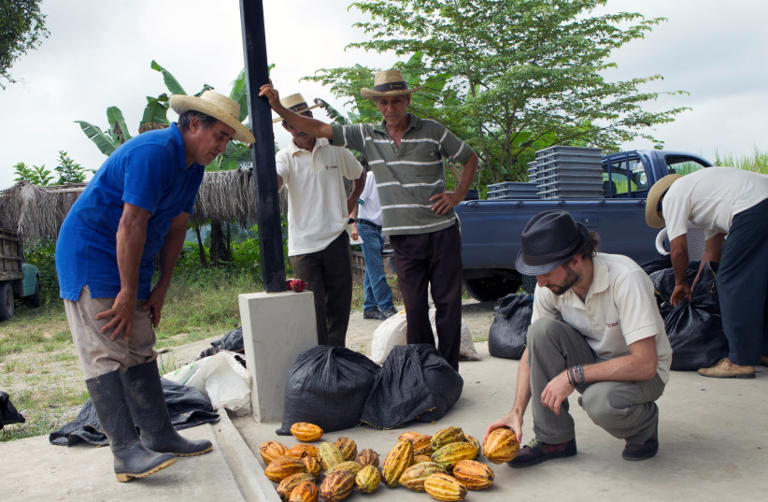
Austrian man Carl Schweizer (R) trades cocoa cobs and beans with local farmers in Piedra de Plata, Ecuador, June 4, 2016. (credit: REUTERS/GUILLERMO GRANJA)© Provided by The Jerusalem Post

Austrian man Carl Schweizer (R) trades cocoa cobs and beans with local farmers in Piedra de Plata, Ecuador, June 4, 2016. (credit: REUTERS/GUILLERMO GRANJA)

Globalization as a root cause

A recent increase in the spread of plant pests and diseases is caused by globalization, climate change, agricultural intensification, and reduced resilience in production systems. A vast number of plant pathogens pose a serious threat to food safety and security, national economies, biodiversity, and rural environment, he said.

 “Pesticides don’t work well against mealybugs, leaving farmers to try to prevent the spread of the disease by cutting out infected trees and breeding resistant trees. But despite these efforts, Ghana has lost more than 254 million cacao trees in recent years,” he warned.

Farmers can combat the mealybugs by giving vaccines to the trees to inoculate them from the virus – but the vaccines are expensive, especially for low-wage farmers, and vaccinated trees produce a smaller harvest of cacao, thus compounding the devastation of the virus.

Chen-Charpentier and colleagues from the University of Kansas, Prairie View A&M, the University of South Florida, and the Cocoa Research Institute of Ghana have developed a new strategy: using mathematical data to determine how far apart farmers can plant vaccinated trees to prevent mealybugs from jumping from one tree to another and spreading the virus.

“These insects have several ways of movement, including moving from canopy to canopy, being carried by ants, or blown by the wind,” Chen-Charpentier explained “What we needed to do was create a model for cacao growers so they could know how far away they could safely plant vaccinated trees from unvaccinated trees in order to prevent the spread of the virus while keeping costs manageable for these small farmers.”

By experimenting with mathematical patterning techniques, the team created two different types of models that allow farmers to create a protective layer of vaccinated cacao trees around unvaccinated trees.

“While still experimental, these models are exciting because they would help farmers protect their crops while helping them achieve a better harvest,” Chen-Charpentier said. “This is good for the farmers’ bottom.”

from:    https://www.msn.com/en-us/foodanddrink/foodnews/worlds-chocolate-supply-threatened-by-devastating-pathogen/ar-AA1nHI3O

Long Term Effects on Sperm Count, Fertility from Pesticides

Sounding the Alarm on Connection Between Fertility and Pesticide Exposure

A systematic review of scientific studies on pesticides and fertility finds exposure associated with lower semen quality, DNA fragmentation and chromosomal abnormalities.

A systematic review of scientific studies on pesticides and fertility finds exposure associated with lower semen quality, DNA fragmentation and chromosomal abnormalities.

Published in the journal Andrology, the review is yet another warning from a long string of researchers sounding the alarm over the connection between global fertility and toxic chemical exposure.

With data from the Centers for Disease Control and Prevention (CDC) indicating roughly one in five couples are unable to conceive after a year of trying, and trends continuing to slope downwards, it is critical that contributing factors be identified so that protective changes can be made.

After screening more than 1,300 studies, researchers narrowed their review down to 64 papers assessing semen parameters and DNA integrity after pesticide exposure. Each study is analyzed for its design, the pesticide investigated, the population studied, controls and reproductive effects determined.

Pesticides are evaluated for their impacts to sperm quality and DNA integrity based on their chemical class. Organochlorine insecticides, which are all banned but still persistent in soil, air, water and food in the United States, include a range of impacts to sperm quality.

Higher levels of DDT or its breakdown metabolite DDE are associated with lower semen count, and motility and morphology below normal threshold values established by the World Health Organization (WHO). (Under WHO threshold values, a sub-fertile condition is defined by values lower than the fifth percentile of the general population.)

Several studies find that as organochlorine concentrations increase in individual males, sperm parameters also fall.

In addition to sperm quality, organochlorines are associated with chromosomal aberrations in several studies, including effects such as sperm disomy, where sperm have extra or missing chromosomes. This can result in viable offspring, but those offspring are at greater risk of abnormalities.

Organophosphate, the class of insecticides that replaced the organochlorines as they were phased out, also present a range of deleterious impacts. These chemicals include pesticides like malathion, still widely used, and chlorpyrifos, which is only now being phased out of agricultural use.

Effects on sperm parameters are particularly pronounced for individuals in farming regions or with a history of occupational pesticide work.

However, studies on the general population also show cause for concern, finding total sperm count and concentrations inversely related to urinary metabolites of organophosphate insecticides.

Apart from sperm quality, the literature reveals several studies showing organophosphate exposure resulting in missing or extra chromosomes in sperm, with particular attention paid to diethyl phosphate, a non-specific organophosphate metabolite.

Synthetic pyrethroids are also singled out in the scientific literature for their links to sperm damage. These are the insecticides that are replacing the organophosphates, as they are being phased out for their myriad health hazards.

Unfortunately, the game of whack-a-mole played by the pesticide industry with the U.S. Environmental Protection Agency’s allowance has not resulted in chemicals that are safer for long-term human fertility.

Like organophosphates, occupationally exposed individuals are particularly affected, with pyrethroid factory workers showing higher rates of sperm abnormalities and lower motility than non-exposed individuals. Factory workers are also more likely to exhibit DNA fragmentation in their sperm.

Another concentration-dependent relationship is found, with individuals reporting higher levels of urinary 3-phenoxybenzoic acid (3-PBA), a non-specific pyrethroid metabolite, having a lower sperm counts, disomy and a greater chance of exhibiting sperm morphology below WHO thresholds.

Beyond these three classes, scientists did find evidence of negative associations with carbamate class insecticides, fungicides and herbicides, but the low number of studies does not allow for extensive analysis. Mixtures of various pesticides are cited as having similar effects to the three main pesticide classes investigated though firm results were difficult to specify due to lack of complete information.

In general, occupationally exposed workers are most at risk, with chronic exposure being associated with greater sperm defects.

The results of the study are concerning in light of steadily declining sperm counts. A 2017 study found that sperm counts since 1973 have fallen by nearly 60%.

One author of that study, Shanna Swan, Ph.D., captured public attention regarding sperm declines through her book “Countdown,” which goes into great depth regarding the impact of environmental chemicals on human fertility.

Watch Dr. Swan’s talk, “Modern Life and the Threat to the Future,” at Beyond Pesticides’ 2021 National Forum, Cultivating Healthy Communities.

Researchers have been sounding the alarm on the impact of pesticides on fertility for decades. In 2013, a previous literature review evaluating pesticide impacts on fertility found pesticides strongly associated with declines in sperm count. 

As she recounted in a presentation at Beyond Pesticides’ 2021 National Pesticide Forum Dr. Swan’s own work is borne out of efforts to try to disprove a paper published in 1992 by Carlsen et al., which highlights significant declines in sperm quality since the late 1930s.

As the human civilization grapples with a range of cascading crises, from climate change to the insect apocalypse and global biodiversity crisis, we may be missing the chance to address one of the most critical aspects to the continuation of humanity as we now know it.

Originally published by Beyond Pesticides

from:    https://childrenshealthdefense.org/defender/male-fertility-toxic-pesticide-chemical-exposure/

Download for Free: Robert F. Kennedy’s New Book — ‘A Letter to Liberals’

Time to Honor the Soil

Toxic Corporations Are Destroying the Planet’s Soil

Colin Todhunter

Anewly published analysis in the journal Frontiers in Environmental Science argues that a toxic soup of insecticides, herbicides and fungicides is causing havoc beneath fields covered in corn, soybeans, wheat and other monoculture crops. The research is the most comprehensive review ever conducted on how pesticides affect soil health.

The study is discussed by two of the report’s authors, Nathan Donley and Tari Gunstone, in a recent article appearing on the Scientific American website.

The authors state that the findings should bring about immediate changes in how regulatory agencies like the Environmental Protection Agency (EPA) assess the risks posed by the nearly 850 pesticide ingredients approved for use in the USA.

Conducted by the Center for Biological Diversity, Friends of the Earth and the University of Maryland, the research looked at almost 400 published studies that together had carried out more than 2800 experiments on how pesticides affect soil organisms. The review encompassed 275 unique species or types of soil organisms and 284 different pesticides or pesticide mixtures.

Pesticides were found to harm organisms that are critical to maintaining healthy soils in over 70 per cent of cases. But Donley and Gunstone say this type of harm is not considered in the EPA’s safety reviews, which ignore pesticide harm to earthworms, springtails, beetles and thousands of other subterranean species.

The EPA uses a single test species to estimate risk to all soil organisms, the European honeybee, which spends its entire life above ground in artificial boxes. But 50-100 per cent of all pesticides end up in soil.

The researchers conclude that the ongoing escalation of pesticide-intensive agriculture and pollution are major driving factors in the decline of soil organisms. By carrying out wholly inadequate reviews, the regulatory system serves to protect the pesticide industry.

The study comes in the wake of other recent findings that indicate high levels of the weedkiller chemical glyphosate and its toxic breakdown product AMPA have been found in topsoil samples from no-till fields in Brazil.

Writing on the GMWatch website, Claire Robinson and Jonathan Matthews note that, despite this, the agrochemical companies seeking the renewal of the authorisation of glyphosate by the European Union in 2022 are saying that one of the greatest benefits of glyphosate is its ability to foster healthier soils by reducing the need for tillage (or ploughing).

This in itself is misleading because farmers are resorting to ploughing given increasing weed resistance to glyphosate and organic agriculture also incorporates no till methods. At the same time, proponents of glyphosate conveniently ignore or deny its toxicity to soils, water, humans and wildlife.

With that in mind, it is noteworthy that GMWatch also refers to another recent study which says that glyphosate is responsible for a five per cent increase in infant mortality in Brazil.

The new study, ‘Pesticides in a case study on no-tillage farming systems and surrounding forest patches in Brazil’ in the journal Scientific Reports, leads the researchers to conclude that glyphosate-contaminated soil can adversely impact food quality and human health and ecological processes for ecosystem services maintenance. They argue that glyphosate and AMPA presence in soil may promote toxicity to key species for biodiversity conservation, which are fundamental for maintaining functioning ecological systems.

These studies reiterate the need to shift away from increasingly discredited ‘green revolution’ ideology and practices. This chemical-intensive model has helped the drive towards greater monocropping and has resulted in less diverse diets and less nutritious foods. Its long-term impact has led to soil degradation and mineral imbalances, which in turn have adversely affected human health.

If we turn to India, for instance, that country is losing 5334 million tonnes of soil every year due to soil erosion and degradation, much of which is attributed to the indiscreet and excessive use of synthetic agrochemicals. The Indian Council of Agricultural Research reports that soil is becoming deficient in nutrients and fertility.

India is not unique in this respect. Maria-Helena Semedo of the Food and Agriculture Organization stated back in 2014 that if current rates of degradation continue all of the world’s topsoil could be gone within 60 years. She noted that about a third of the world’s soil had already been degraded. There is general agreement that chemical-heavy farming techniques are a major cause.

It can take 500 years to generate an inch of soil yet just a few generations to destroy. When you drench soil with proprietary synthetic agrochemicals as part of a model of chemical-dependent farming, you harm essential micro-organisms and end up feeding soil a limited doughnut diet of toxic inputs.

Armed with their multi-billion-dollar money-spinning synthetic biocides, this is what the agrochemical companies have been doing for decades. In their arrogance, these companies claim to have knowledge that they do not possess and then attempt to get the public and co-opted agencies and politicians to bow before the altar of corporate ‘science’ and its bought-and-paid-for scientific priesthood.

The damaging impacts of their products on health and the environment have been widely reported for decades, starting with Rachel Carson’s ground-breaking 1962 book Silent Spring.

These latest studies underscore the need to shift towards organic farming and agroecology and invest in indigenous models of agriculture – as has been consistently advocated by various high-level international agencies, not least the United Nations, and numerous official reports.

from:   https://off-guardian.org/2021/06/23/toxic-corporations-are-destroying-the-planets-soil/

The Spectacular ‘Shroom

All Natural, Mushroom-Based Pesticides Could Revolutionize Farming

(TT) — The massive decline of insect populations in recent years is an environmental crisis that is often overlooked, and by all indications, it seems that pesticides are largely to blame for this problem. However, researchers are currently developing alternatives that can hopefully protect crops for farmers without causing widespread harm to insect populations.

Biopesticides are derived from natural materials like plants, bacteria, and certain minerals. These substances are not harmful to the environment and also pose less of a risk to insects. Some Biopesticides are not even harmful, but just work to repel certain insects from the area, while others only target specific insects in a limited range.

One of the most interesting recent developments in the field of biopesticides is the use of fungi.

Fungus-based pesticides would still kill the insects that attempt to feast on the crops, but this will not be a toxin that gets into the environment, which reduces the widespread exposure to plant, animal and insect life.

Two fungus-based pesticides were developed and patented by the famous mycologist Paul Stamets. One of the products is specifically targeted toward fire ants, carpenter ants, and termites, while his other offering can affect roughly 200,000 insect species.

One of the fungi-based biopesticides, called MycoPesticide, will begin to sprout inside of the insect once it is eaten and will then feed on the creature until it dies, often with mushroom sprouts popping out of its head. It is also not harmful to bees, which has been a growing concern in relation to pesticides.

Fungi seen growing out of an affected insect. Photo Credit: Brian Lovett/University of Maryland Entomology

However, the cost is still a major obstacle for advocates of fungi-based pesticides, as they can be up to 20 times more expensive than chemical pesticides.

Paul Underhill, co-owner of the organic Terra Firma Farm in Winters, California says that the fungi methods are also a bit more difficult to work with.

“Some, like those with fungi, can require special storage, such as refrigeration. [And] the cost to the farmer can easily be 20 times what a conventional pesticide might be,” Underhill told NPR.

Photo Credit: Dr. Yuxian Xia and Nemat O. Keyhani, Chongqing University

The short term financial cost for biopesticides might be higher right now, but hopefully, those prices will start to fall as the development of this technology progresses. It is also important to consider the long term financial and environmental consequences that may not be immediately obvious in the short term.

There are also plant-based pesticides that are currently in development, which could also provide an alternative to conventional chemicals. One example is PureCrop1, a plant-based pesticide company that is partly owned by NBA star John Salley.

According to the PureCrop1, the organic pesticide is made with plant-based materials from grains, and seed crops. Their products do not contain petroleum distillates or synthetics including artificial foaming and thickening agents, builders, reagents, dyes or fragrances.

New solutions can’t come soon enough. According to a new study published this month in the scientific journal PLOS One, America’s agricultural landscape has grown 48 times more toxic to insects in the past 25 years. As Truth Theory reported last month, even fireflies are facing possible extinction all over the world.


By John Vibes | TruthTheory.com | Republished with permission

from:    https://themindunleashed.com/2019/08/all-natural-mushroom-based-pesticides.html

Targeting GMO Activists

As always, do your research.

New Investigation Alleges US Military, Monsanto Targeting GMO Activists and Independent Scientists

Captures

29th July 2013

By Sayer Ji

Contributing Writer for Wake Up World

A highly concerning new investigative report from the largest daily newspaper in Germany alleges that Monsanto, the US Military and the US government have colluded to track and disrupt both anti-GMO activists and independent scientists who study the adverse effects of genetically modified food.

As revealed by Sustainable Pulse, on July 13th the German newspaper Süddeutsche Zeitung detailed information on how the US Government “advances the interests of their corporations,” focusing on Monsanto as a prime example.

The report titled, “The Sinister Monsanto Group: ‘Agent Orange’ to Genetically Modified Corn,” described a ‘new fangled cyber war’ being waged against both eco-activists and independent scientists by supporters and former employees of Monsanto, who are described as “operationally powerful assistants” and who have taken up sometimes high ranking posts in the US administration, regulatory authorities, and some of whom have connections deep within the military industrial establishment, including the CIA.

Monsanto contacts are known to the notorious former secret service agent Joseph Cofer Black, who helped formulate the law of the jungle in the fight against terrorists and other enemies. He is a specialist on dirty work, a total hardliner. He worked for the CIA for almost three decades, among other things as the head of anti-terroism. He later became vice president of the private security company Blackwater, which sent tens of thousands of soldiers to Iraq and Afghanistan under US government orders.”

“Thanks to Snowden and Wikileaks, the world has a new idea of how these friends and partners operate where power and money are concerned. The whistle-blowing platform published embassy dispatches two years ago, which also included details about Monsanto and genetic engineering.”

“For example, in 2007, the former US ambassador in Paris, Craig Stapleton, suggested the US government should create a penalties list for EU states which wanted to forbid the cultivation of genetically engineered plants from American companies. The wording of the secret dispatch: “Country team Paris recommends that we calibrate a target retaliation list that causes some pain across the EU.” Pain, retaliation: not exactly the language of diplomacy.”

The report details the case of Australian scientist Judy Carman, whose work on GMOs underwent heavy criticism by Monsanto supporters. Soon sites that published her work were attacked by hackers with apparent military connections:

Hackers regularly target various web pages where Carman publishes her studies and the sites are also systematically observed, at least that is the impression Carman has. Evaluations of IP log files show that not only Monsanto visits the pages regularly, but also various organizations of the U.S. government, including the military. These include the Navy Network Information Center, the Federal Aviation Administration and the United States Army Intelligence Center, an institution of the US Army, which trains soldiers with information gathering. Monsanto’s interest in the studies is understandable, even for Carman. “But I do not understand why the U.S. government and the military are having me observed,” she says.

The report went on to describe the ongoing though mostly failed crusade of the United States, seemingly on behalf of Monsanto, to open up the European Union’s markets to genetically engineered food and feed crops. According to the report:

“The USA is hoping that negotiations started this week for a free-trade agreement between the USA and the EU will also open the markets for genetic engineering.”

The Americans want to use the Free Trade Agreement to open the European GMO Market. The negotiations will be detailed. Toughness will rule the day. US President Barack Obama has therefore appointed Islam Siddiqui as chief negotiator for agriculture. He has worked for many years for the US ministry of agriculture as an expert. However, hardly anyone in Europe knows: From 2001 to 2008, he represented CropLife America as a registered lobbyist. CropLife America is an important industry association in the United States, representing the interests of pesticide and gene technology manufacturers – including of course Monsanto. “Actually, the EU cannot accept such a chief negotiator because of bias”, says Manfred Hausling, who represents the Green Party in the EU parliament.

If this report is accurate, we can assume that Monsanto has so thoroughly populated both the government and military industrial complex with its own supporters that any remaining illusion of there being a division of Corporation and State has now been dispelled.  Worse, we are bearing witness to the preeminence of the Corporation over State, the very definition of a corpocracy.

from:    http://wakeup-world.com/2013/07/29/new-investigation-alleges-us-military-monsanto-targeting-gmo-activists-and-independent-scientists/

Oregon Bumblebee Deaths

AS if the bee population were not already threatened enough, this happens:

Pesticide blamed in death of 25,000 bumblebees in Oregon

Conservationists in Oregon are trying to figure out why 25,000 bees died in a parking lot.

By Devin KellyJune 21, 2013, 1:08 p.m.

A pesticide used to control aphids has been singled out as the cause in this week’s deaths of tens of thousands of bumblebees in a retail parking lot in Oregon, state officials said Friday.

At least 25,000 bees were found dead and more were dying in a Target parking lot in Wilsonville, about 18 miles southwest of Portland, in what experts have described as the largest known die-off of  bees in the United States.

Witnesses reported bees falling from trees and littering the ground.

Crews worked Friday morning to wrap protective netting, purchased by the city, around the 55 European linden trees in the area. Workers stood on cherry-pickers to place the bee-proof shade material around the large trees, which are in full bloom.

On Monday, concerned calls from shoppers prompted the Xerces Society for Invertebrate Conservation — a Portland-area conservation group — to sound an alarm. The Oregon State Department of Agriculture responded by sending staff to collect samples of insects and foliage from the linden trees.

State officials were able to directly link the deaths to the pesticide Safari, which was sprayed on the trees Saturday to control aphids, the department said Friday in a statement. Officials have not yet identified the property management agency or the crews that applied the pesticide.

“It was a mistake to put it on linden trees in bloom,” said Dan Hilburn, director of plant programs with the Oregon State Department of Agriculture. Linden flowers contain nectar highly attractive to bees.

The pesticide, in a class called neonicotinoids, is lethal to bees and other pollinators. Honeybees, ladybird beetles (ladybugs) and syrphid flies were also found dead in the lot, said Scott Hoffman Black, executive director of the Xerces Society.

In terms of assessing penalties, investigators are focusing on whether the pesticide was applied incosistently with its labeling, and whether the activity was conducted in a faulty, careless or negligent manner, said Dale Mitchell, the pesticide compliance program manager with the Oregon Department of Agriculture.

Violations can carry fines ranging from $1,000 to $10,000, Mitchell said.

In fact, the product label reads:

“This product is highly toxic to bees exposed to direct treatment or residues on blooming crops or weeds. Do not apply this product or allow it to drift to blooming crops or weeds if bees are visiting the treatment area.”

The environmental impact of neonicotinoids has come under increasing scrutiny worldwide. In April, the European Union banned the use of three types of neonicotinoid pesticides in crops that attract bees.

In the United States, one group, the Center for Food Safety, has sued the Environmental Protection Agency, saying that neonicotinoids are not regulated properly.

In a statement, the U.S. Environmental Protection Agency said it was aware of the Wilsonville bee deaths. “The EPA is tracking the incident closely but at this time we cannot comment on ongoing investigations,” the agency said.

The Wilsonville incident marked an ominous start to National Pollinator Week, an event designed to bring attention to the disappearance of bees. An estimated 10 billion hives have been lost since colony collapse disorder first emerged in 2006.

Bumblebee hives are much smaller than honeybee hives, and an estimated 150 colonies were destroyed in Wilsonville, Black said.

from:    http://www.latimes.com/news/nation/nationnow/la-na-nn-bumble-bees-die-in-oregon-20130621,0,1466945.story

Your Tax Dollar – Selling Monsanto Abroad

Taxpayer Dollars Are Helping Monsanto Sell Seeds Abroad

—By

| Sat May. 18, 2013 3:00 AM PDT
Then-US Secretary of State Hillary Rodham Clinton in Kenya, 2009. USAID Photo Gallery

Nearly two decades after their mid-’90s debut in US farm fields, GMO seeds are looking less and less promising. Do the industry’s products ramp up crop yields? The Union of Concerned Scientists looked at that question in detail for a 2009 study. Short answer: marginally, if at all. Do they lead to reduced pesticide use? No; in fact, the opposite.

And why would they, when the handful of companies that dominate GMO seeds—Monsanto, DuPont, Syngenta, Dow—are also among the globe’s largest pesticide makers? Monsanto’s Roundup Ready seeds have given rise to an upsurge of herbicide-resistant superweeds and a torrent of herbicides, while insects are showing resistance to its pesticide-containing Bt crops and causing farmers to boost insecticide use. What about wonder crops that would be genetically engineered to withstand drought or require less nitrogen fertilizer? So far, they haven’t panned out—and there’s little evidence they ever will.

Yet despite all of these problems, the US State Department has been essentially acting as of de facto global-marketing arm of the ag-biotech industry, complete with figures as high-ranking as former Secretary of State Hillary Clinton mouthing industry talking points as if they were gospel, a new Food & Water Watch analysis of internal documents finds.

The FWW report is based on an analysis of diplomatic cables, written between 2005 and 2009 and released in the big Wikileaks document dump of 2010. FWW sums it up: “a concerted strategy to promote agricultural biotechnology overseas, compel countries to import biotech crops and foods that they do not want, and lobby foreign governments—especially in the developing world—to adopt policies to pave the way to cultivate biotech crops.”

The report brims with examples of the US government promoting the biotech industry abroad. Here are a few:

The State Department encouraged embassies to bring visitors—especially reporters—to the United States, which has “proven to be effective ways of dispelling concerns about biotech [crops].” The State Department organized or sponsored 28 junkets from 17 countries between 2005 and 2009. In 2008, when the US embassy was trying to prevent Poland from adopting a ban on biotech livestock feed, the State Department brought a delegation of high-level Polish government agriculture officials to meet with the USDA in Washington, tour Michigan State University and visit the Chicago Board of Trade. The USDA sponsored a trip for El Salvador’s Minister of Agriculture and Livestock to visit Pioneer Hi-Bred’s Iowa facilities and to meet with USDA Secretary Tom Vilsack that was expected to “pay rich dividends by helping [the Minister] clearly advocate policy positions in our mutual bilateral interests.”

The State Department hotly pushed GMOs in low-income African nations—in the face of popular opposition.

Another example: this 2009 cable, referenced in the FWW report, shows a State Department functionary casually requesting US taxpayer funds to  to combat a popular effort to require labeling of GMO foods in Hong Kong—and boasting about successfully having done so in the past. Why focus on the GMO policy of a quasi-independent city? Hong Kong’s  rejection of a mandatory labeling policy “could have influential spillover effects in the region, including Taiwan, mainland China and Southeast Asia,” the functionary writes, adding that her consulate had “intentionally designed [anti-labeling] programs other embassies and consulates” could use.

The report also shows how the State Department hotly pushed GMOs in low-income African nations—in the face of popular opposition. In a 2009 cable, FWW shows, the US embassy in Nigeria bragged that “U.S. government support in drafting [pro-biotech] legislation as well as sensitizing key stakeholders through a public outreach program” helped pass and industry-friendly law. Working with USAID—an independent US government agency that operates under the State Department’s authority—the State Department pushed similar efforts in Kenya and Ghana, FWW shows.

Yet, as FWW points out, in so aggressively pushing biotech solutions abroad, State is bucking against the global consensus of ag-development experts as expressed by the 2009 International Assessment of Agricultural Knowledge, Science and Technology for Development (IAASTD), a three-year project, convened by the World Bank and the United Nations and completed in 2008, to assess what forms of agriculture would best meet the world’s needs in a time of rapid climate change. The IAASTD took such a skeptical view of deregulated biotech as a panacea for the globe’s food challenges that Croplife America, the industry’s main industry lobbying group, saw fit to denounce it. The US government backed up the biotech lobby on this one—just three of the 61 governments that participated refused to sign the IAASTD: the Bush II-led United States, Canada, and Australia.

So why why are our corps of diplomats behaving as if they answered to Monsanto’s shareholders with regard to ag policy? My guess is GMO seed technology, dominated by Monsanto, as well as our towering crops corn and soy crops (which are at this point almost completely from GM seeds) are two of the few areas of global trade wherein the US still generates a trade surplus. The website of the State Department’s Biotechnology and Textile Trade Policy Division puts it like this:

In 2013, the United States is forecasted to export $145 billion in agricultural products, which is $9.2 billion above fiscal 2012 exports, and have a trade surplus of $30 billion in our agricultural sector.

I guess US presidents, Democratic and Republican alike, are bent on preserving and expanding that surplus. President Obama altered much about US foreign policy when he took over for President Bush in 2009; but he doesn’t seem to have changed a thing when it comes to pushing biotech on the global stage. And the impulse is not confined to the State Department. Back in 2009, when Obama needed to appoint someone to lead agriculture negotiations at the US Trade Office, he went straight to the ag-biotech industry, tapping the vice president for science and regulatory affairs at CropLife America, Islam A. Siddiqui, who still holds that post today.

Meanwhile, the State Department operates an Office of Agriculture, Biotechnology and Textile Trade Affairs, which exists in part to “maintain open markets for U.S. products derived from modern biotechnology” and “promote acceptance of this promising technology.” The office’s biotechnology page is larded with language that reads like boilerplate from Monsanto promo material: “Agricultural biotechnology helps farmers increase yields, enabling them to produce more food per acre while reducing the need for chemicals, pesticides, water, and tilling. This provides benefits to the environment as well as to the health and livelihood of farmers.”


from:    http://www.motherjones.com/tom-philpott/2013/05/us-state-department-global-marketing-arm-gmo-seed-industry

Pesticide Corps Mobilize to Back Monsanto

6 Largest Pesticide Corporations Funding Effort to Try to Defeat GMO Labeling Proposition 37

25th October 2012

By J. D. Heyes – naturalnews.com

In what should probably surprise no one who has been following the Proposition 37 issue, a California proposal that would require the ingredients in all GM foods to be labeled, the so-called “Big 6″ pesticide corporations have become the movement’s main opponents.

Filings released this week by the California Secretary of State’s office denote that the world’s six largest pesticide corporations have become the six biggest contributors to opponents of Prop 37. In all, they have funneled in excess of $20 million to oppose the measure which, again, would require what should already be happening: the labeling of genetically engineered or modified food. The money has especially funded an aggressive, extensive ad campaign in recent weeks.

“Pesticide corporations like Monsanto continue to enjoy unfettered and unlabeled access to the market, while consumers are left largely in the dark,” said Marcia Ishii-Eiteman, PhD, senior scientist at Pesticide Action Network. “Despite the best efforts of the big six to confuse and distort the issue, Californians have a right to know what’s in their food and how it’s grown.”

The Big 6 – Monsanto, BASF, Bayer, Dow, DuPont and Syngenta – far and away dominate the global seed and pesticide markets; they are actively opposing Prop 37. In filings released recently, each of the corporations “made contributions of at least $2 million, with Monsanto’s contribution alone totaling more than $7 million,” said PAN, in a press release.

What do the Big 6 have to hide?

The opposition really wants Prop. 37 defeated. Including Big 6 donations, so far those committed to defeating it have ponied up in excess of $37 million; they’ve spent $19 million with Sacramento public relations firms and on aggressive television advertising and paid mailings to voters.

But why? Why are companies so opposed to openness and honesty when it comes to allowing consumers the right to know what’s in the GM foods they are buying?

The answer may lie in a comprehensive study released a week ago. According to Dr. Charles Benbrook, who conducted the study using federal government data, the Big 6 likely don’t want you to know that genetically engineered crops drive up the use of dangerous pesticides while they open more markets for them as well (as usual, “follow the money”).

Benbrook found that GM crops have “increased pesticide use by over 400 million pounds in the United States over the past fifteen years,” said the PAN statement.

“Increased pesticide use has led to greater and greater weed resistance. In turn, this has led to more applications of pesticides – as well as use of more hazardous pesticides – in agricultural fields, putting rural communities and farm workers at the greatest risk of harm due to pesticide exposure,” the activist organization said.

More pesticides, more chemicals, more danger

In addition to the use of more pesticides, the control over seeds has also benefited these giant biotech companies – at the expense, of course, of consumers.

“The Big 6 chemical and seed companies are working diligently to monopolize the food system at the expense of consumers, farmers and smaller seed companies,” said Philip H. Howard, an associate professor at Michigan State University and an expert on industry consolidation.

In all, Monsanto alone controls 23 percent of the world’s seed market, while Bayer controls 20 percent of the global pesticide market.

So what’s the big deal, really? Why should GM foods be labeled anyhow?

Probably the biggest reason why is because GMOs – genetically modified organisms – in general were not created by food or agriculture companies. They were created by Monsanto – the same biotech and chemical company that brought us DDT, PCBs and Agent Orange. Monsanto also marketed aspartame and created bovine growth hormone (rBGH) to infect milking cows that put pus into commercial milk.

That’s what the big deal is.

from:     http://wakeup-world.com/2012/10/25/6-largest-pesticide-corporations-funding-effort-to-try-to-defeat-gmo-labeling-proposition-37/

Bee Collapse, Monsanto, Truth & Fiction

Blamed for Bee Collapse, Monsanto Buys Leading Bee Research Firm

20th April 2012

By Anthony Gucciardi

Contributing Writer for Wake Up World

Monsanto, the massive biotechnology company being blamed for contributing to the dwindling bee population, has bought up one of the leading bee collapse research organizations. Recently banned from Poland with one of the primary reasons being that the company’s genetically modified corn may be devastating the dying bee population, it is evident that Monsanto is under serious fire for their role in the downfall of the vital insects. It is therefore quite apparent why Monsanto bought one of the largest bee research firms on the planet.

It can be found in public company reports hosted on mainstream media that Monsanto scooped up the Beeologics firm back in September 2011. During this time the correlation between Monsanto’s GM crops and the bee decline was not explored in the mainstream, and in fact it was hardly touched upon until Polish officials addressed the serious concern amid the monumental ban. Owning a major organization that focuses heavily on the bee collapse and is recognized by the USDA for their mission statement of “restoring bee health and protecting the future of insect pollination” could be very advantageous for Monsanto.

In fact, Beelogics’ company information states that the primary goal of the firm is to study the very collapse disorder that is thought to be a result — at least in part — of Monsanto’s own creations. Their website states:

“While its primary goal is to control the Colony Collapse Disorder (CCD) and Israeli Acute Paralysis Virus (IAPV) infection crises, Beeologics’ mission is to become the guardian of bee health worldwide.”

What’s more, Beelogics is recognized by the USDA, the USDA-ARS, the media, and ‘leading entomologists’ worldwide. The USDA, of course, has a great relationship with Monsanto. The government agency has gone to great lengths to ensure that Monsanto’s financial gains continue to soar, going as far as to give the company special speed approval for their newest genetically engineered seed varieties. It turns out that Monsanto was not getting quick enough approval for their crops, which have been linked to severe organ damage and other significant health concerns.

Steve Censky, chief executive officer of the American Soybean Association, states it quite plainly. It was a move to help Monsanto and other biotechnology giants squash competition and make profits. After all, who cares about public health?

It is a concern from a competition standpoint,” Censky said in a telephone interview.

It appears that when Monsanto cannot answer for their environmental devastation, they buy up a company that may potentially be their ‘experts’ in denying any such link between their crops and the bee decline.

About the Author

Anthony Gucciardi is an accomplished investigative journalist with a passion for natural health. Anthony’s articles have been featured on top alternative news websites such as Infowars, NaturalNews, Rense, and many others. Anthony is the co-founder of Natural Society, a website dedicated to sharing life-saving natural health techniques.

from:    http://wakeup-world.com/2012/04/20/blamed-for-bee-collapse-monsanto-buys-leading-bee-research-firm/