New Model of Universe

New mathematical model links space-time theories

New mathematical model links space-time theories
The attached image shows a ‘black string’ black hole phenomenon with perturbation. Credit: University of Southampton
Researchers at the University of Southampton have taken a significant step in a project to unravel the secrets of the structure of our Universe.

Professor Kostas Skenderis, Chair in at the University, comments: “One of the main recent advances in is the holographic principle. According to this idea, our Universe may be thought of as a hologram and we would like to understand how to formulate the for such a holographic Universe.”

A new paper released by Professor Skenderis and Dr Marco Caldarelli from the University of Southampton, Dr Joan Camps from the University of Cambridge and Dr Blaise Goutéraux from the Nordic Institute for Theoretical Physics, Sweden published in the Rapid Communication section of Physical Review D, makes connections between negatively curved space-time and flat space-time.

Space-time is usually understood to describe space existing in three dimensions, with time playing the role of a fourth dimension and all four coming together to form a continuum, or a state in which the four elements can’t be distinguished from each other.

Flat space-time and negative space-time describe an environment in which the Universe is non-compact, with space extending infinitely, forever in time, in any direction. The , such as the ones produced by a star, are best described by flat-space time. Negatively curved space-time describes a Universe filled with negative . The mathematics of holography is best understood for negatively curved space-times.

Professor Skenderis has developed a mathematic model which finds striking similarities between flat space-time and negatively curved space-time, with the latter however formulated in a negative number of dimensions, beyond our realm of physical perception.

He comments: “According to holography, at a fundamental level the universe has one less dimension than we perceive in everyday life and is governed by laws similar to electromagnetism. The idea is similar to that of ordinary holograms where a three-dimensional image is encoded in a two-dimensional surface, such as in the hologram on a credit card, but now it is the entire Universe that is encoded in such a fashion.

“Our research is ongoing, and we hope to find more connections between flat space-time, negatively curved space-time and . Traditional theories about how the Universe operates go some way individually to describing its very nature, but each fall short in different areas. It is our ultimate goal to find a new combined understanding of the , which works across the board.”

The paper AdS/Ricci-flat correspondence and the Gregory-Laflamme instability specifically explains what is known as the Gregory Laflamme instability, where certain types of black hole break up into smaller black holes when disturbed – rather like a thin stream of water breaking into little droplets when you touch it with your finger. This black hole phenomenon has previously been shown to exist through computer simulations and this work provides a deeper theoretical explanation.

In October 2012, Professor Skenderis was named among 20 other prominent scientists around the world to receive an award from the New Frontiers in Astronomy and Cosmology international grant competition. He received $175,000 to explore the question, ‘Was there a beginning of time and space?”.

Read more at: http://phys.org/news/2013-05-mathematical-links-space-time-theories.html#jCp

Binary Asteroid Fly-by 5/31


Massive asteroid with moon to pass Earth today

This NASA illustration shows the orbit of asteroid 1998 QE2
This NASA illustration shows the orbit of asteroid 1998 QE2. The asteroid, which is nearly two miles (three kilometers) wide, is set to pass by Earth Friday with no risk of impact, offering scientists a rare chance to study a massive flying object with its own moon.
An asteroid nearly two miles (three kilometers) wide is set to pass by Earth Friday with no risk of impact, offering scientists a rare chance to study a massive flying object with its own moon.

Asteroid 1998 QE2 will make its closest approach to Earth at 4:59 pm (20:59 GMT), at a distance of 3.6 million miles (5.8 million kilometers), or about 15 times the distance between Earth and the moon, the said.

“This is the closest approach the asteroid will make to Earth for at least the next two centuries,” NASA said.

The asteroid will not be visible to the naked eye, but radar astronomers are already studying it with complementary imaging telescopes in California and Puerto Rico and will continue to analyze it until June 9.

On Thursday, NASA scientists using the 230-foot (70-meter) antenna at Goldstone, California reported that the asteroid, first discovered in 1998, also appears to have its own moon.

The huge flying object is known as a binary asteroid, and is circled by a satellite, or moon, that is about 2,000 feet (600 meters) wide, NASA said.

Scientists hope that measurements gathered as the asteroid approaches will help space agencies track other asteroids, including those that might impact the Earth, and calculate their orbits further in advance.

of asteroid distances and velocities often enable computation of asteroid orbits much further into the future than if weren’t available,” NASA said.

The asteroid-moon duo is in rare company—NASA says about 16 percent of asteroids that are 655 feet (200 meters) or larger are binary or triple systems.

Read more at: http://phys.org/news/2013-05-massive-asteroid-moon-earth-today.html#jCp

Arsenic in Your Chicken?

The Arsenic in Your Chicken

By Chris Hunt | |

While industrial livestock production involves a remarkably wide array of bad practices, a few manage to extend beyond mere imprudence into the realm of Total Insanity. For instance, the reckless abuse of antibiotics for growth promotion. Or the construction of uncovered multimillion-gallon cesspools for storing livestock manure in residential areas. Or, of course, feeding arsenic to animals raised for food.

Today, researchers at the Johns Hopkins Center for a Livable Future published a study in the scientific journal Environmental Health Perspectives that provided further evidence of the risks associated with the use of arsenicals in animal agriculture. Just in case anyone still needed convincing (Ahem! FDA, Pfizer and industrial chicken magnates). The study, which involved analysis of chicken breast samples purchased at grocery stores in 10 cities across the US, revealed that chickens likely raised with arsenic-based drugs yield meat that has higher levels of inorganic arsenic, a known carcinogen that has also been associated with cardiovascular disease, type 2 diabetes, cognitive deficits and adverse pregnancy outcomes.

Why would anyone feed arsenic to chickens?

While you and I might associate arsenic only with the plotlines of old who-done-it novels in which affluent elderly gentlemen are slowly poisoned by long-suffering caretakers or disgruntled relatives, its use by industrial chicken producers is anything but fiction. Back in the 1940s, producers started using arsenicals to promote growth, treat disease and improve meat pigmentation. The practice eventually became standard; according to industry estimates, by 2010, 88% of all chickens raised for human consumption in the US were given the arsenic-based drug roxarsone. (And – fun fact – we raise about 9 billion chickens for meat every year.)

Although pharmaceutical giant Pfizer voluntarily pulled roxarsone from the US market in 2011, it can still sell the drug abroad – and other than the sort of basic commitment to social responsibility that big players in the industrial livestock sector love to advertise yet incessantly avoid, there’s nothing stopping Pfizer from reintroducing roxarsone to the US market (i.e., the FDA hasn’t actually banned its use). Moreover, Pfizer still sells nitarsone, another arsenical drug similar to roxarsone.

What happens to the arsenic fed to chickens?

Turns out that when you feed arsenical drugs to livestock, the arsenic doesn’t just magically disappear. Instead, trace amounts of arsenic fed to chicken are excreted in their manure – and when hundreds of thousands of chickens are raised on a factory farm year after year, the arsenic can accumulate pretty quickly, eventually contaminating soil, groundwater and surface waters.

But not all the arsenic is excreted in manure; some portion also ends up in the poultry meat that US consumers eat every day. The newly published CLF study is the first to quantify concentrations of specific forms of arsenic (most notably inorganic arsenic) within chicken meat, and the first to directly compare arsenic concentrations in meat samples from birds likely raised with arsenical drugs to samples from chickens raised without these drugs.

The results

The researchers tested samples of three types of chicken breast: organic (which means the meat came from birds that were required to be raised without arsenical drugs), antibiotic-free (which means the birds were raised without antibiotics, but not necessarily without arsenicals) and conventional (which, given the high rate of arsenical use when the study was conducted between December 2010 and June 2011, means the birds likely received arsenical drugs). The researchers also contacted the various poultry producers to determine whether they had established policies to prohibit arsenical use, and divided the samples accordingly.

A few highlights from the analysis:

  • Conventional samples had higher inorganic arsenic levels than antibiotic-free and organic samples.
  • In meat samples containing roxarsone, levels of inorganic arsenic were four times higher than levels in organic chicken, and two to three times greater than the safety standard for inorganic arsenic in foods proposed in a 2011 FDA Center for Veterinary Medicine study. (Note that the FDA retracted this recommendation shortly afterward.)
  • 70 percent of samples from conventional producers without policies prohibiting arsenical use had inorganic arsenic levels that exceeded the aforementioned FDA safety standard.
  • The researchers had the foresight to preemptively reject any ridiculous “if-you-cook-chicken-to-the -recommended-temperature-arsenic-will-disappear” argument from industrial poultry apologists by cutting each sample of chicken in half, cooking one half and testing both the cooked and raw samples. Unsurprisingly, cooking didn’t eliminate the arsenic. But somewhat alarmingly for poultry consumers who prefer not to eat raw meat, cooked chicken samples had higher levels of inorganic arsenic than their uncooked counterparts.
  • Using a model for cancer risk developed by the EPA, the researchers estimated that based on the levels of inorganic arsenic discovered in the study, industry-wide use of arsenical drugs could cause an average of 124 cancers per year.

Good science to shift bad policy?

The levels of inorganic arsenic discovered in chicken are cause for concern, especially since many of us are already exposed to the carcinogen through additional dietery and environmental paths (for instance, see Consumer Reports’ 2012 report about arsenic in rice). But unlike these other sources of exposure, which typically result from natural arsenic deposits, industry or residual contamination from the days of widespread arsenical pesticide use, as noted in the study, “arsenical poultry drugs are deliberately administered to animals intended for human consumption. Consequently, exposures resulting from use of these drugs are far more controllable than exposures from environmental sources.”

The authors of the study concluded their analysis in the reserved, impartial tone characteristic of practiced scientists, stating, “Our findings suggest that eliminating the use of arsenic-based drugs in food animal production could reduce the burden of arsenic-related disease in the US population.” Since I’m not writing for a peer-reviewed science journal, I’ll allow myself to be a little less diplomatic in my own summary: this study provides further evidence that continued use of arsenicals in food animal production poses an entirely unnecessary threat to public health. While the practice might boost the profits earned by poultry giants and the manufacturers who supply them with arsenical drugs, it’s imprudent and irresponsible. As such, the FDA has no legitimate justification for its ongoing failure to prohibit arsenicals from food animal production.

© 2013 GRACE Communications Foundation

 from:    http://www.gracelinks.org/blog/2561/the-arsenic-in-your-chicken

Hungary Burns GMO Corn


(NaturalNews) When it comes to protecting the public from GMOs, Hungary knows how to get the job done: set fire to the fields growing GM corn!

Although environmentalists might at first argue about the ramifications of burning so much organic matter right out in the open, the deeper truth is that genetic pollution poses a vastly more serious threat to our world, and burning GM corn is the one sure way to destroy the poisonous genetic code contained in plant tissues. In fact, I hope to see the day when the U.S. courts order the destruction of all GM corn fields across America. And I suspect that if the courts won’t rise to the occasion, the People will sooner or later find a way to get it done on their own. Think “Army of the 12 Monkeys” but with a GMO slant.

Lajos Bognar, Hungary’s Minister of Rural Development, reported this week that around 500 hectares of GM corn were ordered burned by the government. Hungary has criminalized the planting of genetically modified crops of any kind, and it has repeatedly burned thousands of hectares of illegal GM crops in years past.

This news was originally published in Portuguese at Rede Brasil Atual. An English translation has been posted at GMwatch.org.

GMOs are outlawed across the planet

GMOs have been banned in 27 countries, and GMOs are required to be labeled in at least 50 countries. In America, where Monsanto has deployed an insidious degree of influence over the legislature and courts, GMOs are neither illegal nor required to be labeled. In fact, 71 U.S. Senators recently voted against a measure that would have allowed states to pass their own food labeling laws.

Those Senators are now known as the Monsanto 71. The list includes Rand Paul and Ted Cruz, both senators from agricultural states (Kentucky and Texas) where Monsanto continues to exercise heavy influence over farmers.

Shockingly, most farmers who are planting GMOs have no knowledge whatsoever of what GMOs are or why people don’t want them in their food. They’ve been lied to by the biotech industry which promised them “higher yields” and “greater profits.” In reality, GM crop yields have plummeted even while giving rise to herbicide-resistant “superweeds” that now threaten many farms. With soils that have been rendered sterile with glyphosate and crop yields falling, farmers are increasingly finding themselves in dire straights.

Their only way out, of course, is to return to planting non-GMO crops. But wisdom moves very, very slowly through Texas A&M, a Monsanto stronghold and key propaganda center for pushing frankenfoods in the South.

A genetic apocalypse may devastate America’s bread basket

Hungary was wise to protect its agricultural sector from Monsanto’s imperialism. In contrast, America is incredibly foolish to sell out its food supply to destructive corporate interests that value nothing but profit.

By disallowing GMO labeling and promoting the continued commercialization of genetically modified crops (thanks, USDA!), the U.S. government is playing Russian roulette with America’s food future. One day, something the scientists didn’t anticipate will kick in, and the crimes against nature that have been committed by Monsanto will explode into a genetic apocalypse that threatens the future of life on our planet.

Remember: GMOs aren’t merely “pollution” in the classic sense. They are self-replicating pollution that may be impossible to stop. Hence the wisdom of burning GM corn fields to the ground. Fire destroys DNA and breaks down vegetable matter into its elemental constituents: carbon and mineral ash, essentially. Fields that were once dangerous are now harmless. Fire restores sanity by destroying the engineered DNA dreamed up by mad scientists working for arrogant, foolish corporations who think they’re smarter than Mother Nature and God.

Mark my words: there will come a day when Americans will wish they had burned all the GM corn fields to the ground. But by then it will be too late. The blight will be upon us, and with it comes the starvation, the suffering, the desperation and the riots. Hunger turns all family men into savages, just as greed turns all corporate men into demons.

To avoid both outcomes, we must banish GMOs now. Indict the executives of Monsanto for conspiracy to commit mass poisoning of the people. Invoke the RICO Act. Pull out the Patriot Act. Use whatever laws are on the books to put this monster away so that future generations do not have to suffer the devastating consequences of open-world genetic experiments gone awry.

If we don’t learn from Hungary, we will sooner or later be schooled by hunger.


from:    http://www.naturalnews.com/040525_Hungary_GM_corn_burning_fields.html

Actual Coop Power

From Housing to Health Care, 7 Co-ops That Are Changing Our Economy

How manufacturers, retailers, restaurants, and others are doing business the cooperative way.
posted Apr 23, 2013
Green Worker Co-Op Academy photo by Stephen O'Byrne

Shown here: Janvieve Williams Comrie and Omar Freilla are surrounded by Co-op Academy graduates. Co-ops represented from left to right: Caracol Interpreters, Ginger Moon, Green Worker Cooperatives, HTINK, and Concrete Green. Photo by Stephen O’Byrne.

1. Green Worker Cooperative’s Co-op Academy
, The Bronx, N.Y.

Ideas for co-ops may flourish, but few people understand exactly how to make theirs real. The Co-op Academy is providing answers. Founded four years ago by Omar Freilla (who recently made Ebony magazine’s list of the Power 100), the academy runs 16-week courses that offer intensive mentoring, legal and financial advice, and help designing logos and websites.
Run by the South Bronx-based Green Worker Cooperative, the academy guides up to four teams per session through the startup process and has graduated four organizations now thriving in New York City. These include Caracol Interpreters, which is raising the bar on interpreter wages, and Concrete Green, which focuses on environmentally sound landscaping. Six more co-ops are in the pipeline.

“I’m amazed at how little knowledge and information is out there for the average person about how co-ops function and how to start one,” says Janvieve Williams Comrie, whose mother-owned cooperative Ginger Moon also came out of the program.

“That’s one thing the Co-op Academy really provides, the hands-on know-how.” Even money for tuition ($1,500 per team) gets the treatment. Freilla is adamant that teams fundraise to cover that cost—even if they can foot the bill themselves. “By fundraising for the registration fee, you are promoting the vision for your cooperative, gaining supporters, and creating a buzz before the program even starts,” he says. “That is just the kind of support that will propel your business forward, and while you’re doing it you’ll be getting an early opportunity to see just how well you and your teammates work together.”

Red Clouds Collective photo by Paul Dunn

Photo by Paul Dunn.

2. Red Clouds Collective
, Portland, Ore.

They shared an active, outdoorsy lifestyle in the Pacific Northwest. They shared a talent for creative work. It seemed logical for the group of friends to leave their corporate jobs to form Red Clouds Collective, a Portland manufacturer of handcrafted canvas and leather gear. The worker-owner cooperative pools the talents of a variety of artists and allows them to make a living as craftsmen beyond what any of them could do individually. A percentage pay system benefits the original designer, the assembler, and the collective. After one year, business is great. What’s popular? theGOODbook™, a leather wallet/iphone case/sketchbook all in one. From left, Owen Johnson, Seth Neefus, Jason Thomas Brown, and Casey Neefus in their garage-turned-factory.

Seward Cafe photo by Paul Dunn

Photo by Paul Dunn.

3. Seward Community Cafe
, Minneapolis

It’s one thing to run a successful cooperative business, and quite another to lend a hand to the competition. But that’s exactly what the Seward Cafe in Minneapolis did, loaning $10,000 to Hard Times Cafe when the nearby worker-run restaurant was struggling through an extended closure due to repairs. “They’re like our little sister,” says Nils Collins, a worker at Seward, which is the oldest collectively run restaurant in the country. “We can’t function in an environment where everything is corporate-owned. It’s a lot more effective to have mutual support and solidarity.” The two businesses often help each other with tax-form preparation and even food delivery. “We call it a friendly rivalry,” said Hard Times’ bookkeeper Rozina Doss. “A worker-run business has its own set of difficulties, so our relationship is just a recognition that other people have the same commitment that we do to changing the way work is done.”

4. Patient/Physician Co-ops
, Houston

Don McCormick, a former health insurance executive, opened a free, charity-funded clinic to better understand the problems in health care and stumbled onto something that surprised him: Uninsured people were willing to pay a nominal monthly fee—like $18—if it guaranteed access to medical care. Then McCormick learned that doctors actually earned more by billing patients directly—even at those nominal fees—than they did by going through Medicare, Medicaid, or HMOs. With that realization, McCormick founded the Houston-based Patient/Physician Cooperative in 2005, which now has 60 participating clinics. Members of PPC function as a group, which allows them to purchase health care at affordable prices. There are no co-payments or qualifications for those with pre-existing conditions, and the model has since spread to North Carolina and Portland, Ore. “This turned into a very practical solution,” McCormick says, “and it’s better than what anyone else is proposing.”

5. Community Food Forest
, Providence, R.I.

The new plantings at Roger Williams Park hover around three feet tall. But in a few years, they’ll sprout leafy greens and medicinal herbs. All will be available to harvest for free, along with wild mushrooms, tubers, and fiber. The edible forestry project, which broke ground in April 2012, is a partnership between the University of Rhode Island Master Gardeners and city officials at Roger Williams Park. The location is no accident. More than 83 percent of nearby residents live in a USDA-declared food desert, with little access to supermarkets selling fresh produce. But in years to come, the edible forest, which sits adjacent to a community garden, will provide nuts, mulch, fruit, and fuel. Similar projects are popping up in other urban areas. The Beacon Hill Food Forest in Seattle—funded in part with a $20,000 grant from the city’s Department of Urban Neighborhoods—is the largest edible forest on public land in the nation.

Quimper Mercantile photo courtesy of Quimper Mercantile

Photo courtesy of Quimper Mercantile.

6. Community-Owned Mercantile, Port Townsend, Wash.

“We live here, work here, invest here. We just want to buy some socks here,” reads the motto of Quimper Mercantile in Port Townsend, Wash. After the town’s general store closed in 2011, residents of this out-of-the-way town found themselves with few nearby options for buying basic goods, and they weren’t interested in inviting Wal-Mart to move in. Their solution? A dozen activists and business owners raised $50,000, formed a corporation, and began selling shares to friends and neighbors. To date, 1,008 folks have invested—a hundred-dollar share at a time—$570,000, and Quimper Mercantile opened for business in October 2012. When the bankroll reaches $950,000 investors can start trading their shares. “We’re a for-profit venture, not a co-op,” says Peter Quinn, CEO. “So it’s essentially buying stock in a startup, with all the usual possibilities and risks.” At this fledgling stage, participation is motivated less by profit-seeking than community-building. “A much more altruistic purpose,” Quinn says.

Cooperative Land photo by Ben Guss

Photo by Ben Guss.

7. Buying land as a cooperative, 
Duvall, Wash.

Mobile homes provide a source of long-term, low-income housing but, vulnerable to rate increases or eviction, it’s hardly stable. Last year, in Duvall, Wash., 24 mobile-home dwellers joined to create a cooperative and purchase their trailer park. Final price: $1.18 million. That sounds pretty steep, but Ben Guss, a facilitator with the Northwest Cooperative Development Center, linked the residents to funding through ROC USA Capital, which has made loans to 125 such communities across the country. For the Duvall project, ROC partnered with the Washington State Housing Finance Commission, and now for $475 a month—just $15 more than they were paying before—each member of the newly-named Duvall Riverside Village Co-op is an owner. “It’s great to change from having Damocles’ Sword in the air that you know can fall,” said Stewart Davidson, who lives there and serves as board president. “When I pass, my wife can live here and not be worried about having a knock on the door with someone saying, ‘Here’s your notice, you’re out.’”

from:    http://www.yesmagazine.org/issues/how-cooperatives-are-driving-the-new-economy/7-ways-to-own-the-new-economy2014together

Are You a Star Child?

Traits Of Star People And Starseeds

Last updated on May 30, 2013 at 12:00 am EDT by in5d Alternative News


Are you a Star Person or Star Seed?

Star People By Brad Steiger

Brad told me that when he had compiled this list of attributes of ‘Star People’ he had no idea how many people would be affected by it. The number of people who currently fit the profile of Star Children – or those who are evolving – has risen greatly since Brad wrote his book. I have therefore removed the stats and just left the information – based on categories. If you do not fit into any of these categories – and feel a sense of disconnection and change within yourself and the universe you are still a Star Child. It is your journey through the Universe of this experiences.

Physical

• 65% are female: 35% are male
• Compelling eyes
• Great magnetism and personal charisma
• Sensitive to electricity and electromagnetic fields
• Lower body temperature than the norm
• Chronic sinustis
• Extra or transitional vertebra
• Hypersensitivity to sound, light, odors
• Swollen or painful joints
• Pain in the back of the neck
• Adversely affected by high humidity
• Survived a life-threatening illness
• Involved in a severe accident or trauma

Emotional

• Feel a tremendous sense of urgency to fulfill their missions
• Experienced a sense of oneness with the universe
• Many have difficulty dealing with / or expressing emotions or have a chemical imbalance

Extraterrestrial Experiences

• All believe in life on other planets
• Most believe that have lived on another planet and can tell you about it
• At an early age they had some kind of extraterrestrial, religious or mystical experience
• Believe they have encountered alien entities of an extraterrestrial or multidimensional level or a being of light
• Telepathic communication with an alien entity – physical or non-physical
• They receive some form of communication from a higher source

http://in5d.com/traits-of-starpeople-and-starseeds.html

Bruce Lipton on Coming Together

Our Drive To Bond

love.jpgThe following is an excerpt from The Honeymoon Effect: The Guide to Creating Heaven on Earth by Bruce H. Lipton, Ph.D., recently published by Hay House. 

It is beyond our imagination to conceive of a single form of life that exists alone and independent, unattached to other forms.
—Lewis Thomas


If you’re a survivor of multiple failed relationships, you may wonder why you keep trying. I can assure you that you don’t persist just for the (sometimes short-lived) good times. And you don’t persist because of TV ads featuring loving couples on tropical islands. You persist, despite your track record and despite dismal divorce statistics, because you are designed to bond. Human beings are not meant to live alone.

There is a fundamental biological imperative that propels you and every organism on this planet to be in a community, to be in relationship with other organisms. Whether you’re thinking about it consciously or not, your biology is pushing you to bond. In fact, the coming together of individuals in community (starting with two) is a principle force that drives biological evolution, a phenomenon I call spontaneous evolution, which I cover in depth in the book of the same name.

There are, of course, additional biological imperatives designed to ensure individual and species survival: the drive for food, for sex, for growth, for protection, and the ferocious, inexplicable drive to fight for life. We don’t know where or how the will to live is programmed into cells, but it is a fact that no organism will readily give up its life. Try to kill the most primitive of organisms and that bacterium doesn’t say, “Okay, I’ll wait until you kill me.” Instead, it will make every evasive maneuver in its power to sustain its survival.

When our biological drives are not being fulfilled, when our survival is threatened, we get a feeling in the pit of our stomach that something is wrong even before our conscious minds comprehend the danger. That gut feeling is being felt globally right now—many of us are feeling that pit in our stomach as we ponder the survivability of our environmentally damaged planet and of the human beings who have damaged it. Most of this book focuses on how individuals can create or rekindle wonderful relationships, but in the last chapter I’ll explain how the energy created by “Heaven on Earth” relationships can heal the planet and save our species.

That’s a tall order, I know, but we have at hand an extremely successful model for creating healing relationships that will ultimately lead to the healing of our planet. As the ancient mystics have said, “The answers lie within.” The nature and power of harmonious relationships can be seen in the community of the trillions of cells that cooperate to form every human being. This might at first seem strange to you because when you look in the mirror, you might logically conclude that you are a single entity. But that is a major misperception! A human being is actually a community made up of 50 trillion sentient cells within a “skin-covered” Petri dish, a surprising insight I’ll explain further in Chapter 3.  As a cell biologist, I spent many hours happily studying the behavior and fate of stem cells in plastic culture dishes. The trillions of cells within each skin-covered human body live far more harmoniously than feuding couples and strife-ridden human communities. This is one excellent reason why we can learn valuable insights from them: 50 trillion sentient cells, 50 trillion citizens living together peacefully in a remarkably complex community. All the cells have jobs. All the cells have health care, protection, and a viable economy (based on an exchange of ATP molecules, units of energy biologists often refer to as the “coin of the realm”). In comparison, humanity’s job—figuring out the logistics of how a relatively measly seven billion humans can work together in harmony—looks easy. And compared to the 50-trillion-celled-cooperative human community, each couple’s job—figuring out how two human beings can communicate and work together in harmony—seems like a piece of cake (though I know that at times it seems like the hardest challenge we face on Earth).

I grant you that single-celled organisms, which were the first life forms on this planet, spent a lot of time—almost three billion years—figuring out how to bond with one another. Even I didn’t take that long! And when they did start coming together to create multicellular life forms, they initially organized as loose communities or “colonies” of single-celled organisms. But the evolutionary advantage of living in a community (more awareness of the environment and a shared work load) soon led to highly structured organisms composed of millions, billions, and then trillions of socially interactive single cells.

These multicellular communities range in size from the microscopic to those easily seen by the naked eye: a bacterium, an amoeba, an ant, a dog, a human being, and so on. Yes, even bacteria do not live alone; they form dispersed communities that keep in constant communication via chemical signals and viruses.

Once cells figured out a way to work together to create organisms of all sizes and shapes, the newly evolved multicellular organisms also started to assemble into communities themselves. For example, on the macro level, the aspen tree (Populus tremuloides) forms a super organism made up of large stands of genetically identical trees (technically, stems) connected by a single underground root system. The largest known, fully connected aspen is a 106-acre grove in Utah nicknamed Pando that some experts contend is the largest organism in the world.

The social nature of harmonious multiorganism societies can provide fundamental insights directly applicable to human civilization. One great example is an ant, which, like a human being, is a multicellular social organism; when you take an ant out of its community it will die. In fact, an individual ant is really a suborganism; the true organism is actually represented by the ant colony. Lewis Thomas described ants this way: “Ants are so much like human beings as to be an embarrassment. They farm fungi, raise aphids as livestock, launch armies into war, use chemical sprays to alarm and confuse enemies, capture slaves, engage in child labor, exchange information ceaselessly. They do everything but watch television.”

Nature’s drive to form community is also easy to observe in mammalian species, such as horses. Rambunctious colts run around and irritate their parents just as human children can. To get the colts in line, their parents nip their offspring as a form of negative reinforcement. If those little bites don’t work, the parents move on to the most effective punishment of all—they force the misbehaving colt out of the group and do not let it return to the community. That turns out to be the ultimate punishment for even the friskiest, least controllable colt, which will do anything in its behavioral capacity to rejoin the community.

As for human communities, we can fend for ourselves as individuals longer than a single ant can, but we’re likely to go crazy in the process. I’m reminded of the movie Cast Away in which Tom Hanks plays a man who is marooned on an island in the South Pacific. He uses his own bloody hand to imprint a face on a Wilson Sporting Goods volleyball he calls “Wilson” so he can have someone to talk to. Finally, after four years, he takes the risky step of venturing off the island in a makeshift raft because he’d rather die trying to find someone to communicate with than stay by himself on the island, even though he has figured out how to secure food and drink—that is, how to survive.

Most people think that the drive to propagate is the most fundamental biological imperative for humans, and there’s no doubt that reproduction of the individual is fundamental to species survival. That’s why for most of us sex is so pleasurable—Nature wanted to ensure that humans have the desire to procreate and sustain the species. But Hanks doesn’t venture off the island to propagate; he ventures off the island to communicate with someone other than a volleyball.

For humans, coming together in pairs (biologists call it “pair coupling”) is about more than sex for propagation. In a lecture entitled “The Uniqueness of Humans,” neurobiologist and primatologist Robert M. Sapolsky explains how unique humans are in this regard:

“Some of the time, though, the challenge is we’re dealing with something where we are simply unique—there is no precedent out there in the animal world. Let me give you an example of this. A shocking one. Okay. You have a couple. They come home at the end of the day. They talk. They eat dinner. They talk. They go to bed. They have sex. They talk some more. They go to sleep. The next day they do the same exact thing. They come home from work. They talk. They eat. They talk. They go to bed. They have sex. They talk. They fall asleep. They do this every day for 30 days running. A giraffe would be repulsed by this. Hardly anybody out there has non-reproductive sex day after day and nobody talks about it afterward.”

For humans, sex for propagation is crucial until a population stabilizes. When human populations reach a state of balance and security, sex for propagation decreases. In the United States, where most parents expect their children to survive and also expect that they themselves won’t be out on the streets with a cup when they’re old, the average number of offspring per family is less than two. However, any population that is threatened will initiate reproduction earlier and reproduce more—they’re unconsciously doing the calculation that some of their children are not going to survive and that they’ll need more than two children to share the load of helping to support them when they’re old. In India, for example, though the fertility rate dropped 19% in a decade to 2.2, in the poorest areas where families face tremendous challenges to survive, the rate can be three times higher.

But even in societies where the drive to reproduce is curtailed, there is still an incentive for coupling because the drive to bond trumps the drive to procreate. Couples who don’t have children can create wonderful relationships and many make a conscious decision not to have children. In Two Is Enough: A Couple’s Guide to Living Childless by Choice, author Laura S. Scott explores why some forgo the experience. Scott starts off the book with a conversation with a friend’s husband, who was at the time a new dad:

“So why did you get married if you didn’t want kids?” Huh? Love . . . companionship, I blurted. His question startled me, rendering me uncharacteristically short of words . . . He cocked his head and waited for more, his curiosity genuine. In that moment, I recognized just how strange I must have seemed to him. Here was a person who could not imagine life without kids trying to understand a person who could not imagine a life with kids.

Scott started researching the subject and found that according to a 2000 Current Population Survey, 30 million married couples in the United States do not have children and that the United States Census Bureau predicted that married couples with children would account for only 20 percent of households by 2010. Scott also did her own survey of couples who are childless by choice and found that one important motive for not having children was how much the couples valued their relationships. Said one of the surveyed husbands, “We have a happy, loving, fulfilling relationship as we are now. It’s reassuring to think that the dynamic of my relationship with my wife won’t change.”

Perhaps if more people realized that coupling in higher organisms is fundamentally about bonding, not only about the drive to reproduce, there would be less prejudice against homosexuality. In fact, homosexuality is natural and common in the animal kingdom. In a 2009 review of the scientific literature, University of California at Riverside biologists Nathan W. Bailey and Marlene Zuk, who advocate more study about the evolutionary impetus for homosexual behavior, state, “The variety and ubiquity of same-sex sexual behavior in animals is impressive; many thousands of instances of same-sex courtship, pair bonding and copulation have been observed in a wide range of species, including mammals, birds, reptiles, amphibians, insects, mollusks and nematodes.”7 One example is silver gulls; 21 percent of female silver gulls pair with another female at least once in their lifetimes and 10 percent are exclusively lesbian.

Since we’re driven to form bonds, whether they are homosexual or heterosexual, we need to understand how Nature intended us to bond, which is the topic of this book. Until we successfully learn how to couple, how can we follow the example of cells to create larger cooperative communities? Until we successfully learn how to couple better, the next stage of our evolution, wherein humans assemble to form the larger superorganism humanity, is stalled. If ants can do it, so can we humans!

The good news is that the story of evolution is not only a story of the survival of cooperative communities but also a story of repeating patterns that can be understood through geometry, the mathematics of putting structure into space. Humans didn’t create geometry—they derived it from studying the structure of the Universe because it provides a way of understanding the organization of Nature. As Plato wrote, “Geometry existed before creation.”

The repeating patterns of the new geometry, fractal geometry, reveal a surprising insight into the nature of the Universe’s structure. Even though we know in the pit of our stomach that we are at a crisis point, fractal geometry makes it clear, as I’ll explain later, that the planet has been in dire straits before. Each time, though there were casualties along the way (most notoriously dinosaurs), something better emerged out of the crisis.

The mathematical computations involved in fractal geometry are actually quite simple; equations use only multiplication, addition, and subtraction. When one of these equations is solved, the answer is reinserted into the original equation and solved again. This “recursive” pattern can be repeated infinitely. When fractal equations are repeatedly solved over a million times (computations made possible by the advent of powerful computers), visual geometric patterns emerge. It turns out that an inherent characteristic of fractal geometry is the creation of ever-repeating, “self-similar” patterns nested within one another. The traditional Russian matryoshka doll provides a great image for understanding fractal patterns. A symbol of motherhood and fertility, the doll is actually a set of wooden dolls of decreasing size that nest into each other. Each doll is a miniature though not necessarily exact replica of the larger ones.

Just like Russian nesting dolls, the repeating patterns in Nature make its fractal organization clear. For example, the pattern of twigs on a tree branch resembles the pattern of limbs branching off the trunk. The pattern of a major river is similar to the patterns of its smaller tributaries. In the human lung, the pattern of branching along the large bronchus airway is repeated in the smaller bronchioles. No matter how complicated organisms are, they display repetitive patterns.

These iterative patterns help make the natural world more comprehensible. Despite the evolution of increasing complexity in the structure of cooperative multicellular communities, the amazing fact is that in the physiology of humans—the organisms that are presumably at the top of the evolutionary ladder—there are no new functions that aren’t already present in simple cells at the bottom of the evolutionary ladder. Digestive, excretory, cardiovascular, nervous, and even immune systems are present in virtually all of the single cells that comprise our bodies. Show me a function in your human body and I’ll show you where it originally arose in the single cell. These repeating fractal patterns mean that everything we learn from Nature’s simple organisms applies to more complex organisms as well as to us humans. So if you want to understand the nature of the Universe, you don’t have to take on the whole thing—you can study its components as I did when I was a cell biologist. Fractal geometry’s repeating patterns provide a scientific framework for the principle that mystics call “as above, so below.” We are clearly part of the Universe, not an add-on afterthought whose job is to “conquer” Nature.

A biosphere built on the repetitive patterns of fractal geometry also offers an opportunity to predict the future of evolution by looking back on its history. In contrast, conventional Darwinian theory holds that evolution is initiated by random mutations, genetic “accidents,” which implies that we cannot predict the future. But following in the footsteps of cells, our future should be one of more and more cooperation and more and more harmony so that humans (starting with pair-bonded twos) can learn to cooperate to form the larger evolved communal organism defined as humanity.
Instead of cursing our bad luck in relationships, we need to recognize that our efforts at bonding are a fundamental drive of Nature and that these bonds can be cooperative and harmonious. We need to heed Rumi’s sage advice: “Yesterday I was clever, so I wanted to change the world. Today I am wise, so I am changing myself.” When we start living in harmony with Nature (and with ourselves), we can move on to creating The Honeymoon Effect in our lives, where relationships are based on love, cooperation, and communication. In the next chapter, we’ll explore the most fundamental form of communication among organisms: energy vibrations.

from:    http://www.realitysandwich.com/honeymoon_effect

China Bye-Bye’s GMO Corn

China Destroys Three US Shipments of GM Corn

Breaking News: China Destroys 3 US Shipments of GM Corn

30th May 2013

By Sayer Ji

Contributing Writer for Wake Up World

Could the global tide in support of GMO’s be turning? A new report reveals that the formerly pro-GMO Chinese government, one of the largest consumers of GMO food crops in the world, is beginning to crack down on GM corn shipments from the US that have not followed appropriate biosafety regulations.

According to a news brief released by GMWatch.org, China destroyed three shipments of GM corn imported from the US. GMWatch.org reported:

“The law says that the [Chinese] Ministry of Agriculture must require environmental and food safety tests to be carried out by Chinese institutions, in order to verify data provided by the seed developer. All these documents must be reviewed by the National Biosafety Committee before the MOA can issue a safety certificate. Yet these shipments of US corn did not have the relevant safety certificates and approval documents, according to the news reports below.”

The first two shipments are referenced on the website of the Zhuhai Entry-Exit Inspection and Quarantine Bureau, confirming that two illegal GM corn shipments entered Wanzai Port in Zhuhai City on May 7th, and were subsequently destroyed:

“Recently, during inspection and quarantine of imported food from USA by a certain company, the Wanzai Office of Zhuhai Inspection and Quarantine Bureau (in Guangdong Province in the south of China) detected two shipments containing GM corn products, which are not in compliance with China’s “Entry and Exit of Genetically Modified Products Inspection and Quarantine Management Approach“. The Office destroyed the two shipments of corn according to the provisions.*”

The existence of a third shipment was confirmed in a May 19th article appearing on news.china.com.cn titled, “Harbin intercepted a total of 115 kgs of GM corn seeds, which will be destroyed“:

Recently, the Harbin Entry-Exit Inspection and Quarantine Bureau intercepted inbound mail of 21 cartons of corn seeds from USA, totaling 115 kgs, which were detected as GM seeds. This is the first time that the Heilongjiang Provincial Inspection and Quarantine System has intercepted inbound corn seeds containing GM ingredients. These corn seeds will be destroyed. *

Surprisingly, despite these seemingly drastic steps by Chinese authorities to destroy GM seeds, an article in China Daily from last year explains that the consumption of GM soybeans is already universal in China, even despite widespread public concerns that they have not been adequately safety tested:

Summary: Imported RR soybeans (Roundup herbicide resistant GM soybeans) has already accounted to over 80% of total consumption of soybeans in China, but the assessment and approval procedures for the initial imported GM soybeans, has been oppugned that it’s examination procedures exists with defects. According to news reports, on Feb. 20, 2012, Gu Xiu-lin and other three citizens upon application were approved to check the “certification documents for the GM soybeans obtaining safety certificates”.

The China Daily article goes on to quote Shi Yan-quan, Deputy Director, Agricultural Finance and Education Dept., who stated on April 20, 2012, that over 50 million tons of GMO soybeans were imported to China in 2011 alone. The article also refers to the fact that for eight years, 1.3 billion Chinese consumers have been consuming Monsanto‘s GM food crops, relying entirely on biotech-funded safety evaluations, without any independent safety testing carried out by the Chinese government. Additionally, a revealing study published in 2012 found that the Chinese print media is completely co-opted by biotech industry influence. They revealed that “48.1% of articles were largely supportive of the GM technology research and development programs and the adoption of GM cottons, while 51.9% of articles were neutral on the subject of GMOs. Risks associated with GMOs were mentioned in the newspaper articles, but none of the articles expressed negative tones in regards to GMOs.” The authors concluded: “Chinese print media is largely supportive of GMOs. It also indicates that the print media describes the Chinese government as actively pursuing national GMO research and development programs and the promotion of GM cotton usage.”

Are these latest incidents a sign that the Chinese government is beginning to take more seriously the health threats associated with the consumption of genetically modified food? According to the GMWatch.org report’s primary informant, who for purposes of anonymity goes by the pseudonym “Mr. Li”:

[T]he new government’s decisive move to destroy the illegal GMOs “progressive, encouraging, and satisfying”. He regards it as a sign that it is keeping its promise to work for the people and the nation.

Mr Li said: “The deeply pro-GMO old government would not have made such a thing public. It would have secretly returned the shipments, or in most cases it would not even have inspected shipments that could contain GM ingredients.

from:    http://wakeup-world.com/2013/05/30/china-destroys-three-us-shipments-of-gm-corn/

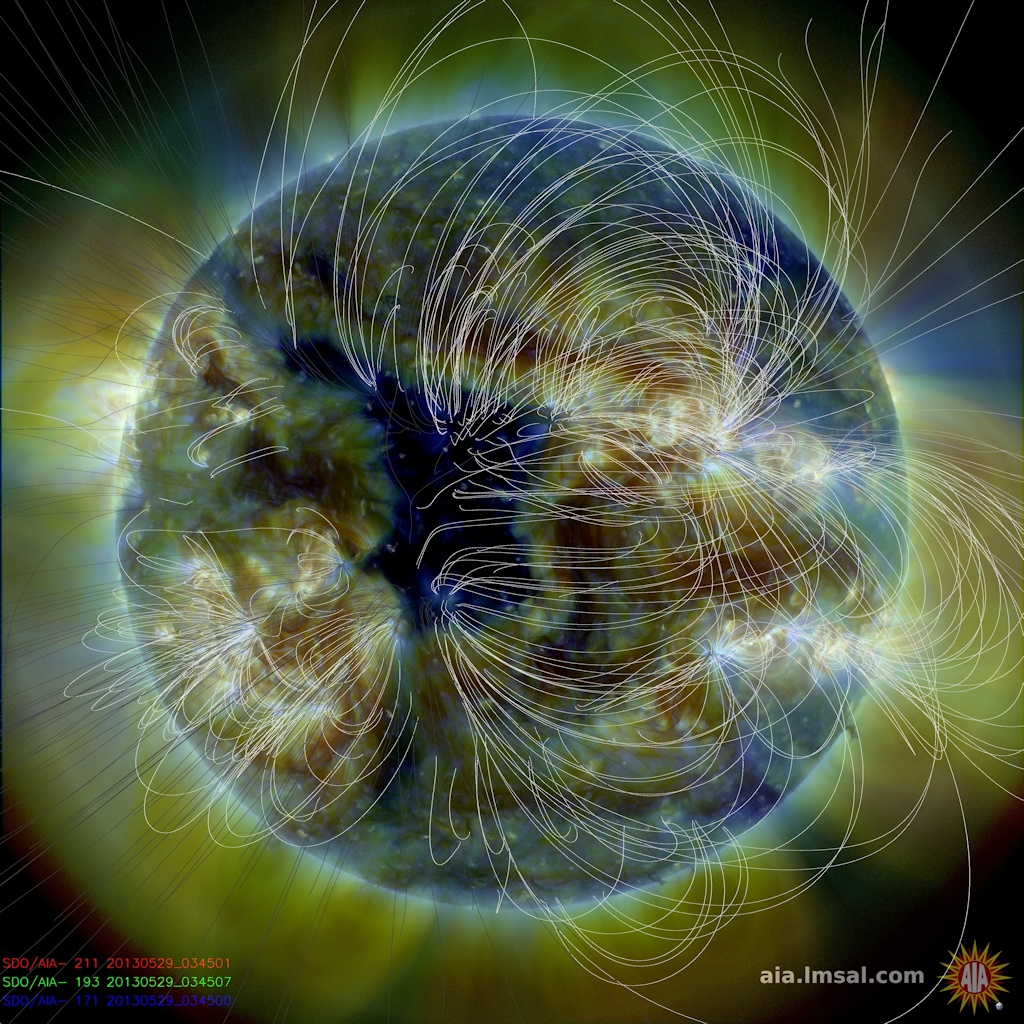
Solar Coronal Hole

CORONAL HOLE: A hole in the sun’s atmosphere–a “coronal hole”–has opened up and it is spewing solar wind into space. NASA’s Solar Dynamics Observatory photographed the UV-dark gap during the early hours of May 29th:

Coronal holes are places where the sun’s magnetic field spreads apart and allows solar wind to escape. A windy stream of plasma flowing from this particular hole should reach Earth on June 2-3. The impact could spark geomagnetic storms and auroras around the poles

fr/spaceweather.com

Santa Barbara, CA Area Earthquake

Update 20:19 UTC :
– Another M2.5 aftershock was almost unnoticed by people.
– We hate to say it, but social media are again rumoring that a stronger earthquake will occur later today. Such rumors are TOTALLY NONSENSE. Even when such a stronger earthquake would occur, NOBODY in the world can predict such events today (hopefully in the future). You should be prepared for an earthquake at all times. DROP, COVER and HOLD until it is over.
– The authorities and local press are still maintaining that there was NO damage or injuries.
Our ER team continued to search for signs of damage and came up with the following felt reports :
– Goleta: dishes on counter broke after hit by something falling off shelves.
– Goleta : Clock almost fell off wall but nothing broken. Small crack in wall.
– Undefined location in the area : “Running at the beach and saw some big chunks come off the cliffs. Good time to be especially careful near the tops and bottoms of the bluffs!”
– earthquake related or not : A major natural gas leak in Thousand Oaks prompted evacuations on a half-mile radius, Thousand Oaks is just south of Oxnard (MMI of III was felt there) they don’t know what caused this. The gas leak was reported 3 hours after the earthquake.

MMI radius map

MMI radius map

Update 17:25 UTC : Don’t be blind for the always appearing standard text “There were no immediate reports of damage or injuries” who are published soon after an earthquake from this type. Although the text is right at the time of writing, people often do not report fallen objects, fissures in walls, etc. Based on our experience, it would really surprise us that no minor damage was inflicted. We will continue following up local reports and will bring them to you if we find them.
The current status is still : The Santa Barbara County Sheriff’s Department, Office of Emergency Management and Fire Department said they had no initial reports of injuries or damage.

Update 17:06 UTC : The local press is still writing that USGS did decrease the Magnitude from 4.9 to 4.6 which was indeed the case BUT after a new update USGS has now reported a magnitude of 4.8. if you are a journalist reading this, please adapt your content. A M4.8 earthquake at a depth of 8 km is a rather strong event for California.
The M2.6 aftershock which occurred 12 minutes after the mainshock will not have been felt by many people.

Update 17:03 UTC : News Channel 3 Santa Barbara is receiving reports of minor damage such as glass breaking and small objects falling from walls, exactly what we wrote a few minutes after it happened.

Update 16:52 UTC : The seismograph at ABC7 KABC-TV LOS ANGELES, CA has been building the seismogram of this event.

Update 16:31 UTC : USGS has updated his values to M4.8 at a depth of 8 km.
Shaking values at the following locations :
Moderate MMI V shaking : Isla Vista  23,000 and  Goleta 30,000
Light shaking MMI IV : Santa Ynez 4,000, Buellton 5,000, Solvang 5,000 and Mission Canyon 2,000
The Human impact map has been changed as follows :

Screen Shot 2013-05-29 at 18.29.34

Update 16:09 UTC : Below the Focal Mechanism of this earthquake (reverse faulting mechanism). Today’s earthquake was right on the coastal fault. The stress comes from the Oceanic plate pushing towards the North American plate (South-West – North-East direction.  As you can see on the fault map below, the whole area is very complex.
On our map below, you can see that the strongest earthquake in the area was a M6.2 earthquake in 1925 followed by a M5.8 in 1978, both in the direct vicinity of Santa Barbara.

Screen Shot 2013-05-29 at 18.08.50

Fault map courtesy http://www.geol.ucsb.edu/

Fault map courtesy http://www.geol.ucsb.edu/

Update 15:09 UTC : No reports of damage so far (far to early to bu sure about that). Based on our California experience incoming MMI’s are higher than normal, so minor damage is still possible.

Update 15:06 UTC : Maximum shaking as expected by USGS MMI VI (this is also the maximum we are getting from our readers).

Screen Shot 2013-05-29 at 17.07.21

Based on the many I Have Felt It reports we are receiving, people have been really scared by the shaking. In average we get a moderate MMI V shaking. Goleta , closest to the epicenter has the strongest incoming MMI’s
We expect at least some minor damage in Goleta (minor damge like fallen objects, cracks in walls, fallen rooftiles, etc).

Screen Shot 2013-05-29 at 16.51.23

5km (3mi) W of Isla Vista, California
8km (5mi) WSW of Goleta, California
20km (12mi) W of Santa Barbara, California
36km (22mi) W of Carpinteria, California
484km (301mi) SSE of Sacramento, California

Most important Earthquake Data:

Magnitude : 4.6

Local Time (conversion only below land) : 2013-05-29 07:38:02

GMT/UTC Time : 2013-05-29 14:38:02

Depth (Hypocenter)  : 2 km

from:    http://earthquake-report.com/2013/05/29/moderate-earthquake-santa-barbara-channel-calif-on-may-29-2013/