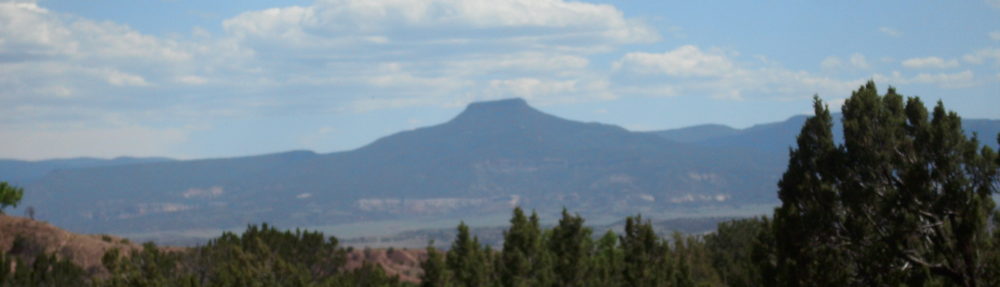
New Zealand Mt. Tongariro Erupts

New Zealand Volcano Erupts, At Risk for More

Eli MacKinnon, Life’s Little Mysteries Staff Writer
Date: 21 November 2012
A view of Mount Tongariro just after it erupted on Wednesday (Nov. 21).
CREDIT: Via Stuff.co.nz | Lomi Schaumkel/Tamatea Intermediate School

New Zealand’s Mount Tongariro volcano erupted for the second time this year on Wednesday (Nov. 21), sending a plume of ash 2.5 miles (4 kilometers) skyward and raising the odds that another eruption is imminent.

Tongariro, one of three active volcanoes that stand over Tongariro National Park in the heart of New Zealand’s North Island, lay dormant for more than a century before blowing open its Te Maari crater in August.

That eruption was augured by an increase in seismic activity, but Wednesday’s eruption came without any warning, said volcanologist Tony Hurst, who spoke to Radio New Zealand.

A view of Mount Tongariro just after it erupted on Wednesday (Nov. 21).
CREDIT: Via Stuff.co.nz | Lomi Schaumkel/Tamatea Intermediate School

New Zealand’s Mount Tongariro volcano erupted for the second time this year on Wednesday (Nov. 21), sending a plume of ash 2.5 miles (4 kilometers) skyward and raising the odds that another eruption is imminent.

Tongariro, one of three active volcanoes that stand over Tongariro National Park in the heart of New Zealand’s North Island, lay dormant for more than a century before blowing open its Te Maari crater in August.

That eruption was augured by an increase in seismic activity, but Wednesday’s eruption came without any warning, said volcanologist Tony Hurst, who spoke to Radio New Zealand.

There were hikers in the area at the time of the eruption, including a group of schoolchildren, but no injuries have been reported. Hurst said the eruption was relatively non-threatening because it didn’t eject many rocks, suggesting it may have originated from the same vent that had been mostly cleared out by the August eruption, which rained rocks on a hiker’s shelter a mile (1.5 km) away from the crater.

Middle school teacher Paul Lowes was hiking on Tongariro with his class when Wednesday’s 5-minute eruption began, at about 1:25 p.m. local time.

“We were sitting there celebrating with the kids, the achievement of them getting up there, and next thing, one of them pointed out, ‘Look what’s happening.’ I turned around and there [the volcano] was, just starting to blow,” Lowes told Stuff.co.nz. “We stopped in a bit of awe of it to start with, and didn’t realize what was actually happening. And as it was getting bigger, then it was sort of, ‘Right-o, it’s time to move everyone out of here.'”

Scientists had no reason to expect the eruption, but one no-warning eruption serves as a warning for the next. That’s because, historically, the Te Maari crater has had a tendency to break a silence and keep talking.

“In 1892 and 1896, it sort of had eruptive periods that went on for months with a number of different events,” Hurst told Radio New Zealand. “Having [now had] two events, it could well have more than two in this sequence. There’s an enhanced risk at the moment, certainly.”

But Tongariro is not the only potential loose cannon in the park right now. Last week, GNS Science, an official monitoring body in New Zealand and Hurst’s employer, issued a warning that Mount Ruapehu, a neighboring volcano, is showing signs that it may erupt in the coming weeks or months.

Tongariro National Park served as the backdrop of numerous scenes in the “Lord of the Rings” film trilogy, standing in for the fictional land of Mordor.

The park’s third active volcano, Mount Nguaruhoe, featured as the movies’ Mount Doom in long shots. That volcano last erupted in 1975.

from:http://www.livescience.com/24987-new-zealand-volcano-erupts-at-risk-for-more.html

Tokyo Earthquake

Earthquake below the greater Tokyo area, Japan

Last update: November 24, 2012 at 12:48 pm by By

Earthquake below the greater Tokyo area, Japan – 首都圏、日本下の地震

USGS Near The South Coast Of Honshu, Japan Nov 24 08:59 AM 4.8


Based on an increasing number of visitors joining us from Japan, we believe that an earthquake was felt.
Update : The hypocenter of this earthquake was at an intermediate depth but the epicenter was very close to Tokyo. As the earthquake was so close to Tokyo, the capital had almost no warning  as the P wave arrived almost at the same time than the S wave.
Update 09:31 UTC : JMA Japan reports a Magnitude of (only) M4.9 at a depth of 80 km. Harmless but well felt by the population. The max. intensity was 4 JM. ER considers 5+ as a potentially dangerous level.
Based on the number of people visiting our site from Japan and compared to other events during the last couple of weeks, people were very anxious to see where the epicenter was.
Update 09:39 UTC : This earthquake proves that earthquakes also happen almost below the city itself and that Tokyo citizens will not always be warned of an upcoming wave as the P and S waves are arriving at almost the same moment.

from:    http://earthquake-report.com/2012/11/23/major-earthquakes-list-november-24-2012/

Myanmar Earthquake — Update

Damaging earthquake Myanmar – International Red Cross reports 26 fatalities and 231 people injured

Last update: November 13, 2012 at 10:24 am by By

Update 03:06 UTC :  Still waiting for more news from inside Myanmar. After such a massive earthquake, we reckon that the power and the telecommunications will be down in a radius of at least 50 km around the epicenter.
– Awaiting more news we have been checking the landscape in the epicenter area. More bad news here, the epicenter is rather close to a transform fault line. Transform earthquakes are among the most damaging earthquake types.
Additionally, the epicenter is close to an important river bed, which means that soft sediment can make a serious portion of the soil. Soft soil is very dangerous for earthquakes. Rock layers are decreasing the wave.  Acceleration maps would give us a clue how the soil in that area is composed.
– The image below shows a detailed view of the epicenter area and the towns. The bigger star is the M6.8 mainshock, the 3 smaller stars the M5 aftershocks.


Update 02:52 UTC :  The earthquake happened right on top of a known fault line. In developed countries houses will have been build using earthquake resistant methods. We do not think that this has been the case here.
Closest cities are :

Update 02:52 UTC :  USGS has just increased (after recalculation by seismologists) the Magnitude to M6.8 (from M6.6) at a depth of 9.7 km. An increase from 6.6 to 6.8 is a strong increase and is opposite at what we hoped.

Update 02:46 UTC :  The earthquake has been felt in all the neighbouring countries, which means Thailand, China and India
– We urge our Myanmar readers to let us know the whereabouts from people near the epicenter area if they get such information. You can use the form below to do this.
– Most of the Myanmar people reading our article are coming from Rangoon and Mandalay.
– The highest MMI value people have reported to USGS is MMI VII, very strong shaking . The number of testimonies is however too small to be reliable

Update 02:40 UTC : So far we have NO news from within our 50 km radius. Mandalay at 117 km from the epicenter is too far away to be in the danger zone.
– Testimonies we received out of Mandalay at Earthquake-report.com are talking about a 1 to 2 minute shaking. This is very bad news as sustained shaking can be even more damaging. We truly hope that we are wrong, but the signs are not good at all.

Update 02:20 UTC : USGS has calculated what a M6.6 at 9.9 km would mean for the local people? Very strong and severe shaking can be damaging. In total 89000 people are living in this area.
– 1 good issue can be that the earthquake happened during the morning hours so that most people will not have been inside their houses.

Update 02:17 UTC : Our reporting will only continue on this page
–  USGS has modified his preliminary data from M7.0 to M6.6, but has also reduced the depth from 33.9 to 9.9 km. The overall danger remains as we initially have stated it.

Update 02:14 UTC : The greater epicenter area is currently rattled with very powerful aftershocks. these can go on for days and even weeks after such a massive earthquake.
– Seismologists all over the world are currently calculating the improved versions of the preliminary data. These can differ seriously from the initial ones.
– Residents from Mandalay, the second biggest commercial city in central Myanmar, told Reuters that they felt a very strong tremor. ”I’ve never felt such strong tremor. I also heard some loud noises and the light went out. No idea about the damage,” a resident said.

Update 01:58 UTC : Following USGS calculations, 23000 people may have experienced a severe MMI VII shaking. Such shaking can be very damaging, especially for houses which have been build without earthquake resistant methods.  The figure below is very alarming as the orange part is at great risk for damage.

Shaking map, courtesy USGS

Update 01:38 UTC : We do absolutely NOT like what we see. Also the nearby Chinese seismological instruments are reporting a Magnitude of M7.0 at a depth of 20 km ! Such an earthquake at this depth is very destructive !

Update 01:47 UTC : If the earthquake parameters are confirmed, we call more than 1 million people at risk for damage and eventual injuries. This number of people is living whitin a radius of 50 km from the epicenter?
We have to stress that all the current data is preliminary and maybe modified down- or upwards later on. Let’s hope the numbers will decrease.
We will soon start an in-depth article on this probably very damaging earthquake.

A very dangerous earthquake just occurred in Myanmar.  The preliminary Magnitude is M6.7 ! at a depth of 30 km.
If these parameters are confirmed, we have to call this earthquake extremely dangerous.
Based on the readers present in our site, this earthquake was also felt in Thailand.
Distances from the epicenter :

  1. 27km (17mi) E of Shwebo, Myanmar
  2. 62km (39mi) NNW of Mandalay, Myanmar
  3. 69km (43mi) SW of Mogok, Myanmar
  4. 72km (45mi) N of Sagaing, Myanmar
  5. 308km (191mi) N of Nay Pyi Taw, Myanmar

Update 01:29 UTC : USGS is making this earthquake even more dangerous as it is reporting a Magnitude of M7.0 at a depth of 33.7 km
These data can indicate a VERY DAMAGING earthquake !

Most important Earthquake Data:
Magnitude : M7.0 (CENC)
UTC Time : 2012-11-11 01:12:38 UTC
Local time at epicenter : 2012-11-11 07:42:38 UTC+06:30 at epicenter
Depth (Hypocenter) : 20 km (CENC)
Geo-location(s) :

  1. 56km (35mi) NNE of Shwebo, Myanmar
  2. 60km (37mi) WNW of Mogok, Myanmar
  3. 117km (73mi) N of Mandalay, Myanmar
  4. 123km (76mi) NNW of Maymyo, Myanmar
  5. 364km (226mi) N of Nay Pyi Taw, Myanmar

…..

Update Nov. 13, 10:20 UTC :
The Myanmar earthquake in Pictures by news agency AFP (Please click on the image below to see the series of pictures)

Please click on this picture to watch the AFP images in full size

Update Nov. 13, 09:04 UTC :

– International Red Cross has reported that the earthquake in Myanmar has made 26 victims, a lot more than officially admitted. We still do not understand why governments are downplaying disasters. China and Russia stopped doing this, but some countries are still trying to fool their own population.

Excerpt from the Red Cross report of November 12 :

The Myanmar Red Cross Society, with the support of the International Federation of Red Cross and Red Crescent Societies (IFRC), has determined that external assistance is not required at this stage, pending receipt of a full assessment report and analysis of the situation. It is, therefore, not seeking funding or other assistance from donors at this time.

An earthquake measuring 6.8 on the Richter scale struck central Myanmar on 11 November at 7.42 a.m. local time. Twenty-six people died and 231 were injured as a result. About 462 structures were damaged.
The Myanmar Red Cross Society (MRCS) has provided emergency relief supplies to 200 families in two locations, while emergency services such as first aid and referrals to health facilities are being provided to affected people in seven of the worst-hit townships. Volunteers are conducting situation assessments and working closely with local authorities.


Update Nov. 12, 19:43 UTC :

– Excerpt from an article as it appeared earlier today in the Burmese newspaper “The Irrawaddy” :
It was before 8 am when Nay Win Myint felt a sudden jolt in his Mandalay cottage. He put down his book to find that his home was shaking. “It was like an elephant ramming into my house,” said the famous Burmese writer who lives 169 km (105 miles) south from the epicenter of the magnitude 6.8 earthquake that struck Upper Burma on Sunday. Read more …

for ore information, go to:    http://earthquake-report.com/2012/11/11/extremely-dangerous-and-maybe-destructive-earthquake-in-central-myanmar/


Facts about British Columbia Huge Quake 10/27-28

Understanding the Haida Gwaii, British Columbia (Canada) October 27/28 2012 massive earthquake

Last update: November 8, 2012 at 5:59 pm by By

A massive M7.7 earthquake struck below Haida Gwaii, formerly known as Queen Charlotte Islands Canada

The October 28th, 2012 (October 27 at the location of the epicenter) M 7.7 earthquake south of Masset, Canada, occurred as a result of oblique-thrust faulting near the plate boundary between the Pacific and North America plates. At the location of this event, the Pacific plate moves approximately north-northwest with respect to the North America plate at a rate of approximately 50 mm/yr.

This earthquake is likely associated with relative motion across the Queen Charlotte fault system offshore of British Columbia, Canada. Studies of tectonics in this region suggest plate motions are taken up by strike slip faulting parallel to the plate boundary, accompanied by lesser amounts of thrust motion to accommodate the oblique nature of the plate motion vector between the two plates with respect to the orientation of the main plate boundary fault structure.
This oblique component of plate motion may involve either underthrusting of the western edge of the Pacific Plate beneath North America, or be taken up on crustal faults within the North America plate. The October 28th earthquake is consistent with either scenario.

This region of the Pacific:North America plate boundary has hosted 7 earthquakes of magnitude 6 or greater over the past 40 years – the largest of which was a M 6.6 earthquake in 2009, 80 km to the south east of the 2012 earthquake.
In 1949, a M 8.1 earthquake occurred closer to the Pacific:North America plate boundary, likely as a result of strike-slip faulting, approximately 100 km northwest of the October 28th earthquake, near the northern extent of Haida Gwaii region (formerly Queen Charlotte Islands).

Felt (V) in the Masset-Queen Charlotte City area and (IV) at Fort Saint James, Kelowna, Kitimat, Prince Rupert and Revelstoke. Felt from Seattle, Washington to Juneau, Alaska and Calgary, Alberta.

Most important Earthquake Data:
Magnitude : 7,7
UTC Time :  2012-10-28 03:04:08 UTC
Local time at epicenter : 2012-10-27 20:04:08 UTC-07:00 at epicenter
Depth (Hypocenter) : 17.5 km
Geo-location(s) :

  1. 139km (86mi) S of Masset, Canada
  2. 199km (124mi) SSW of Prince Rupert, Canada
  3. 288km (179mi) SW of Terrace, Canada
  4. 551km (342mi) NW of Campbell River, Canada
  5. 636km (395mi) SSE of Juneau, Alaska

from:    http://earthquake-report.com/2012/11/08/understanding-the-haida-gwaii-british-columbia-canada-october-2728-2012-massive-earthquake/

Winter Storm Athena Heading for East Coast

First Hurricane Sandy, now Winter Storm Athena for the Eastern U.S.

Published: 2:57 PM GMT on November 07, 2012

Winter Storm Warnings are up for Southwest New Jersey, Northern Delaware, and Southeast Pennsylvania, including Philadelphia, PA, where Winter Storm Athena is expected to drop 3 – 5″ of snow today through Thursday morning. Slushy accumulations of up to 1″ are likely in Baltimore, and non-accumulating snow will fall as far south as Washington, DC. Athena, the season’s first Nor’easter and first winter storm to get a name under The Weather Channel’s new naming system, is spreading rain and high winds into Southern New Jersey and Eastern Long Island, NY this morning. Winds at buoy 44025, about 40 miles offshore from the coast of Central New Jersey, reached 40 mph, gusting to 49 mph, with a significant wave height of 14′, at noon EST. Winds at Nantucket, MA have gusted as high as 54 mph this morning. Athena is building a storm surge that has already reached 2.2′ at Atlantic City and 1.8′ at New York City as of noon EST. A storm surge of 2 – 3.5′ is likely along the section of coast most heavily damaged by Sandy’s storm surge, and battering waves up to 20′ high will cause moderate beach erosion along much of the New Jersey and New York shoreline. The storm surge will cause minor to moderate flooding during this afternoon’s high tide cycle near 1 pm EST, and again at the next high tide, near 1 am EST Thursday morning. Fortunately, the high tides this week will be some of the lowest of the month, since we are midway between the new moon and full moon. Wind gusts from Athena will likely reach 50 mph along the coasts of New Jersey and Southern Long Island, NY, and could hit 60 mph on Cape Cod, Massachusetts. I expect that Athena’s winds, rains, and wet, heavy snows will cause up to 50,000 new power outages today. As of early Wednesday morning, 676,000 customers were still without power in the wake of Hurricane Sandy (down from a peak of 8.5 million customers.)


Figure 1. Winter Storm Athena as seen at 9:01 am EST November 7, 2012. Image credit: NOAA/GSFC.


Figure 2. Predicted storm surge at Sandy Hook, NJ, for Winter Storm Athena, from the experimental Extratropical Storm Surge model, run by NOAA’s Meteorological Development Laboratory. This model used winds from this morning’s 6Z (1 am EDT) run of the GFS model. The peak storm surge (yellowish-brown line) is predicted to be 3.4′, occurring Wednesday evening. High tide (green line) occurs near 1 pm Wednesday afternoon, resulting in a peak storm tide of approximately 7.2′ around 1 pm Wednesday (black line). For comparison, Sandy delivered a 8.6′ storm surge to Sandy Hook before their tide gauge failed, with the storm tide reaching 13.2′ above MLLW (Mean Lower Low Water.)

The decision to name Athena
The Weather Channel announced in October that they would begin naming winter storms this year, in an effort to aid in raising awareness and reduce the risks the public faces. One of the main criteria for naming a storm is its impact on populated areas; the meteorology of the storm may not get it named, if the storm doesn’t affect a populated area. If Hurricane Sandy had not devastated the region of coast being affected by today’s Winter Storm Athena, it may not have gotten a name. With so many people still under recovery efforts even well inland, the combination of heavy, wet snow and wind prompted the decision to name Athena. The models have been trending towards more cold air getting pulled into this system, so it is possible Athena could drop heavier snows than currently advertised. The National Weather Service will not be referring to today’s Nor’easter as “Athena”. They put out this internal directive: “The NWS does not use named winter storms in our products. Please refrain from using the term Athena in any of our products.”

Here are the peak wind gusts from Athena as of 11 am EST on Wednesday, November 7, 2012:

Jeff Masters

from:    http://www.wunderground.com/blog/JeffMasters/article.html

Champerico, Guatemala Earthquake

Massive earthquake close to Champerico, Guatemala

Last update: November 7, 2012 at 5:23 pm by By

Update 17:34 UTC : The Guatemalan Instituto Nacional de Sismología reports a Magnitude of 7.2 at a depth and mentions a MMI of V at many Guatemalan locations.  The earthquake was well felt at Guatemala, Jalapa, Jutiapa, Alta Verapaz, Quetzaltenango, Suchitepéquez, Zacapa, Escuintla and Quiché.

Update 17:26 UTC : Based on the current USGS data, 236000 people will have experienced a very strong shaking (MMI VII). Nearly 2 million people a strong shaking. We will have to wait a little longer to get a better view on the potential damage. The chance on damage cannot be excluded as the location of the epicenter has been relocated closer to the coast.

Update 17:23 UTC : The max. MMI has been increased by USGS from VI to VII (strong increased to very strong shaking). The main risk however is a tsunami risk at the closest shores to the epicenter.

USGS is currently reporting a Magnitude of 7.5 at  a depth of 33 km.
Luckily the epicenter is about 20 miles out of the coast which will weaken the shaking a lot.
So far a MMI VI has been reported (strong shaking).
There will certainly have been called a Tsunami alarm as the epicenter was close to the coast.
NOAA stipulates that there is NO tsunami warning for ALASKA/ BRITISH  COLUMBIA/ WASHINGTON/ OREGON AND CALIFORNIA…, which must be a relief for those areas.
NOAA Tsunami bulletin
We will soon start an in-depth article on this massive earthquake.
Update 17:09 UTC : The max. shaking values we have received so far are MMI VI, which is very hopeful (minor damage and injuries expected at these values).  The first reports we did receive did locate the epicenter closer to the coast, which is not confirmed by other agencies.

Shaking map courtesy USGS

Most important Earthquake Data:
Magnitude : 7.4
UTC Time :  2012-11-07 16:35:50 UTC
Local time at epicenter : 2012-11-07 10:35:50 UTC-06:00 at epicenter
Depth (Hypocenter) : 41.6 km
Geo-location(s) :
24km (15mi) S of Champerico, Guatemala
55km (34mi) SSW of Retalhuleu, Guatemala
60km (37mi) SSW of San Sebastian, Guatemala

from:    http://earthquake-report.com/2012/11/07/massive-earthquake-out-of-the-champerico-guatemala-coast/

First Sandy, and Now, A Nor-easter

A moderate-strength Nor’easter on Wednesday looking increasingly likely

Published: 7:38 PM GMT on November 03, 2012

Storm-weary U.S. residents pounded by Superstorm Sandy may have a new storm to contend with on Wednesday: an early-season Nor’easter is expected to impact the mid-Atlantic and New England with strong winds and heavy rain. Our two top models, the European (ECMWF) and GFS (run by the U.S. National Weather Service), are now in agreement on both the track and intensity of the storm. The storm will move off the coast of South Carolina/Georgia on Tuesday evening. Once over the warm waters off the coast, the low will intensify, spreading heavy rains of 2 – 3″ over coastal North Carolina on Tuesday night and Wednesday morning. The storm will accelerate to the north-northeast on Wednesday and pull in cold air from Canada, intensifying into a medium-strength Nor’easter with a central pressure of 984 mb by Wednesday evening. The European model, which did an exemplary job forecasting Hurricane Sandy, is slower, predicting the Nor’easter’s highest winds will begin affecting New Jersey on Wednesday night. The GFS model is about 12 hours faster, predicting the strongest winds will arrive on Wednesday morning. A 12-hour period of strong winds of 40 – 45 mph will likely affect the coast from Maryland to Massachusetts, accompanied by a swath of 2 – 3″ of rain. The heaviest rains will likely fall over Eastern Massachusetts and Rhode Island. The storm also has the potential to bring more than a foot of snow to mountain areas of New England. The storm is still four days away, and four-day forecasts of the path and intensity of Nor’easters usually have large errors. Nevertheless, residents and relief workers in the region hit by Sandy should anticipate the possibility of the arrival on Wednesday of a moderate-strength Nor’easter with heavy rain, accompanied by high winds capable of driving a 1 – 2 foot storm surge with battering waves. The surge and waves will potentially cause moderate to severe erosion on New Jersey coast, where Hurricane Sandy pulverized the protective beach dunes.


Figure 1. Predicted wind speed for Thursday morning, November 8, 2012, from the ECMWF model (left) and predicted wind speed for 2 pm EST on Wednesday, November 7, from the GFS model (right). Both models runs were done beginning at 12Z (8 am EDT) on November 3, 2012. Winds tropical storm-force (39+ mph) are predicted to extend from coastal Virginia to Massachusetts. The GFS model brings the Nor’easter to a point off the New Jersey coast about 12 hours faster than the ECMWF model.


Figure 2. Forecast track error for four of our top models used to predict Hurricane Sandy. The GFS model performed the best for 1 – 3 day forecasts, but the European (ECMWF) model far out-performed all models at longer-range 4 – 5 day forecasts. This may be due to the fact the model was able to successfully predict the timing of the arrival of a trough of low pressure over the Eastern U.S. that acted to steer Sandy to the north and then northwest. Image credit: Morris Bender, NOAA/GFDL.

Charities mobilize for Sandy
Sandy’s death toll of 109 in the U.S. makes it the 25th deadliest hurricane in U.S. history, and the 2nd deadliest since 1972, when Hurricane Agnes killed 122 in the Northeast U.S. The main owners of The Weather Channel have agreed to match donations of up to $1 million to the American Red Cross, with all donations to benefit people in the hard-hit areas of the U.S. To have your donation matched, please visit www.redcross.org/sandy, or text SANDY to 90999. I also recommend my favorite disaster relief charity, Portlight.org. They are focusing their response efforts exclusively on the post-Sandy needs of people with disabilities.Check out the Portlight blog to see what they’re up to. Sandy’s greatest devastation occurred in Haiti, where rains of up to 20 inches in 24 hours unleashed rampaging flood waters that killed at least 54, left 200,000 homeless, wiped out thousand of acres of crops, and killed massive numbers of livestock. For impoverished families in Haiti still struggling to recover from the earthquake in 2010 and Hurricane Isaac in August, Sandy was devastating. These crops are the very essence of rural Haitian’s livelihoods, and there are fears widespread starvation will result. A disaster relief charity in Haiti that I’ve contributed to for many years, The Lambi Fund of Haiti, is seeking donations to help farmers purchase local seeds so that they can replant their crops in the wake of this latest terrible Haitian catastrophe.

I’ll have an update Monday, unless there’s some major change in the model forecasts for the coming Nor’easter.

from:    http://www.wunderground.com/blog/JeffMasters/article.html

Pesticide Corps Mobilize to Back Monsanto

6 Largest Pesticide Corporations Funding Effort to Try to Defeat GMO Labeling Proposition 37

25th October 2012

By J. D. Heyes – naturalnews.com

In what should probably surprise no one who has been following the Proposition 37 issue, a California proposal that would require the ingredients in all GM foods to be labeled, the so-called “Big 6″ pesticide corporations have become the movement’s main opponents.

Filings released this week by the California Secretary of State’s office denote that the world’s six largest pesticide corporations have become the six biggest contributors to opponents of Prop 37. In all, they have funneled in excess of $20 million to oppose the measure which, again, would require what should already be happening: the labeling of genetically engineered or modified food. The money has especially funded an aggressive, extensive ad campaign in recent weeks.

“Pesticide corporations like Monsanto continue to enjoy unfettered and unlabeled access to the market, while consumers are left largely in the dark,” said Marcia Ishii-Eiteman, PhD, senior scientist at Pesticide Action Network. “Despite the best efforts of the big six to confuse and distort the issue, Californians have a right to know what’s in their food and how it’s grown.”

The Big 6 – Monsanto, BASF, Bayer, Dow, DuPont and Syngenta – far and away dominate the global seed and pesticide markets; they are actively opposing Prop 37. In filings released recently, each of the corporations “made contributions of at least $2 million, with Monsanto’s contribution alone totaling more than $7 million,” said PAN, in a press release.

What do the Big 6 have to hide?

The opposition really wants Prop. 37 defeated. Including Big 6 donations, so far those committed to defeating it have ponied up in excess of $37 million; they’ve spent $19 million with Sacramento public relations firms and on aggressive television advertising and paid mailings to voters.

But why? Why are companies so opposed to openness and honesty when it comes to allowing consumers the right to know what’s in the GM foods they are buying?

The answer may lie in a comprehensive study released a week ago. According to Dr. Charles Benbrook, who conducted the study using federal government data, the Big 6 likely don’t want you to know that genetically engineered crops drive up the use of dangerous pesticides while they open more markets for them as well (as usual, “follow the money”).

Benbrook found that GM crops have “increased pesticide use by over 400 million pounds in the United States over the past fifteen years,” said the PAN statement.

“Increased pesticide use has led to greater and greater weed resistance. In turn, this has led to more applications of pesticides – as well as use of more hazardous pesticides – in agricultural fields, putting rural communities and farm workers at the greatest risk of harm due to pesticide exposure,” the activist organization said.

More pesticides, more chemicals, more danger

In addition to the use of more pesticides, the control over seeds has also benefited these giant biotech companies – at the expense, of course, of consumers.

“The Big 6 chemical and seed companies are working diligently to monopolize the food system at the expense of consumers, farmers and smaller seed companies,” said Philip H. Howard, an associate professor at Michigan State University and an expert on industry consolidation.

In all, Monsanto alone controls 23 percent of the world’s seed market, while Bayer controls 20 percent of the global pesticide market.

So what’s the big deal, really? Why should GM foods be labeled anyhow?

Probably the biggest reason why is because GMOs – genetically modified organisms – in general were not created by food or agriculture companies. They were created by Monsanto – the same biotech and chemical company that brought us DDT, PCBs and Agent Orange. Monsanto also marketed aspartame and created bovine growth hormone (rBGH) to infect milking cows that put pus into commercial milk.

That’s what the big deal is.

from:     http://wakeup-world.com/2012/10/25/6-largest-pesticide-corporations-funding-effort-to-try-to-defeat-gmo-labeling-proposition-37/

The Toll Of Hurricane Sandy

Sandy by the numbers: trying to comprehend a stunning disaster

Published: 7:19 PM GMT on November 01, 2012

The immensity of the impact of Superstorm Sandy on the Eastern U.S. is difficult to comprehend, and the scenes of devastation coming from the impact zone are stunning and heart-wrenching. To help understand the extraordinary scale of this historic storm, I’ve put together a list of notable statistics from Sandy:

Death toll: 160 (88 in the U.S., 54 in Haiti, 11 in Cuba)

Damage estimates: $10 – $55 billion

Power outages: 8.5 million U.S. customers, 2nd most for a natural disaster behind the 1993 blizzard (10 million)

Maximum U.S. sustained winds: 69 mph at Westerly, RI

Peak U.S. wind gusts: 90 mph at Islip, NY and Tompkinsville, NJ

Maximum U.S. storm surge: 9.45′, Bergen Point, NJ 9:24 pm EDT October 29, 2012

Maximum U.S. Storm Tide: 14.60′, Bergen Point, NJ, 9:24 pm EDT October 29, 2012

Maximum wave height: 33.1′ at the buoy east of Cape Hatteras, NC (2nd highest: 32.5′ at the Entrance to New York Harbor)

Maximum U.S. rainfall: 12.55″, Easton, MD

Maximum snowfall: 36″, Richwood, WV

Minimum pressure: 945.5 mb, Atlantic City, NJ at 7:24 pm EST, October 29, 2012. This is the lowest pressure measured in the U.S., at any location north of Cape Hatteras, NC (previous record: 946 mb in the 1938 hurricane on Long Island, NY)

Destructive potential of storm surge: 5.8 on a scale of 0 to 6, highest of any hurricane observed since 1969. Previous record: 5.6 on a scale of 0 to 6, set during Hurricane Isabel of 2003.

Diameter of tropical storm-force winds at landfall: 945 miles

Diameter of ocean with 12′ seas at landfall: 1500 miles


Figure 1. The Visible Infrared Imaging Radiometer Suite (VIIRS) on the Suomi NPP satellite acquired this image of Superstorm Sandy around 3:35 a.m. Eastern Daylight Time (7:35 Universal Time) on October 30. This image is from the “day-night band” on VIIRS, which detects light wavelengths from green to near-infrared. The full Moon lit up the tops of the clouds. Image credit: NASA.


Figure 2. Preliminary death and damage statistics for Sandy as compiled by Wikipedia on November 1, 2012.


Figure 3. Precipitation from Superstorm Sandy for the 7-day period ending at 8 am EDT Thursday, November 1, 2012. Image credit: NOAA/NWS/AHPS.


Figure 4. Top five weather-related power outages in the U.S.


Figure 5. Strong winds from Sandy blow snow in West Virginia on October 30, 2012. Image credit: Facebook/Cheryl Clay

Sandy’s snows
Several cities set records for snowiest October day on record during Sandy: Elkin, WV (7″, previous record, 4.6″ in 1917) and Bluefield (4.7″, previous record 3.2″ in 1993.) Heavy snows caused roof collapses in West Virginia, and snows of two feet or more fell in four states–West Virginia, Tennessee, Maryland, and Virginia. However, Sandy fell short of setting the all-time record for snowfall from a hurricane. The Vermont Journal estimated that the Snow Hurricane of 1804 dumped up to 4 feet of snow in Vermont.

36″ Richwood, WV
34″ Mount Leconte, TN
34″ Sevier, TN
33″ Clayton, WV
32″ Snowshoe, WV
29″ Quinwood, WV
28″ Frostburg, WV
28″ Davis, WV
28″ Huttonsville, WV
28″ Flat Top, WV
26″ Redhouse, MD
26″ Garret, MD
26″ Craigsville, WV
24″ Oakland, MD
24″ Alpine Lake, WV
24″ Nettie, WV
24″ Norton, VA
24″ Quinwood, WV
24″ Alexander, WV

Links
Impressive loop of 1-minute visible satellite imagery spanning 6 days of Sandy’s life.

A one-day time lapse video from a New York City webcam showing Sandy’s impact on the city. It’s eerie to see the city suddenly plunged into darkness.

First round of damage assessment aerial imagery collected by NOAA’s National Geodetic Survey on Oct. 31 along the New Jersey coast.


Figure 6. Flooding in Haiti from Hurricane Sandy. Image credit: The Lambi Fund of Haiti.

Charities mobilize for Sandy
The outpouring of charitable donations in the wake of the devastation wrought by Hurricane Sandy has been one of the bright spots in the gloomy aftermath of the storm. The main owners of The Weather Channel have agreed to match donations of up to $1 million to the American Red Cross, if you text SANDY to 90999 ($10). I also recommend my favorite disaster relief charity, Portlight.org. They are focusing their response efforts exclusively on the post-Sandy neeeds of people with disabilities.Check out the Portlight blog to see what they’re up to; donations are always needed.

Sandy’s greatest devastation occurred in Haiti, where rains of up to 20 inches in 24 hours unleashed rampaging flood waters that killed at least 54, left 200,000 homeless, wiped out thousand of acres of crops, and killed massive numbers of livestock. For impoverished families in Haiti still struggling to recover from the earthquake in 2010 and Hurricane Isaac in August, Sandy was devastating.  These crops are the very essence of rural Haitian’s livelihoods, and there are fears widespread starvation will result. A disaster relief charity in Haiti that I’ve contributed to for many years, The Lambi Fund of Haiti, is seeking donations to help farmers purchase local seeds so that they can replant their crops in the wake of this latest terrible Haitian catastrophe.

from:    http://www.wunderground.com/blog/JeffMasters/article.html

Dr. Jeff Masters on Sandy’s Trek IntoNew Jersey

Why did Hurricane Sandy take such an unusual track into New Jersey?

Published: 4:33 PM GMT on October 31, 2012

We’re used to seeing hurricane-battered beaches and flooded cities in Florida, North Carolina, and the Gulf Coast. But to see these images from the Jersey Shore and New York City in the wake of Hurricane Sandy is a shocking experience. New Jersey only rarely gets hit by hurricanes because it lies in a portion of the coast that doesn’t stick out much, and is too far north. How did this happen? How was a hurricane able to move from southeast to northwest at landfall, so far north, and so late in hurricane season? We expect hurricanes to move from east to west in the tropics, where the prevailing trade winds blow that direction. But the prevailing wind direction reverses at mid-latitudes, flowing predominately west-to-east, due to the spin of the Earth. Hurricanes that penetrate to about Florida’s latitude usually get caught up in these westerly winds, and are whisked northeastwards, out to sea. However, the jet stream, that powerful band of upper-atmosphere west-to-east flowing air, has many dips and bulges. These troughs of low pressure and ridges of high pressure allow winds at mid-latitudes to flow more to the north or to the south. Every so often, a trough in the jet stream bends back on itself when encountering a ridge of high pressure stuck in place ahead of it. These “negatively tilted” troughs have winds that flow from southeast to northwest. It is this sort of negatively tilted trough that sucked in Sandy and allowed the hurricane to take such an unusual path into New Jersey.


Figure 1. Inlet section of Atlantic City, N.J., after Hurricane Sandy. Image credit: 6 ABC Action News.

The 1903 Vagabond Hurricane
The only other hurricane to hit New Jersey since 1851 besides Sandy was the 1903 Category 1 Vagabond Hurricane. According to Wikipedia, the Vagabond Hurricane caused heavy damage along the New Jersey coast ($180 million in 2006 dollars.) The hurricane killed 57 people, and endangered the life of President Theodore Roosevelt, who was sailing on a yacht near Long Island, NY, when the hurricane hit. However, the Vagabond Hurricane hit in September, when the jet stream is typically weaker and farther to the north. It is quite extraordinary that Sandy was able to hit New Jersey in late October, when the jet stream is typically stronger and farther south, making recurvature to the northeast much more likely than in September.


Figure 2. The path of the 1903 Vagabond Hurricane, the only other hurricane to hit New Jersey since 1851.

The blocking ridge that steered Sandy into New Jersey
A strong ridge of high pressure parked itself over Greenland beginning on October 20, creating a “blocking ridge” that prevented the normal west-to-east flow of winds over Eastern North America. Think of the blocking ridge like a big truck parked over Greenland. Storms approaching from the west (like the fall low pressure system that moved across the U.S. from California to Pennsylvania last week) or from the south (Hurricane Sandy) were blocked from heading to the northeast. Caught in the equivalent of an atmospheric traffic jam, the two storms collided over the Northeast U.S., combined into one, and are now waiting for the truck parked over Greenland to move. The strength of the blocking ridge, as measured by the strength of the North Atlantic Oscillation (NAO), was quite high–about two standard deviations from average, something that occurs approximately 5% of the time. When the NAO is in a strong negative phase, we tend to have blocking ridges over Greenland.


Figure 3. Jet stream winds at a pressure of 300 mb on October 29, 2012, as Hurricane Sandy approached the coast of New Jersey. Note that the wind direction over New Jersey (black arrows) was from the southeast, due to a negatively tilted trough of low pressure over the Eastern U.S. caused by a strong blocking ridge of high pressure over Greenland. Image credit: NOAA/ESRL.

Arctic sea ice loss can cause blocking ridges
Blocking ridges occur naturally, but are uncommon over Greenland this time of year. According to NOAA’s Climate Prediction Center, blocking near the longitude of Greenland (50°W) only occurs about 2% of the time in the fall. These odds rise to about 6% in winter and spring. As I discussed in an April post, Arctic sea ice loss tied to unusual jet stream patterns, three studies published in the past year have found that the jet stream has been getting stuck in unusually strong blocking patterns in recent years. These studies found that the recent record decline in Arctic sea ice could be responsible, since this heats up the pole, altering the Equator-to-pole temperature difference, forcing the jet stream to slow down, meander, and get stuck in large loops. The 2012 Arctic sea ice melt season was extreme, with sea ice extent hitting a record lows. Could sea ice loss have contributed to the blocking ridge that steered Sandy into New Jersey? It is possible, but we will need to much more research on the subject before we make such a link, as the studies of sea ice loss on jet stream patterns are so new. The author of one of the new studies, Dr. Jennifer Francis of Rutgers, had this say in a recent post by Andy Revkin in his Dot Earth blog: “While it’s impossible to say how this scenario might have unfolded if sea-ice had been as extensive as it was in the 1980s, the situation at hand is completely consistent with what I’d expect to see happen more often as a result of unabated warming and especially the amplification of that warming in the Arctic.”

from:    http://www.wunderground.com/blog/JeffMasters/article.html