Stone Age Artifacts in Arabia

Arabian Artifacts May Rewrite ‘Out of Africa’ Theory

Charles Choi, LiveScience Contributor
Date: 30 November 2011 Time: 05:40 PM ET
stone artifacts found in Oman were likely made by striking flakes off flint
The stone artifacts found in Oman were likely made by striking flakes off flint, leading to distinctive triangular shapes. This is the first time this particular stone tool technology has been found outside of Africa.
CREDIT: Yamandu Hilbert

Newfound stone artifacts suggest humankind left Africa traveling through the Arabian Peninsula instead of hugging its coasts, as long thought, researchers say.

Modern humans first arose about 200,000 years ago in Africa. When and how our lineage then dispersed has long proven controversial, but geneticists have suggested this exodus started between 40,000 and 70,000 years ago. The currently accepted theory is that the exodus from Africa traced Arabia’s shores, rather than passing through its now-arid interior.

However, stone artifacts at least 100,000 years old from the Arabian Desert, revealed in January 2011, hinted that modern humans might have begun our march across the globe earlier than once suspected.

Now, more-than-100 newly discovered sites in the Sultanate of Oman apparently confirm that modern humans left Africa through Arabia long before genetic evidence suggests. Oddly, these sites are located far inland, away from the coasts.

“After a decade of searching in southern Arabia for some clue that might help us understand early human expansion, at long last we’ve found the smoking gun of their exit from Africa,” said lead researcher Jeffrey Rose, a paleolithic archaeologist at the University of Birmingham in England. “What makes this so exciting is that the answer is a scenario almost never considered.”

Arabian artifacts

The international team of archaeologists and geologists made their discovery in the Dhofar Mountains of southern Oman, nestled in the southeastern corner of the Arabian Peninsula.

“The coastal expansion hypothesis looks reasonable on paper, but there is simply no archaeological evidence to back it up,” said researcher Anthony Marks of Southern Methodist University, referring to the fact that an exodus by the coast, where one has access to resources such as seafood, might make more sense than tramping across the desert..

On the last day of the research team’s 2010 field season, the scientists went to the final place on their list, a site on a hot, windy, dry plateau near a river channel that was strewn with stone artifacts. Such artifacts are common in Arabia, but until now the ones seen were usually relatively young in age. Upon closer examination, Rose recalled asking, “Oh my God, these are Nubians — what the heck are these doing here?”

The 100-to-200 artifacts they found there were of a style dubbed Nubian Middle Stone Age, well-known throughout the Nile Valley, where they date back about 74,000-to-128,000 years. Scientists think ancient craftsmen would have shaped the artifacts by striking flakes off flint, leading to distinctive triangular pieces. This is the first time such artifacts have been found outside of Africa.

Subsequent field work turned up dozens of sites with similar artifacts. Using a technique known as optically stimulated luminescence dating, which measures the minute amount of light long-buried objects can emit, to see how long they have been interred, the researchers estimate the artifacts are about 106,000 years old, exactly what one might expect from Nubian Middle Stone Age artifacts and far earlier than conventional dates forthe exodus from Africa.

“It’s all just incredibly exciting,” Rose said.

Arabian spring?

Finding so much evidence of life in what is now a relatively barren desert supports the importance of field work, according to the researchers.

“Here we have an example of the disconnect between theoretical models versus real evidence on the ground,” Marks said.

However, when these artifacts were made, instead of being desolate, Arabia was very wet, with copious rain falling across the peninsula, transforming its barren deserts to fertile, sprawling grasslands with lots of animals to hunt, the researchers explained.

“For a while, South Arabia became a verdant paradise rich in resources — large game, plentiful fresh water, and high-quality flint with which to make stone tools,” Rose said.

Instead of hugging the coast, early modern humans might therefore have spread from Africa into Arabia along river networks that would’ve acted like today’s highways, researchers suggested. There would have been plenty of large game present, such as gazelles, antelopes and ibexes, which would have been appealing to early modern humans used to hunting on the savannas of Africa.

“The genetic signature that we’ve seen so far of an exodus 70,000 years ago might not be out of Africa, but out of Arabia,” Rose told LiveScience.

So far the researchers have not discovered the remains of humans or any other animals at the site. Could these tools have been made by now-extinct human lineages such as Neanderthals that left Africa before modern humans did? Not likely, Rose said, as all the Nubian Middle Stone Age tools seen in Africa are associated with our ancestors. [Photos: Our Closest Human Ancestor]

It remains a mystery as to how early modern humans from Africa crossed the Red Sea, since they did not appear to enter the Arabian Peninsula from the north, through the Sinai Peninsula, Rose explained. “Back then, there was no land bridge in the south of Arabia, but the sea level might not have been that low,” he said. Archaeologists will have to continue combing the deserts of southern Arabia for more of what the researchers called a “trail of stone breadcrumbs.”

The scientists detailed their findings online Nov. 30 in the journal PLoS ONE.

from:    http://www.livescience.com/17248-arabian-artifacts-humans-africa.html

Large Scale “Spooky Action at a Distance”

Two Diamonds Linked by Strange Quantum Entanglement

Clara Moskowitz, LiveScience Senior Writer
Date: 01 December 2011 Time: 02:00 PM ET
Quantum entanglement is demonstrated in two macroscopic diamonds
The vibrational states of two spatially separated, millimeter-sized diamonds are entangled at room temperature by beaming laser light at them (green). The researchers verified this entanglement by studying the subsequent laser pulses beamed through the system.
CREDIT: Science/AAAS

Scientists have linked two diamonds in a mysterious process called entanglement that is normally only seen on the quantum scale.

Entanglement is so weird that Einstein dubbed it “spooky action at a distance.” It’s a strange effect where one object gets connected to another so that even if they are separated by large distances, an action performed on one will affect the other. Entanglement usually occurs with subatomic particles, and was predicted by the theory of quantum mechanics, which governs the realm of the very small.

But now physicists have succeeded in entangling two macroscopic diamonds, demonstrating that quantum mechanical effects are not limited to the microscopic scale.

“I think it’s an important step into a new regime of thinking about quantum phenomena,” physicist Ian Walmsley of England’s University of Oxford said.”That is, in this regime of the bigger world, room temperatures, ambient conditions. Although the phenomenon was expected to exist, actually being able to observe it in such a system we think is quite exciting.”

Another study recently used quantum entanglement to teleport bits of light from one place to another. And other researchers have succeeded in entangling macroscopic objects before, but they have generally been under special circumstances, prepared in special ways, and cooled to cryogenic temperatures. In the new achievement, the diamonds were large and not prepared in any special way, the researchers said.

“It’s big enough you can see it,” Walmsley told LiveScience of the diamonds.”They’re sitting on the table, out in plain view. The laboratory isn’t particularly cold or particularly hot, it’s just your everyday room.”

Walmsley, along with a team of physicists led by Oxford graduate student Ka Chung Lee, accomplished this feat by entangling the vibration of two diamond crystals. To do so, the researchers set up an apparatus to send a laser pulse at both diamonds simultaneously. Sometimes, the laser light changed color, to a lower frequency, after hitting the diamonds. That told the scientists it had lost a bit of energy.

Because energy must be conserved in closed systems (where there’s no input of outside energy), the researchers knew that the “lost” energy had been used in some way. In fact, the energy had been converted into vibrational motion for one of the diamonds (albeit motion that is too small to observe visually). However, the scientists had no way of knowing which diamond was vibrating.

Then, the researchers sent a second pulse of laser light through the now-vibrating system. This time, if the light emerged with a color of higher frequency, it meant it had gained the energy back by absorbing it from the diamond, stopping its vibration.

The scientists had set up two separate detectors to measure the laser light — one for each diamond.

If the two diamonds weren’t entangled, the researchers would expect each detector to register a changed laser beam about 50 percent of the time. It’s similar to tossing a coin, where random chance would lead to heads about half the time and tails the other half the time on average.

Instead, because the two diamonds were linked, they found that one detector measured the change every time, and the other detector never fired. The two diamonds, it seemed, were so connected they reacted as a single entity, rather than two individual objects.

The scientists report their results in the Dec. 2 issue of the journal Science.

“Recent advances in quantum control techniques have allowed entanglement to be observed for physical systems with increasing complexity and separation distance,” University of Michigan physicist Luming Duan, who was not involved in the study, wrote in an accompanying essay in the same issue of Science.”Lee et al. take an important step in this direction by demonstrating entanglement between oscillation patterns of atoms—phonon modes—of two diamond samples of millimeter size at room temperature, separated by a macroscopic distance of about 15 cm.”

In addition to furthering scientists’ understanding of entanglement, the research could help develop faster computers called photonic processors, relying on quantum effects, said Oxford physicist Michael Sprague, another team member on the project.

“The long-term goal is that if you can harness the power of quantum phenomena, you can potentially do things more efficiently than is currently possible,” Sprague said.

from:    http://www.livescience.com/17264-quantum-entanglement-macroscopic-diamonds.html

The Language of Ravens

Ravens Use ‘Hand’ Gestures to Communicate

Charles Choi, LiveScience Contributor
Date: 29 November 2011 Time: 11:11 AM ET
male raven gestures with its beak to two other ravens
The researchers found that ravens often use their beaks like hands to make gestures, such as this male raven is doing as the bird shows two of its kin an object in its beak.
CREDIT: Thomas Bugnyar

Ravens use their beaks and wings much like humans rely on our hands to make gestures, such as for pointing to an object, scientists now find.

This is the first time researchers have seen gestures used in this way in the wild by animals other than primates.

From the age of 9 to 12 months, human infants often use gestures to direct the attention of adults to objects, or to hold up items so that others can take them. These gestures, produced before children speak their first words, are seen as milestones in thedevelopment of human speech.

Dogs and other animals are known to point out items using gestures, but humans trained these animals, and scientists had suggested the natural development of these gestures was normally confined only to primates, said researcher Simone Pika, a biologist at the Max Planck Institute for Ornithology in Seewiesen, Germany. Even then, comparable gestures are rarely seen in the wild in our closest living relatives, the great apes — for instance, chimpanzees in the Kibale National Park in Uganda employ so-called directed scratches to indicate distinct spots on their bodies they want groomed.

Still, ravens and their relatives such as crows and magpies have been found to be remarkably intelligent over the years, surpassing most other birds in terms of smarts and even rivaling great apes on some tests.

“[What] I noticed when I encountered ravens for the first time is that they are, contrary to my main focus of research, chimpanzees, a very object-oriented species,” Pika said. “It reminded me of my childhood, when my twin brother and I were still little and one of us suddenly regained a favorite toy, which existence both of us had forgotten for a little while. This toy suddenly became the center of interest, fun and competition. Similar things happen, when ravens play with each other and regain objects.”

Beak gestures

To see if ravens communicated using gestures, scientists investigated wild ravens in Cumberland Wildpark in Grünau, Austria. Each bird was individually tagged to help identify them.

A male raven approaches two other ravens showing an object in its beak.
CREDIT: Thomas Bugnyar

The researchers saw the ravens use their beaks much like hands to show and offer items such as moss, stones and twigs. These gestures were mostly aimed at members of the opposite sex and often led those gestured at to look at the objects. The ravens then interacted with each other — for example, by touching or clasping their bills together, or by manipulating the item together. As such, these gestures might be used to gauge the interest of a potential partner or strengthen an already existing bond.

“Most exciting is how a species, which does not represent the prototype of a ‘gesturer’ because it has wings instead of hands, a strong beak and can fly, makes use of very sophisticated nonvocal signals,” Pika told LiveScience.

Origin of gestures

Ravens are known to possess a relatively high degree of cooperation between partners. These findings suggest that gestures evolved in a species that demonstrates a high degree of collaborative abilities, a discovery that might shed light on the origin of gestureswithin humans.

“Gesture studies have too long focused on communicative skills of primates only,” Pika said. “The mystery of the origins of human language, however, can only be solved if we look at the bigger picture and also consider the complexity of the communication systems of other animal groups.”

As to whether or not these findings suggest that ravens are smarter than dogs, “I am not an advocate of proposing that a given species is smarter than another one,” Pika said. “In my view, all species have adapted to distinct social and ecological settings and niches, and thus, a given species might behave in a distinct situation ‘smarter’ than another one in the same situation and vice versa. In my opinion, it is much more interesting to investigate why one species can solve a given task better than another one and how and why this behavior evolved.”

Pika and her colleagues would like to further explore what other gestures ravens use and what their meaning and function might be. Pika and Thomas Bugnyar detailed their findings online Nov. 29 in the journal Nature Communications

from:    http://www.livescience.com/17213-ravens-gestures-animal-communication.html

Disappearing Act

How to disappear completely

24 November 11

It seems you can’t move in today’s world without leaving a digital footprint. The good news is that escaping the panopticon doesn’t have to mean living in a cave in Tora Bora. Frank Ahearn, a former skip-tracer and the author of How To Disappear, reveals how to pull off the ultimate vanishing act.

Incorporate Yourself
“The beauty of corporations, whether in the US, Canada, Caribbean, UK, Guernsey or Jersey, is that they offer privacy,” says Ahearn. A corporation lets you conduct business affairs anonymously. Utilities, property and other essentials can be leased in the company’s name.

Learn to live off the grid
When you upload info to social networks, you grant them rights to share that data. “If you want to remain anonymous you can’t rely on third-party entities,” he says. Share images on your own password-protected website, and use Skype or email to stay in touch with friends.

Create an army of doppelgängers
To throw stalkers off the scent, Ahearn buys 30 different domains containing variations of his client’s name and creates an individual social network for each one. He then splices real information about each client with misinformation about their location and activities.

Engineer your own identity
Open a bank account and deposit a few hundred pounds. Send the card to a friend in a different city and have them spend in small increments. If your bank statements fall into the wrong hands, says Ahearn, “They’ll find those supermarkets and search in the wrong place”.

Switch your contact details
Before you disconnect your services, switch the contact number they have on file for a police department’s on the other side of the UK. If a stalker manages to get hold of it, they’ll flag themselves up to the police. Make sure friends and work colleagues know not to give out your details.<

Pack your bags
Choose where you can lead a normal life. “If you’re a small-town English girl, you might find it difficult to disappear in London. Everyone wants the palm trees and beachfront life-style, but they can’t always have it.” Forget the beach hut in Goa: think two-bedroom flat in Oldham.

for more, go to:   http://www.wired.co.uk/magazine/archive/2011/12/how-to/disappear-competely

Mercury Retrograde 11/24-12/14

At 07:20 UT (Universal Time) Thursday, November 24th, 2011, Mercury the wise communicator—and universal trickster—turns retrograde at 20°06′ Sagittarius in the sign of the Archer, sending communications, travel, appointments, mail and the www into a general snarlup! The retro period begins some days before the actual turning point (as Mercury slows) and lasts for three weeks or so, until December 14, 2011, when the Winged Messenger reaches his direct station. At this time he halts and begins his return to direct motion through the zodiac.

Everything finally straightens out on January 1st, as he passes the point where he first turned retrograde. Mercury normally turns retrograde three times a year, but last year he turned tail four times, which is unusual, and his shadow phase was still active in early January 2011. The effects of each period differ, according to the sign in which it happens (see box for Retrograde Periods in 2011).

A planet is described as retrograde when it appears to be moving backwards through the zodiac. According to modern science, this traditional concept arises in the illusory planetary motion created by the orbital rotation of the earth with relation to other planets in our solar system. It’s a bit like travelling on the road watching another car beside you: when the other car slows down, or you speed up, it looks as though the other car is moving backwards. Planets are never actuallyretrograde or stationary, they just seem that way due to this cosmic shadow-play. Click here for some neat graphics and more on the science of retrograde planetary motion.

Retrograde periods, although often problematic for us earthlings, are not particularly uncommon. Each planet retrogrades, except the Sun and Moon. Although a powerful astrological influence, Mercury is quite a small planet that travels at a relatively fast speed through the zodiac. Despite being the closest planet in our solar system to the Sun, Mercury is not always in the same sign as the Sun. This time Merc turns in Sagittarius while the Sun too is in Sagittarius and both of these celestials remain in Sagittarius till the end of the retro phase on Dec 14. However, by way of illustration, Mercury turned retrograde last time in Virgowhile the Sun was in Leo, then moved back to Leo on the 8th to join the Sun, but the solar orb moved into Virgo on August 23 (with Mercury by then back in Leo). Mercury turned direct in Leo on August 26 with the Sun still in Virgo, but Mercury remained in Leo till Sep 9, when he entered Virgo again. The Divine Messenger remained in Virgo until Sep 25.

 Fated Events

As a rule, the planets are more emphatic during their retrograde phases, marking periods of seemingly inevitable or fated events that relate to their spheres of influence. By fated events I mean those that circumstances thrust upon us, rather than matters we have consciously decided to implement or resolve. In particular, unresolved issues from the past tend to rear their heads and demand to be dealt with.

Retro phases present us with a series of events over which we seem to have little or no conscious control, relating especially to the sign in which the retrogradation occurs—although this need not mean that our responses are outside our control! By way of example, Mercury retrograde in Virgo (analysis; critical ability) awakens quite different sets of circumstances from those generated when he retrogrades into Leo (dramatic; generous; egocentric).

A retrograde period is best seen as a cycle, beginning when the planet begins to slow to a halt before travelling backwards through the zodiac, and ending when it returns to the point where it first paused. However, during the cycle, a planet’s energy is at its most powerful—and more likely to generate critical events of universal importance—when it is travelling slowly, and particularly when it makes a station: appearing motionless in the sky.

How conscious are you? Mercury’s stations reveal much! Stations occur twice during the cycle, beginning with the

  1. retrograde station near the start when Mercury first halts ready to hit reverse gear
  2. and then again midway through the cycle at the direct station, when the retrograde planet slows to a stop before moving forward again.

The direct station is the most powerful and can be used for maximum benefit. It is often thought of as the psychological peak of the retro phase, rather than the end, thanks to the shadow phase.

 Mercury Shadow Phases

Many astrologers consider that the “Mercury Shadow” begins between two and three weeks before the actual retro station; so the shadow phase begins this time on November 5, when Mercury passes the point of direct station for the first time in this cycle (see the date for the beginning of each shadow period in the table). Weird things often start to happen then, but the really noticeable peculiarities begin when Mercury slows significantly, a few days before the retro station.

The Mercury Shadow extends to the return date, something under three weeks after the direct station. Bear this in mind, because experience shows that the effects of the retro period are still marked during the shadow phase. Some of the most characteristic annoyances often occur just after Mercury makes the direct station, while he is crawling forward before picking up speed.

 What does Mercury affect?

In general, Mercury rules thinking and perception, processing and disseminating information and all means of communication, commerce, education and transportation. By extension, Mercury rules people who work in these areas, especially those who work with their minds or their wits: writers and orators, consultants, commentators and critics, gossips and spin doctors, salespeople, teachers, travellers, tricksters and thieves. Mercury also has an occult side, so healing, astrology and the transmission of spiritual knowledge are also in his area.

Mercury retrograde gives rise to personal misunderstandings; flawed, disrupted, or delayed communications, negotiations and trade; glitches and breakdowns with phones, computers, cars, buses, and trains. And all of these problems usually arise because some crucial piece of information, or component, has gone astray or awry.

It is not exactly wise to make important decisions while Mercury is retrograde, since it is likely that such decisions will be clouded by misinformation, poor communication and careless thinking. Mercury is all about mental clarity and the power of the mind, so when Mercury is retrograde these intellectual characteristics tend to be less acute than usual, as the critical faculties are dimmed. Make sure you pay attention to the small print!

THE KEY ISSUE

The key issue here is one of focus.

to read more, go to:   http://www.astrologycom.com/mercret.html#sign

Tasting Words & Hearing Colors

Why It Pays to Taste Words and Hear Colors

Charles Choi, LiveScience Contributor
Date: 22 November 2011 Time: 05:01 PM ET
colored numbers
Of the more than 60 known types of synesthesia, grapheme-color synesthesia, in which people see every number or letter tinged with a particular color, is the most common.
CREDIT: hkeita | Shutterstock

While most of us see sights and hear sounds, some people also hear colors and taste words, a mysterious phenomenon called synesthesia, which occurs when stimulating one of the five senses triggers experiences in an unrelated sense. Now researchers suggest this unusual trait can provide numerous mentalbenefits, potentially explaining why evolution has kept it around.

Scientists first discovered synesthesia in the 19th century, noting that certain people saw every number or letter tinged with a particular color, even though they were written in black ink. This condition, known as grapheme-color synesthesia, is the most common of the more than 60 known variants of synesthesia.

Although synesthesia can occur due to drug use, brain damage, sensory deprivation and even hypnosis, research has revealed that 2 percent to 4 percent of the general population naturally experiences synesthesia, with the phenomenon tending to run in families. Recent work analyzing the brains of people with grapheme-color synesthesia has revealed it is caused by an increased number of connections between sensory regions of the brain.

A key question regarding synesthesia is why the phenomenon has survived when it might not seem to provide any benefit. Now scientists, in a review of past research in the field, are finding answers from those who have it — synesthetes.

For instance, synesthesia is purported to be seven times more common in artists, poets and novelists than in the rest of the population. Cognitive neuroscientist Vilayanur Ramachandran at the University of California, San Diego, and his colleagues suggest that mutant genes responsible for synesthesia might lead people to perceive links not only between seemingly unrelated sensations but also between seemingly unrelated ideas, leading to greater creativity.

Intriguingly, synesthetes at times also demonstrate remarkable memory abilities. For instance, British writer Daniel Tammet said that for him, each positive integer up to 10,000 has its own unique shape, color, texture and feel, and said he has used his synesthesia to memorize the mathematical constant pi to 22,514 digits. Scientists have suggested that synesthesia might be linked with savantism, the remarkable expertise, ability or brilliance in one or more areas at times seen in people with autism or other mental disorders.

In addition, researchers have found that number-color synesthetes are better than others at discriminating very similar colors, while mirror-touch synesthetes — those who experience tactile sensations on their own body when they watch someone else being touched — possess a more sensitive sense of touch. This suggests the senses of synesthetes may be enhanced in very subtle ways.

Altogether, researchers suggest that synesthesia could yield vital clues toward a better general understanding of the human mind.

“Synesthesia appears to rely on many of the same mechanisms present in all individuals,” neuroscientist David Brang at the University of California, San Diego, told LiveScience.

Brang noted that synesthesia may be an extreme variant of multisensory processing — that is, how the brain processes information from multiple senses at once.

“Understanding the differences between this exaggerated type of multisensory processing can tell us about the inner workings of normal multisensory processes as well,” Brang said. He added that synesthetes might also help us better understand the neuroscience of creativity.

Brang and Ramachandran detailed their findings online Nov. 22 in the journal PLoS Biology

from:    http://www.livescience.com/17156-synesthesia-taste-words-benefits.html

Solar Filament — 11/23

ERUPTION: The day before Thanksgiving, however, was not so quiet. On Nov. 23rd, a magnetic filament wrapping around the sun’s NW limb rose up and erupted. Click on the arrow to play the movie recorded by NASA’s Solar Dynamics Observatory:

The eruption hurled a cloud of plasma (a “CME”) into space but not toward Earth. Because of the blast site’s high-northern location on the sun, the cloud flew up and out of the plane of the solar system; no planets will be affected.

Solar Filaments

fr/spaceweather.com

QUIET BEAUTY: With more than half a dozen spots scattered across the face of the sun, the sunspot number is high. Nevertheless, solar activity remains low. None of the sun’s so-called “active regions” are actually producing flares. The starscape, meanwhile, is as beautiful as ever. On Nov. 22nd, Robert Arnold took these pictures from his private observatory on the Isle of Skye, Scotland:

“The sun is criss-crossed with magnetic filaments and plasma clouds,” says Arnold. “It’s a beautiful view.”


Upcoming Solar Eclipse

NTARCTIC SOLAR ECLIPSE: On Nov. 25th the Moon will pass in front of the sun, slightly off-center, producing a partial solar eclipse visible from Antarctica, Tasmania, and parts of South Africa and New Zealand. An animated map created by graphic artist Larry Koehn shows the eclipse unfolding across the southern end of our planet:

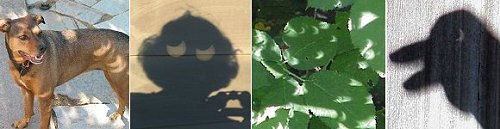
Maximum coverage occurs about 100 miles off the coast of Antarctica where the sun will appear to be a slender 9% crescent. Observers in the eclipse zone should be alert for crescent-shaped shadows and sunbeams. The sun-dappled ground beneath leafy trees is a good place to look. Of course that won’t work in Antarctica where trees are scarce.

fr/spaceweather.com

US Congress Declares Pizza A Vegetable

Congress Reaps Pizza Harvest

Congress Reaps Pizza Harvest

Tuesday, by act of Congress, pizza was declared a vegetable. The Spending Bill before our elected officials contained an Agriculture Department provision recognizing that school kids are dangerously obese, and that subsidizing school lunches of frozen pizza and french fries is unwise and unhealthy. The Congressional response: a slice of pizza = a serving of vegetables.

Continue reading…