Phobias, Fears, & Spiders, Oh My!

If You’re Afraid of Spiders, They Seem Bigger: Phobia’s Effect On Perception of Feared Object Allows Fear to Persist

ScienceDaily (Feb. 22, 2012) — The more afraid a person is of a spider, the bigger that individual perceives the spider to be, new research suggests.

The more afraid a person is of a spider, the bigger that individual perceives the spider to be, new research suggests. (Credit: © M.R. Swadzba / Fotolia)

In the context of a fear of spiders, this warped perception doesn’t necessarily interfere with daily living. But for individuals who are afraid of needles, for example, the conviction that needles are larger than they really are could lead people who fear injections to avoid getting the health care they need.

A better understanding of how a phobia affects the perception of feared objects can help clinicians design more effective treatments for people who seek to overcome their fears, according to the researchers.

In this study, participants who feared spiders were asked to undergo five encounters with live spiders — tarantulas, in fact — and then provide size estimates of the spiders after those encounters ended. The more afraid the participants said they were of the spiders, the larger they estimated the spiders had been.

“If one is afraid of spiders, and by virtue of being afraid of spiders one tends to perceive spiders as bigger than they really are, that may feed the fear, foster that fear, and make it difficult to overcome,” said Michael Vasey, professor of psychology at Ohio State University and lead author of the study.

“When it comes to phobias, it’s all about avoidance as a primary means of keeping oneself safe. As long as you avoid, you can’t discover that you’re wrong. And you’re stuck. So to the extent that perceiving spiders as bigger than they really are fosters fear and avoidance, it then potentially is part of this cycle that feeds the phobia that leads to its persistence.

“We’re trying to understand why phobias persist so we can better target treatments to change those reasons they persist.”

The study is published in a recent issue of the Journal of Anxiety Disorders.

The researchers recruited 57 people who self-identified as having a spider phobia. Each participant then interacted at specific time points over a period of eight weeks with five different varieties of tarantulas varying in size from about 1 to 6 inches long.

The spiders were contained in an uncovered glass tank. Participants began their encounters 12 feet from the tank and were asked to approach the spider. Once they were standing next to the tank, they were asked to guide the spider around the tank by touching it with an 8-inch probe, and later with a shorter probe.

Throughout these encounters, researchers asked participants to report how afraid they were feeling on a scale of 0-100 according to an index of subjective units of distress. After the encounters, participants completed additional self-report measures of their specific fear of spiders, any panic symptoms they experienced during the encounters with the spiders, and thoughts about fear reduction and future spider encounters.

Finally, the research participants estimated the size of the spiders — while no longer being able to see them — by drawing a single line on an index card indicating the length of the spider from the tips of its front legs to the tips of its back legs.

An analysis of the results showed that higher average peak ratings of distress during the spider encounters were associated with estimates that the spiders were larger than they really were. Similar positive associations were seen between over-estimates of spider size and participants’ higher average peak levels of anxiety, higher average numbers of panic symptoms and overall spider fear. These findings have been supported in later studies with broader samples of people with varying levels of fear of spiders.

“It would appear from that result that fear is driving or altering the perception of the feared object, in this case a spider,” said Vasey, also the director of research for the psychology department’s Anxiety and Stress Disorders Clinic. “We already knew fear and anxiety alter thoughts about the feared thing. For example, the feared outcome is interpreted as being more likely than it really is. But this study shows that even perception is altered by fear. In this case, the feared spider is seen as being bigger. And that may serve as a maintaining factor for the fear.”

The approach tasks with the spiders are a classic example of exposure therapy, a common treatment for people with phobias. Though this therapy is known to be effective, scientists still do not fully understand why it works. And for some, the effects don’t last — but it is difficult to predict who will have a relapse of fear, Vasey said.

He and colleagues are studying these biased perceptions as well as attitudes with hopes that the new knowledge will enhance treatment for people with various phobias. The work suggests that fear not only alters one’s perception of the feared thing, but also can influence a person’s automatic attitude toward an object. Those who have developed an automatic negative attitude toward a feared object might have a harder time overcoming their fear.

Though individuals with arachnophobia are unlikely to seek treatment, the use of spiders in this research was a convenient way to study the complex effects of fear on visual perception and how those effects might cause fear to persist, Vasey noted.

“Ultimately, we are interested in identifying predictors of relapse so we can better measure when a person is done with treatment,” he said.

This work is supported by the National Institute of Mental Health.

Co-authors include Michael Vilensky, Jacqueline Heath, Casaundra Harbaugh, Adam Buffington and Vasey’s principal collaborator, Russell Fazio, all of Ohio State’s Department of Psychology.

from:    http://www.chromographicsinstitute.com/wp-admin/post-new.php

New CME

fr/spaceweather.com:

CANYON OF FIRE: A magnetic filament snaking over the sun’s northeastern limb rose up and erupted during the early hours of Feb. 24th. The eruption split the sun’s atmosphere creating a “canyon of fire,” shown here in a movie captured by the Solar Dynamics Observatory:

The glowing walls of the canyon are formed in a process closely related to that ofarcade loops, which appear after many solar flares. Stretching more than 400,000 km from end to end, the structure traces the original channel where the filament was suspended by magnetic forces above the stellar surface.

As erupting magnetic filaments often do, this one launched a coronal mass ejection (CME) into space. The Solar and Heliospheric Observary recorded the expanding cloud

Chardonnay Under Attack

New moth species invades Italy’s vineyards

By Victoria GillScience reporter, BBC Nature

New species of leafminer moth (c) Antispila oinophyllaThe moth is common in North America and was first spotted in Italy in 2006
A moth with a taste for Chardonnay leaves, which has infested vineyards across northern Italy, is a new species of leafminer, scientists say.

The pest was first discovered by Italian scientists in 2006, but they were unable to identify it.

Now, by examining a snippet of the moth’s genetic code, researchers have confirmed that it is a previously unnamed species.

The team published their findings in the journal ZooKeys.

The Italian team enlisted the help of insect expert Erik van Nieukerken from the Netherlands Centre for Biodiversity in Leiden.

“We first turned to the [scientific] literature to find out what was already known, which was appallingly little for this group [of moths],” Dr van Nieukerken told BBC Nature.

He and his colleagues used a method known as DNA barcoding to examine a section of the insect’s genetic code.

  • “I figured out that this one, despite being quite common in North America, had no name,” he recalled.

The new species, which now bears the name Antispila oinophylla, had previously been confused with a North American species (Antispila ampelopsifoliella), which feeds on Virginia creeper.

Only the genetic studies revealed it to be a different species with a taste for grapevines. Its native range is across eastern North America, where it feeds on several species of wild grapes.

So far, the species has been found in vineyards in Italy’s Trento and Veneto regions, spreading and increasing in population since it was first recorded.

Having observed the moths in the field, the scientists say that the insect seems to have a preference for the leaves of Chardonnay, Cabernet Sauvignon and Muscat grapes, but they added that the economic impact of this particular pest was not yet clear.

The researchers do not know exactly how the moth arrived in Italy, but Dr van Nieukerken said that it was very easy for the cocoons containing the larvae to be accidentally transported with plant material.

“They’re very small and exactly the same colour as the leaves,” he told BBC Nature. “So if you were carrying plants, you would probably not notice them.

The scientist said that another species from this same group had been discovered in commercial walnut crops and that more needed to be known about the insects.

“This group is very poorly studied,” he told BBC Nature.

“If you know exactly what it is and where it belongs, if you know its evolutionary history…. you can understand better how to control it.”

from:    http://www.bbc.co.uk/nature/17139837

What’s Up In Dulce?

Tuesday, January 10, 2012

Dulce, New Mexico, the mysterious “earthquakes” of 1966 and 1967 and Project Gasbuggy

from Norio Hayakawa at: Civilian Intelligence Central

E-mail = noriohayakawa@gmail.com

January 10, 2012:

Dulce, New Mexico, the mysterious “earthquakes” of 1966 and 1967 and Project Gasbuggy

Here is a fascinating report which was posted several years ago on the Internet by an anonymous researcher who only went by the name of Firefoot:

http://maps.google.com/maps/ms?ie=UTF&msa=0&msid=113796814867830262616.0004510b49d1517768f16

This researcher, Firefoot, apparently studied the earthquake epicenters in and around Dulce from January 23, 1966 to December 10, 1967. Apparently unusual “earthquakes” were occuring in these areas nearly a year before Project Gasbuggy took place on December 10, 1967!!

(December 10, 1967 was when the U.S. exploded a nuclear device a mile and a half underground, about 22 miles southwest of Dulce, New Mexico…..it was called Project Gasbuggy and was explained by the U.S. Government as an experiment that would help ease the flow of natural gas trapped under hard, tuffa rocks in the entire region……it was an explosion of 30 megaton bomb, which caused a 5.10 magnitude earthquake in the area, extending all the way to Farmington).

This anonymous researcher, Firefoot, covered all known earthquake information from a point that extends 50km in every direction around the coordinates 37.052N, 106.907W.

He states that for some reason, 95% of the earthquakes occured between 1966 and 1967.
He states that it is possible that there was underground construction occuring.
He then made this map using the USGS/NEIC data.

As you go to his above link, he points out that Red “tacks” show coordinates where MULTIPLE earthquakes occured. Blue “tacks” show places where there was one earthquake only.

He made black grid lines to connect lines of more than TWO earthquakes which happened to happen along a meridian.
He says that the chances of there being so many lines of more than two earthquakes is statistically nil!!

The green and red lines show locations between places where multiple earthquakes occurred where they just happen to measure into perfect triangles. (As stated, lines of these two triangles are marked with green and read.)
“Very strange to say the least!” he says.

He believes explosives and RAND Corp digging machines were used.

But once again, I would like for you to go to the link for more fascinating information that I would like to point out. Please study the link very carefully again and since you can zoom in to any location within this google map/satellite imagery, please do so anytime:

(try to keep it in the satellite imagery mode, as much as possible)

http://maps.google.com/maps/ms?ie=UTF&msa=0&msid=113796814867830262616.0004510b49d1517768f16

MYSTERY SPOT 18 MILES NORTHEAST OF DULCE, NEW MEXICO:

In his explanation on the left side, he mentions three items of interest:

These three items are Purple “tacks”:

He describes one as a “hangar in the forest”, which is the northwestern point of the equilateral triangle. The equilateral triangle is indicated with purple color. If you zoom in, yes, you can definitely see an isolated building which definitely could be a hangar. This location is slightly south southeast of Pagosa Springs, Colorado.

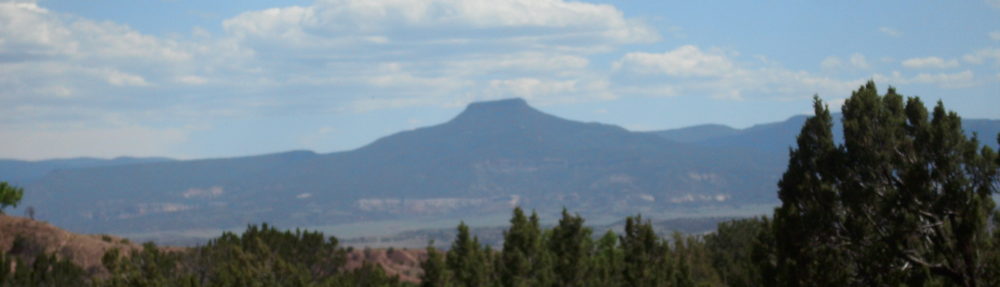
Next he describes a “door in the mountain”. This is the eastern point of the equilateral triangle. What he calls a “door in the mountain” (if you zoom in) appears to be an anomalous spot…a strange area near atop a snow-capped peak (the researcher calls this peak Navajo Peak, and is located about 8 miles northeast of the town of Chromo, Colorado. The anomalous spot (which superficially looks somewhat like a lake) certainly doesn’t fit in because the rest of the area is snow-covered.

(In late 2008 I was contacted by a Los Alamos scientist who first pointed this to me when he visited my home)

Lastly, the researcher, Firefoot, describes an “arrow at Dulce”. This location is at the southern point of the equilateral triangle. If you zoom in, you can clearly tell that it is a building located in the southern area of Dulce. Actually, it is the Dulce Elementary School, located right next to the Stone Lake Road.
If you zoom in, you can clearly see that the arrow is seen on the strangely-configured circular driveway of the school. This is now known among some researchers as the Dulce Arrow.

(Again, in late 2008, the very same Los Alamos scientist who visited me pointed this out to me)

What is most interesting is that from the Arrow of the circular driveway of Dulce Elementary School to the anomalous point on Navajo Peak in Colorado is exactly 18 miles.

And, from the anomalous area high atop the snow-capped Navajo Peak in Colorado to the “hangar” south of Pagosa Springs, is also exactly 18 miles.

And, from the “hangar” south of Pagosa Springs to the circular driveway of Dulce Elementary School is also exactly 18 miles!!

The last three items (i.e., “the door in the mountain”, “the Dulce arrow” and “hangar in the forest”) are summarized in this YouTube piece:

MYSTERY SPOT 18 MILES NORTHEAST OF DULCE, NEW MEXICO:

http://www.youtube.com/watch?v=AVdtoYl1UbA

for more information, go to Norio Hayakawa’s blog:    http://noriohayakawa2012.blogspot.com/

Ancient History & Mythology

Ancient History Rocks

Sphinx_-_Copy_2.jpgWorld-renowned authority on ancient mysteries Graham Hancock joins rock’n’roll band Turbowolf to explore their mutual interest in theunresolved questions troubling the mainstream historical myths of our planet.

Known as the best-selling non-fiction author of books such as “The Sign and the Seal”, “Fingerprints of the Gods”, and “Supernatural”, Hancock explains how he accidentally began his career as an explorer of the unexplained in rural Ethiopia, why ancient maps provide troubling news for the strict evolutionary worldview, and why most mainstream historians refuse to investigate the mounting evidence that ancient megastructures such as the Great Pyramid and The Sphinx are dated incorrectly by thousands of years.

Standing in front of the steaming Roman Baths of Bath, Hancock says to Turbowolf at the end of Episode 1, “I can’t help feeling that there’s something missing from the story…” This video provides a quick and powerful reminder that we still have much to acknowledge and integrate from our past if we are to create wise global myths in our current time.


(Image photo of The Sphinx by Santha Faiia, copyright 1999.)   

from:    http://www.realitysandwich.com/ancient_history_rocks


Eat MORE Dark Chocolate

chocolate

Seven reasons to eat more dark chocolate

Wednesday, February 22, 2012 by: PF

(NaturalNews) More and more health reasons for eating dark chocolate keep coming in. Many will be pointed out here, then explained further in the sources indicated by numbers in parenthesis. But first, understand thatorganic dark chocolatebrought into the market place under fair trade agreements is best.
Some of the major cheap chocolate producers use child slaves in Africa to pick cacao. The more dark the chocolate with less sugar, milk, and other ingredients, the closer it is to cacao. A range of at least 70% to 90% cacao in dark chocolate is both tasty and healthy.

Milk chocolate contains milk, which negates the health benefits, and sugar, which feeds cancer cells. Avoid it.

According to Dr. Debra Miller’s statement inChemistry Central Journal, “Cacao seeds are a ‘Super Fruit’ providing nutritive value beyond that of their macronutrient composition.” (1)

Interestingly, one doesn’t have to gorge lots of chocolate every day to get the health benefits. A little treat, like a square or two daily will support good health.

A study of almost 20,000 participants in Germany concluded that those who ate 7.5 grams of dark chocolate a day received most of the heart protection benefits of chocolate. Organic dark chocolate bars are usually 100 grams. (1)

Benefits of dark chocolate

Cardiac and stroke protection :Dark chocolate lowers blood pressure, which lowers risks of heart attacks and strokes. (1)

Reduces risk of colon cancer :Cocoa polyphenols from dark chocolate reduce the risk of colorectal cancer. This was determined in a study by the Science and Technology Institute of Food and Nutrition in Spain, which was published in the journalMolecular Nutrition.(2)

Healthy fats :The fat in chocolate does little to raise cholesterol. It contains abundant oleic acid, the type of fatty acid found in olive oil, which helps prevent heart disease and promote antioxidant activity. (3)

Enhances glucose metabolism :Dark chocolate (70% plus) candy bars inhibit blood sugar issues to help prevent diabetes and obesity. How’s that for a surprise! (3)

Improves mood :Studies have shown that dark chocolate contains serotonin and increases endorphin production. It’s a natural anti-depressant. (4)

Improves brain function :Nottingham University professor Ian MacDonald used MRI analysis to determine improved brain activity with people who had just consumed cocoa drinks. (4) Hopefully they didn’t have to undergo too many MRI scans that would fry their brains!

Eases PMS issues :Here’s a hint for husbands and boyfriends to give dark chocolate to your wives and lady friends. (5)

There you have it: many reasons to enjoyorganic dark chocolate that is at least 70% cacao.There are brands with 80% to 90% as well. These aren’t your kiddy chocolates with lots of sugar or milk or creamy nugget fillings, etc. They are semi-sweet at best.

The more bitter the better. It’s not difficult to get used to if you really like chocolate. Enjoy chocolate with the knowledge that it’s actually good for you.

From, and to Learn more, go to:    http://www.naturalnews.com/035035_dark_chocolate_health_benefits_cacao.html#ixzz1nEN1GzKE


Homeopathy vs Allopathy for Infectious Disease

homeopathy

Life-threatening infectious disease responds better to homeopathy than allopathic medicine

Wednesday, February 22, 2012 by: Carolanne Wright

(NaturalNews) Homeopathic medicine has a long, successful history of prevention and treatment of illness without harmful side effects. Documentation spanning several centuries has shown the incredible effectiveness of homeopathy during some of the most deadly epidemics in history.

Samuel Hahnemann, a German physician in the 1800s, is considered the father of homeopathy. Dr. Hahnemann, a man deeply rooted in the scientific method, critically condemned the medical practices of the day such as bloodletting and purging with medicines made with mercury, lead, and arsenic. He discovered the “Law of Similars” while researching cinchona bark which is used to treat malaria. Hahnemann, in perfect health, began taking this Peruvian bark two times a day for several days. He reported that he began showing identical symptoms to malaria. Upon conclusion of the experiment, he realized medicinal substances create symptoms in healthy people that were almost identical to the diseases they were meant to treat. This was the beginning of Dr. Hahnemann’s distinguished career in homeopathy which lead to widespread acceptance of his method around the world.

Epidemics: Fertile ground for the usefulness of homeopathy

Homeopathic medicine has been used successfully by Hahnemann and others for treatment during some of the most devastating epidemics in history. During the European Typhus Epidemic of 1813, those treated in homeopathic hospitals had a mortality rate of less than 1 percent while those treated with allopathic medicine had a mortality rate well over 30 percent. Documentation for the Russian Cholera Epidemic of 1831 confirmed a death rate of under 10 percent for those treated homeopathically while conventional treatments had a death rate of up to 80 percent.

During the Spanish Flu Pandemic of 1918 that claimed the lives of millions, homeopathic hospitals had a remarkably low mortality rate. Twenty-six thousand cases of the flu were treated homeopathically with 1.05 percent mortality rate while the 24,000 cases that were treated allopathically had a mortality rate of 28.2 percent. Gelsemium was the most commonly used remedy for the H1N1 influenza virus of the pandemic.

Hahnemann was inspired to use homeopathic medicine as a preventative while treating several ailing children in two families. The first family had three children out of four who were ill with scarlet fever. The fourth, who was taking Belladonna for a finger joint problem at the time, remained free from the illness.

Shortly after, a family with eight children, three of which were already infected with scarlet fever, requested Dr. Hahnemann’s expertise to help protect the other five children. Once again, he used Belladonna with positive result. All five children escaped the illness even though they were exposed repeatedly to their unwell siblings. After observing the protective effects of Belladonna against scarlet fever, Hahnemann continued to use this remedy with extraordinary success during epidemics.

Additional disease prevented by homeopathy

During a 1902 smallpox outbreak in Iowa, a Dr. Eaton reported that 2806 people were given Variolinum as a preventative. The rate of protection was an astounding 97 percent which was unheard of in allopathic medicine.

TheBritish Medical Journalreported that during the 1974 meningitis outbreak in Brazil, those who were given Menigococcium prophylaxis were protected from developing the disease 23 more times than those who did not receive treatment.

Homeopathic medicine has also been shown to be astonishingly effective in preventing polio. In several studies involving over 11,000 children, Lathyrus Sativus was given as a ‘vaccine’ against the disease. Not a single case of polio was reported nor were there any documented side effects.

As safe alternative to conventional medicine, homeopathy is remarkably beneficial in preventing and treating many of the most dangerous communicable diseases known to man.

Sources for this article include:

“Samuel Hahnemann. Founder of Homeopathy,” Altmed. Creighton Education. Retrieved on January 28, 2012 from:http://altmed.creighton.edu/Homeopathy/history.htm

“Homeopathy in Epidemics and Pandemics,” Jayney Goddard FCMA, Lic.LCCH, Dip.ACH, Scientific Research in Homeopathy Conference. Retrieved on January 28, 2012 from:http://www.slideshare.net

“Homeopathic Prophylaxis: Fact or Fiction,” National Center for Homeopathy, October 2006. Retrieved on January 30, 2012 from:http://www.homeopathic.org

“What is Homeopathy? Definition and Details,” Alan V. Schmukler, Hpathy, November 2009. Retrieved on January 31, 2012 from:http://hpathy.com

“Human Homeopathic Prevention: Records, Studies and Trials,” Homeopathy Plus. Retrieved on January 31, 2012 from:http://homeopathyplus.com.au

About the author:
Carolanne enthusiastically believes if we want to see change in the world, we need to be the change. As a nutritionist, natural foods chef, and wellness coach, Carolanne has encouraged others to embrace a healthy lifestyle of organic living, gratefulness, and joyful orientation for over 13 years. Through her websitewww.Thrive-Living.comshe looks forward to connecting with other like-minded people from around the world who share a similar vision.

From, and to Learn more, go to:    http://www.naturalnews.com/035030_homeopathy_infectious_disease_medicine.html#ixzz1nELlInpM

Destructive Effect of Roundup on Human DNA

Study: Roundup diluted by 99.8 percent still destroys human DNA

Thursday, February 23, 2012 by: Ethan A. Huff, staff writer, Natural News

Roundup(NaturalNews) A new study published in the journal Archives of Toxicology proves once again that there really is no safe level of exposure to Monsanto’s Roundup (glyphosate) herbicide formula for genetically-modified organisms (GMOs). According to the new findings, Roundup, which is applied by the tens of thousands of tons a year all around the world, is still toxic to human DNA even when diluted to a mere 0.02 percent of the dilution amount at which it is currently applied to GM food crops.Numerous studies have already identified the fact that Roundup causes DNA damage, not to mention endocrine disruption and cancer. But this new study, which originates out of the Medical University of Vienna, is one of the first to illustrate Roundup’s toxicity at such drastically diluted levels, which is a direct contradiction of the agri-giant’s talking points about the supposed safety of Roundup.

“Comparisons with results of earlier studies with lymphocytes and cells from internal organs indicate that epithelial cells are more susceptible to the cytotoxic effects and DNA-damaging properties of the herbicide and its formulation,” wrote the authors in their abstract.

“Since we found genotoxic (DNA damaging) effects after short exposure to concentrations that correspond to a 450-fold dilution of spraying used in agriculture, our findings indicate that inhalation may cause DNA damage in exposed individuals.”

Interestingly, it is not so much just the glyphosate ingredient in Roundup that is extremely poisonous, as much as it is this chemical’s amplified toxicity in the presence of other additives in the formula. Polyoxyethyleneamine, for instance, a surfactant that facilitates glyphosate’s absorption into cells, has been found to significantly increase Roundup’s synergistic toxicity in humans.

Despite Monsanto’s claims to the contrary, Roundup is clearly an exceptionally toxic chemical that has no legitimate place in agriculture. According to data compiled by GreenMedInfo.com, Roundup is linked to causing Non-Hodgkin Lymphoma, imbalanced hormones in children, DNA damage, low testosterone, endocrine disruption, liver cancer, meningitis, infertility, skin cancer, kidney damage, and even uranium poisoning (http://www.greenmedinfo.com/toxic-ingredient/glyphosate).

Environmentally, Roundup is a pervasive threat to air, water, and particularly groundwater and drinking supplies, as studies have shown that it does not effectively biodegrade after being sprayed. Back in the fall, the U.S. Geological Survey (USGS) released data showing that air and water all across America’s “bread belt,” where much of our nation’s food is grown, is highly contaminated with glyphosate (http://www.naturalnews.com/033699_Roundup_pollution.html).

Sources for this article include:

http://www.greenmedinfo.com

from:    http://www.naturalnews.com/035050_Roundup_Monsanto_DNA.html

Giving Rights to Marine Mammals

Marine Mammals Need Rights, Too, Scientists Say

Jennifer Welsh, LiveScience Staff Writer
Date: 23 February 2012 Time: 08:15 AM ET
Killer whale and Weddell seal.
CREDIT: Robert Pitman/NOAA

VANCOUVER, British Columbia — Orcas mourn their dead, right whales have accents and dolphins like to have fun (and they “talk” in their sleep). Because of their special intelligence and culture, marine mammals should have their own set of rights, researchers attending the American Association for the Advancement of Science’s annual meeting here said.

“Because of their cultural sophistication these are enormously vulnerable individuals,” said Lori Marino, who studies brain and behavioral evolution in mammals at Emory University in Atlanta. “We have all the evidence to show that there is an egregious mismatch between how cetaceans are and how they are perceived and still treated by our species.”

Giving rights to cetaceans, the name for the group of marine mammals that includes dolphins and whales, would allow them better treatment under the law, including making sure they have healthy habitats and enough food to hunt and survive, as well as getting them out of captivity.

Special brains  

Scientists point to a few qualities of marine mammals when suggesting the animals deserve some basic rights: they are self-aware, display complex intelligence and even have culture.

“These characteristics are shared with our own species, we recognize them,” Marino said. “All of these characteristics make it ethically inconsistent to deny the basic rights of cetaceans.”

And what do they mean by “basic rights?”

“When we talk about rights, that’s a shorthand way to talk about the fundamental needs of a being,” Thomas White, of Loyola Marymount University in California, said at the symposium. He also draws the difference between “human” and “person,” similar to how philosophers distinguish the two: A human is a biological idea — Homo sapiens, to be specific, while in philosophy, a person is a being of any species with a particular set of characteristics that deserves special treatment. [10 Things That Make Humans Special]

“You have to have a species-appropriate understanding of rights,” White said. These include the basic set of conditions for growth, development, flourishingand even a rudimentary sense of satisfaction in life.

The researchers noted some areas where humans are stripping these animals of their rights. For instance, by keeping them in captivity we are exploiting their right to live in their natural environment without human interference, and taking away their right to physical and mental health, Marino said, adding, “The effects of captivity are well known. These animals suffer from stress and disease in captivity. Many captive dolphins and orcas show physical and behavioral indications of stress.” (Some endangered animals are kept in captivity for specially designed breeding programs meant to protect their population from extinction.)

PETA problems

The meeting comes on the heels of a recent ruling in a San Diego court that animals such as whales and dolphins don’t have human rights, shutting down a lawsuit from the group People for the Ethical Treatment of Animals (PETA), who had claimed that SeaWorld’s orcas were slaves. PETA claimed that the park broke the 13th Amendment of the Constitution — banning slavery — by forcing their animals, specifically the orcas, to work against their will for the financial gain of their owners.

San Diego District Judge Jeffrey Miller dismissed the case before the hearing even began. “As ‘slavery’ and ‘involuntary servitude’ are uniquely human activities,” he explained in his decision on Feb. 8, “there is simply no basis to construe the Thirteenth Amendment as applying to non-humans.”

His statement makes clear, Marino pointed out, why she and others are fighting for “person” status for marine mammals. “Without obtaining legal status as a person in the law there’s nowhere to go and there’s nothing that judge could have done in that PETA case, even if he wanted to,” Marino said. Before we start asking for legal action, she said, we need to get these animals their basic rights.

http://www.livescience.com/18611-marine-mammals-dolphins-human-rights.html