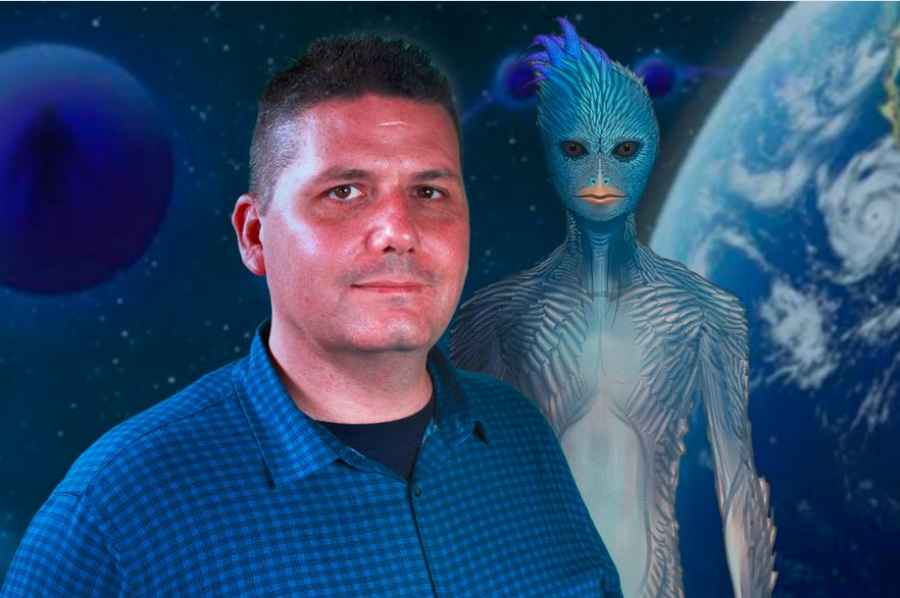
Flagstaff AZ – UFO’s

Fleet of UFOs over Flagstaff, Arizona May Be Tall Whites Walking Around City, Jan 2016, Photos, UFO Sighting News.

Date of sighting: January 14, 2016
Location of sighting: Flagstaff, Arizona, USA
Source: http://www.wesh.com/video/the-weather-channel/ufo-clouds-appear-in-arizona-skies/37510104

This is a great capture of some UFOs cloaked in clouds this week over Flagstaff. We know that they are not clouds, because the wind is blowing hard and the real clouds are moving to the right fast. However these UFO clouds are hovering in place, observing the city of Flagstaff. They don’t move!!! They might even be picking up or dropping off aliens to walk around the city for recreation. Since they probably look, walk and talk like us, its going to be very difficult to tell them from a normal person.

This is very close to Nellis AFB where there is a known alien base located inside the USAF base area. This is an alien base of tall whites, which the only distinguishing traits are they hate humans touching them, they are extremely white, tall and walk oddly. Also their eyes are larger, so they will wear sunglasses most the time.

There is no video here because the source doesn’t allow embedding, but if someone posts it to Youtube, I will put it up soon.
Scott C. Waring
www.ufosightingsdaily.com

from:    http://www.ufosightingsdaily.com/2016/01/fleet-of-ufos-over-flagstaff-arizona.html

Corey Goode, ET’s, the SSP, DIsclosure, etc.

Campbell’s To Label GMO Ingredients

Breaking: Campbell Soup to Adopt GMO Labels on its Products

Claims to support labeling standard for GMOs
campbells-soup-735-250
Mike Barrett
by Mike Barrett
Posted on January 8, 2016

In a move that will likely rock the mainstream, mega-food industry, Campbell Soup Company announced that it will work to become the first major food company to adopt food labels that will disclose genetically modified ingredients.

The decision by Campbell to attach a GMO label to its products is undoubtedly motivated by the continually-growing pressure from the people for food companies to engage in food transparency. Food providers such as Chipotle, Ben & Jerry’s, and even Hershey’s and General Mills have made moves to limit or eliminate genetically modified ingredients in at least some of their products – but never has going GMO-free been so mainstream and on a grand-scale.

Though the news isn’t completely out of the blue. In 2015, Campbell’s made several major announcements about improving the sustainability of its foods, including an aim to offer more non-GMO and organic foods.

The change in labeling is now expected to take 12 to 18 months.

The company stated:

“- Campbell’s will be launching several lines of organic kid’s soups, and removing MSG from all their kid’s soups.  In August 2015, the company will introduce Campbell’s Organic soup for kids in three chicken noodle varieties.  The soups will be non-GMO and certified Organic.

– Pepperidge Farm will be launching several organic wheat versions of their popular Goldfish Crackers.  Look for organic wheat versions of regular, cheddar, and parmesan in the coming year.  They still need to remove GMOs and go completely organic with the rest of their ingredients.

– Increasing organics across other food lines, and increasing the number of organic products offered by Plum.”

Read: 43% of Consumers Rank ‘Non-GMO’ as ‘Very Important’

It was a bit of a shock to those of us in the health food industry, as Campbell contributed hundreds of thousands of dollars to fight GMO labeling efforts across the nation.

But based on recent interviews with Denise Morrison, chief executive of Campbell, it seems the company’s tune has changed (at least on the surface).

“We will withdraw from any coalition that doesn’t support mandatory labeling,” Ms. Morrison said. “We were involved in fighting the state ballots in California and Washington out of concern over a state-by-state patchwork, yet we didn’t participate in the fights in any other state beyond those. Any money we did spend after that was in support of seeking a federal solution.”

Adding to the news and probably most intriguing is the fact that Campbell is actually calling nationwide, uniform GMO labeling that would be mandatory.

“We’re optimistic that a federal solution can be reached in a reasonable amount of time, but if that’s not the case, we’re preparing to label all our products across the portfolio.

…We’ve always believed consumers have a right to know what’s in their food. We know that 92 percent of Americans support G.M.O. labeling, and transparency is a critical part of our purpose.”

About three-quarters of products made by Campbell (maker of brands like Pepperidge Farm, Prego, Plum Organics and V8 in addition to its namesake soups) – contain genetically modified ingredients from corn, canola, soybeans or sugar beets, the 4 most prevalent GMO crops.

This is a great win for the health food industry at large, as it shows a clear sign that our desire and demand for GMO labeling and food transparency is reaching new heights.

Additional Sources:

Winnipeg Free Press

Nikola Tesla & Multiplication Map

Long-Lost Nikola Tesla Drawings Reveal Map To Multiplication

Tesla map

A recently discovered set of original Nikola Tesla drawings reveal a map to multiplication that contains all numbers in a simple to use system. The drawings were discovered at an antique shop in central Phoenix Arizona by local artist, Abe Zucca. They are believed to have been created during the last years of Tesla’s Free Energy lab, Wardenclyffe. The manuscript is thought to contain many solutions to unanswered questions about mathematics.

The Sketches were hidden in a small trunk with numerous other drawings and manuscripts ranging from hand-held technological devices to free-energy systems, many with notes scrawled all over them. Some of the pieces are already familiar to the public, but a few others are not. Most notably is the Map to Multiplication or the Math Spiral. Zucca made a few copies and showed the drawings around to different thinkers, dreamers, and mathematicians.

A few days later a Local High School Mathematics Instructor, Joey Grether, had been working on deciphering the system and had a few breakthroughs. Grether suggests that the Spiral not only explores Multiplication as an interwoven web, but that it, “offers a comprehensive visual understanding of how all numbers are self-organized into 12 positions of compositability.”

“This device allows us to see numbers as patterns, the formation of prime numbers, twin primes, Highly composite numbers, multiplication and division, as well as few other systems, I imagine, that are yet to be discovered.”

The diagram itself is very intuitive, allowing students to see how numbers all work together based on a spiral with 12 positions. 12, or 12x (multiples of 12) is the most highly composite system, which is why we have 12 months in a year, 12 inches in a foot, 24 hours in a day, etc. 12 can be divided by 2, 3, 4, and 6. So can all multiples of 12. For every 12 numbers there is a chance of 4 numbers being prime. They happen to fall in positions (think clock positions) 5, 7, 11, and 1.

Tesla is known for the quote “If you only knew the magnificence of the 3, 6 and 9, then you would have the key to the universe.” It turns out that when the device is examined, the digital roots of the numbers in positions 3, 6, 9, and 12 constantly repeat the same sequence 3, 6, 9! Is this what Tesla was referring too? The self-organization of numbers and their digital roots?

Its hard to say, but Grether seems to think so. “This breakthrough is phenomenal. If we could get students all over the globe to use this technique, to play with it, and help figure out how to use it, we could overcome our cultural aversion to Mathematics. Instead of memorizing the multiplication table, we could learn the positions of numbers and have a better understanding of how they work.”

Juan Zapata, One of Mr. G’s students believes so as well… “I used to say I’m bad at Math… cause thats what everyone says, but now, I’m like, dude, this is too easy.”

Theres one other fact about the Tesla Spiral that make it interesting. The diagram is dated 12/12/12! 1912. Grether and his students want to turn December 12 into a national holiday. So grab a 12 pack, get a dozen donuts, and celebrate the power of 12x.

from:    http://cbsnews.com.co/long-lost-nikola-tesla-drawings-reveal-map-to-multiplication/

Another Holistic MD Found Dead

Another Alternative Health Doctor Killed, Found in Makeshift Grave

Posted by December 29, 2015

alternative-health-doctor-compressed

By Christina Sarich | Natural Society

The mysterious doctor deaths are getting even more concerning. Now a Canadian alternative health doctor has been found. Canadian doctor, Linnea Veinotte, was found dead just a few days before Christmas. Even the police report says that the place Veinotte and her family resided ‘was a safe place.’

Doctor Bradstreet’s death led this rash of strange ‘suicides,’ but the number of strange death circumstances – most of alternative doctors – seems to be growing. [1]

According to HealthNutNews:

“Her body, partially decomposed, was found just days ago and buried in a makeshift grave near a small dirt road on the south end of the island. Last seen on Sunday, Dec. 6., Dr. Veinotte, “left the house at 8 a.m., wearing green running shorts, a purple tank top and her Adidas, with the family dog, Nico, in tow.” She was to go for a jog around a well-known residential community, but instead residents later reported hearing tires belonging to a dark-colored SUV screech, and a loud thump. Their dog was discovered bleeding at the scene, but Dr. Veinotte was nowhere to be found.”

Sylvan McIntyre, an assistant-superintendent with the Royal Grenada Police who has been an officer for 31 years, says he’s never seen a case like this. On an island of just 110,000 residents, people don’t go missing.

On Friday, just after midnight, a “person of interest” Akim Frank – who appears to have a record from 2008 for the offenses of burglary, causing harm, stealing, and wounding – turned himself in. The SUV that neighbors reported seeing was also found. It turns out the vehicle was just used by Frank, but it was not his.

Authorities are still unsure whether or not to call it a crime or accident. Dr. Venoitte was researching alternative ways to treat cancer.

Dr. Venoitte’s obituary: http://www.obitsforlife.com

from:    http://consciouslifenews.com/another-alternative-health-doctor-killed-found-in-makeshift-grave/11104941/

Bank Bail-ins Threaten Savings

A Crisis Worse Than ISIS? Bail-Ins Begin

by Zen Gardner Dec 30, 2015

EllenBrown.com

While the mainstream media focus on ISIS extremists, a threat that has gone virtually unreported is that your life savings could be wiped out in a massive derivatives collapse. Bank bail-ins have begun in Europe, and the infrastructure is in place in the US.  Poverty also kills.

At the end of November, an Italian pensioner hanged himself after his entire €100,000 savings were confiscated in a bank “rescue” scheme. He left a suicide note blaming the bank, where he had been a customer for 50 years and had invested in bank-issued bonds. But he might better have blamed the EU and the G20’s Financial Stability Board, which have imposed an “Orderly Resolution” regime that keeps insolvent banks afloat by confiscating the savings of investors and depositors. Some 130,000 shareholders and junior bond holders suffered losses in the “rescue.”

The pensioner’s bank was one of four small regional banks that had been put under special administration over the past two years. The €3.6 billion ($3.83 billion) rescue plan launched by the Italian government uses a newly-formed National Resolution Fund, which is fed by the country’s healthy banks. But before the fund can be tapped, losses must be imposed on investors; and in January, EU rules will require that they also be imposed on depositors. According to a December 10th article on BBC.com:

The rescue was a “bail-in” – meaning bondholders suffered losses – unlike the hugely unpopular bank bailouts during the 2008 financial crisis, which cost ordinary EU taxpayers tens of billions of euros.

Correspondents say [Italian Prime Minister] Renzi acted quickly because in January, the EU is tightening the rules on bank rescues – they will force losses on depositors holding more than €100,000, as well as bank shareholders and bondholders.

. . . [L]etting the four banks fail under those new EU rules next year would have meant “sacrificing the money of one million savers and the jobs of nearly 6,000 people”.

That is what is predicted for 2016: massive sacrifice of savings and jobs to prop up a “systemically risky” global banking scheme.

Bail-in Under Dodd-Frank

That is all happening in the EU. Is there reason for concern in the US?

According to former hedge fund manager Shah Gilani, writing for Money Morning, there is. In a November 30th article titled “Why I’m Closing My Bank Accounts While I Still Can,” he writes:

[It is] entirely possible in the next banking crisis that depositors in giant too-big-to-fail failing banks could have their money confiscated and turned into equity shares. . . .

If your too-big-to-fail (TBTF) bank is failing because they can’t pay off derivative bets they made, and the government refuses to bail them out, under a mandate titled “Adequacy of Loss-Absorbing Capacity of Global Systemically Important Banks in Resolution,” approved on Nov. 16, 2014, by the G20’s Financial Stability Board, they can take your deposited money and turn it into shares of equity capital to try and keep your TBTF bank from failing.

Once your money is deposited in the bank, it legally becomes the property of the bank. Gilani explains:

Your deposited cash is an unsecured debt obligation of your bank. It owes you that money back.

If you bank with one of the country’s biggest banks, who collectively have trillions of dollars of derivatives they hold “off balance sheet” (meaning those debts aren’t recorded on banks’ GAAP balance sheets), those debt bets have a superior legal standing to your deposits and get paid back before you get any of your cash.

. . . Big banks got that language inserted into the 2010 Dodd-Frank law meant to rein in dangerous bank behavior.

The banks inserted the language and the legislators signed it, without necessarily understanding it or even reading it. At over 2,300 pages and still growing, the Dodd Frank Act is currently the longest and most complicated bill ever passed by the US legislature.

Propping Up the Derivatives Scheme

Dodd-Frank states in its preamble that it will “protect the American taxpayer by ending bailouts.” But it does this under Title II by imposing the losses of insolvent financial companies on their common and preferred stockholders, debtholders, and other unsecured creditors. That includes depositors, the largest class of unsecured creditor of any bank.

Title II is aimed at “ensuring that payout to claimants is at least as much as the claimants would have received under bankruptcy liquidation.” But here’s the catch: under both the Dodd Frank Act and the 2005 Bankruptcy Act, derivative claims have super-priority over all other claims, secured and unsecured, insured and uninsured.

The over-the-counter (OTC) derivative market (the largest market for derivatives) is made up of banks and other highly sophisticated players such as hedge funds. OTC derivatives are the bets of these financial players against each other. Derivative claims are considered “secured” because collateral is posted by the parties.

For some inexplicable reason, the hard-earned money you deposit in the bank is not considered “security” or “collateral.” It is just a loan to the bank, and you must stand in line along with the other creditors in hopes of getting it back. State and local governments must also stand in line, although their deposits are considered “secured,” since they remain junior to the derivative claims with “super-priority.”

Turning Bankruptcy on Its Head

 Under the old liquidation rules, an insolvent bank was actually “liquidated” – its assets were sold off to repay depositors and creditors. Under an “orderly resolution,” the accounts of depositors and creditors are emptied to keep the insolvent bank in business. The point of an “orderly resolution” is not to make depositors and creditors whole but to prevent another system-wide “disorderly resolution” of the sort that followed the collapse of Lehman Brothers in 2008. The concern is that pulling a few of the dominoes from the fragile edifice that is our derivatives-laden global banking system will collapse the entire scheme. The sufferings of depositors and investors are just the sacrifices to be borne to maintain this highly lucrative edifice.

In a May 2013 article in Forbes titled “The Cyprus Bank ‘Bail-In’ Is Another Crony Bankster Scam,” Nathan Lewis explained the scheme like this:

At first glance, the “bail-in” resembles the normal capitalist process of liabilities restructuring that should occur when a bank becomes insolvent. . . .

The difference with the “bail-in” is that the order of creditor seniority is changed. In the end, it amounts to the cronies (other banks and government) and non-cronies. The cronies get 100% or more; the non-cronies, including non-interest-bearing depositors who should be super-senior, get a kick in the guts instead. . . .

In principle, depositors are the most senior creditors in a bank. However, that was changed in the 2005 bankruptcy law, which made derivatives liabilities most senior. Considering the extreme levels of derivatives liabilities that many large banks have, and the opportunity to stuff any bank with derivatives liabilities in the last moment, other creditors could easily find there is nothing left for them at all.

As of September 2014, US derivatives had a notional value of nearly $280 trillion. A study involving the cost to taxpayers of the Dodd-Frank rollback slipped by Citibank into the “cromnibus” spending bill last December found that the rule reversal allowed banks to keep $10 trillion in swaps trades on their books. This is money that taxpayers could be on the hook for in another bailout; and since Dodd-Frank replaces bailouts with bail-ins, it is money that creditors and depositors could now be on the hook for. Citibank is particularly vulnerable to swaps on the price of oil. Brent crude dropped from a high of $114 per barrel in June 2014 to a low of $36 in December 2015.

What about FDIC insurance? It covers deposits up to $250,000, but the FDIC fund had only $67.6 billion in it as of June 30, 2015, insuring about $6.35 trillion in deposits. The FDIC has a credit line with the Treasury, but even that only goes to $500 billion; and who would pay that massive loan back? The FDIC fund, too, must stand in line behind the bottomless black hole of derivatives liabilities. As Yves Smith observed in a March 2013 post:

In the US, depositors have actually been put in a worse position than Cyprus deposit-holders, at least if they are at the big banks that play in the derivatives casino. The regulators have turned a blind eye as banks use their depositors to fund derivatives exposures. . . . The deposits are now subject to being wiped out by a major derivatives loss.

Even in the worst of the Great Depression bank bankruptcies, noted Nathan Lewis, creditors eventually recovered nearly all of their money. He concluded:

When super-senior depositors have huge losses of 50% or more, after a “bail-in” restructuring, you know that a crime was committed.

Exiting While We Can

How can you avoid this criminal theft and keep your money safe? It may be too late to pull your savings out of the bank and stuff them under a mattress, as Shah Gilani found when he tried to withdraw a few thousand dollars from his bank. Large withdrawals are now criminally suspect.

You can move your money into one of the credit unions with their own deposit insurance protection; but credit unions and their insurance plans are also under attack. So writes Frances Coppola in a December 18th article titled “Co-operative Banking Under Attack in Europe,” discussing an insolvent Spanish credit union that was the subject of a bail-in in July 2015. When the member-investors were subsequently made whole by the credit union’s private insurance group, there were complaints that the rescue “undermined the principle of creditor bail-in” – this although the insurance fund was privately financed. Critics argued that “this still looks like a circuitous way to do what was initially planned, i.e. to avoid placing losses on private creditors.”

In short, the goal of the bail-in scheme is to place losses on private creditors. Alternatives that allow them to escape could soon be blocked.

from:    http://www.zengardner.com/a-crisis-worse-than-isis-bail-ins-begin/

Dr. Steven Greer, Deep National Security State, UFO’s, etc.

Dr. Steven Greer – How the Secret Government Works: The Most Explosive Expose

November 28, 2015

Dr. Steven Greer - How the Secret Government Works: The Most Explosive Expose

New Steven Greer disclosure video!

Here is the synopsis:

  • For those folks who want a very professionally performed investigation (ongoing for more than 20 years) on the UFOs, advanced technology, the cover-up, and curiously:
  • Carl Sagan compromised and swindled into debunking UFOs (see 2:08:00)
  • Donald Rumsfeld announced 1 day before 911 that Congress had lost $2.3 trillion unaccounted for, now updated to $8.5 trillion. (see 1:56:30)
  • Marilyn Monroe’s involvement (see 41:00).
  • Burl Ives the actor and 33rd degree mason (see 47:00)
  • Jack Kennedy wanted full disclosure and to make peace with the Soviets (see 49:00)
  • IMPORTANT: Listen to what he says at 2:43:30

It’s a long talk, but well worth the listen. So grab the non-GMO popcorn and lemon water before you hit the armchair.

from;    http://in5d.com/dr-steven-greer-how-the-secret-government-works-the-most-explosive-expose/

A Little Cat Wisdom

10 Things We Can Learn From Cats That Will Make Us Happier, Healthier Humans

CAT PERSON


2015-11-25-1448468135-5323815-Brutus.2.JPG Photo Courtesy of Lori Johnston and Brutus

I recently wrote an article “What We Can Learn From Dogs That Will Make Us Happier and Healthier Humans” http://www.huffingtonpost.com/lisa-zawistowski/10-things-we-can-learn-from-our-dogs-that-will-make-us-happier-and-healthier-humans_b_7772094.html. Cats, clearly, would want to share their wisdom too. They have a different view of the world than dogs and both make our lives richer. While dogs are seemingly more concerned with your happiness, cats are more concerned with their own. What follows are 10 essentials to being more successful in work and life inspired by observations of my own cats, friends’ cats, and those that just show up for breakfast and dinner.

1. I love you but I love me more. Love yourself first. Clean your fur often, get 18 hours of sleep per day (or the human equivalent), eat little bits throughout the day rather than large meals and pursue things that interest you. Set high standards for yourself in all ways and stick to it as if no other options exist. Make yourself a priority at all times, physically, mentally and emotionally. When you are healthy in every way, you will see a world ripe with catnip mice and opportunity.
2. Accept the gifts and honor the intention. I will occasionally bring you a dead mouse or bird (or mostly dead anyway). It’s a gift. Even if it isn’t a gift you want, I gave it to you because I love you. There are gifts everywhere. Notice them, search for them and honor the intention of the giver whether it be a cat, some inferior animal (anything not a cat), a human or from the universe itself.
3. Focus on what you really want and be relentless about getting it. “No” is not an option. I’m hungry. You will get out of bed now and feed me or I will keep batting your eyelashes and walking on your hair as I cross your pillow. I will be pooping on the floor next to the litter box until you clean it out for me. I need to sit on the porch and I know you would love to get up right now and make that happen. Do the work to get what you need and want and enlist others to help you.
4. You teach people how to treat you. Role model how you want others to treat you and, gently but firmly, do not accept anything less. I would love for you to pet me now so I will rub on your legs and show you my charming side. And if you walk away I will follow you. Ok, now I’ve had enough so I’m going to bat your hand with my claws just slightly exposed. Please do not pet me when I am not in the mood.
5. Act like you are royalty. Be confident on the outside even if you’re not always there on the inside. If you fake being self-assured long enough you will trick your brain into believing it! Royalty does not do tricks, wear frilly clothes or acquiesce to any other ridiculous requests that are beneath me, might dirty my fur, cause me stress or wear me out. If I do something it’s because it’s good for me in some way. Yes, I’m sitting above you, staring down at you. As it should be.
6. Appearance matters. Clean your fur and wear nice accessories. Unlike dogs who will happily wear anything, with my kind the collar matters. It should reflect my personality. Bling, studs or simple elegance. I need my collar and other accessories to make a statement of who I am. Like it or not, your appearance shares how you feel about yourself with the rest of the world. Even though you have eloquent words, if your fur and accessories are a mess you undermine your royalty.
7. Be independent. I rely on you for food and water because I am in your house but I mostly rely on myself. I know that I get me through every day and am responsible for my own happiness. I love companionship but I need downtime too. I am in charge of my moods, emotions and needs.
8. Respect is essential. I will claw you, or at least respond with complete and obvious disdain for an extended period of time, if you wake me from a nap, take my catnip toy, bring a dog home or otherwise disturb my environment. And don’t bring home another cat either. I’m enough. I need all the attention you have time for. Please do bring home as many fish and birds as you like. Respect for me and our shared environment will make your life with me easier and I will be happy. I don’t need much but I do love respect.
9. Walk through your fear. Climb to very high places like on top of the door, refrigerator or a top shelf even if you don’t know how you will get down. Go where you want to go in life and don’t be afraid. You always find your way home even if you don’t know how you will do it while you’re on the journey. Being paralyzed by fear is for lower animals with much smaller brains than mine or yours.
10. Keep moving forward. You will land on your feet when you fall. And then act like you meant to do that. Don’t hold on to the act of falling, hold on to the act of being on your feet after the fall. We all fall from time to time. Get up and go forward. I don’t over analyze why I fell, enlarge the fall to a debilitating story about myself such as “I can’t do it” or “I’m not good enough” or “bad things always happen to me” or blame the fall on someone else. I don’t generalize the fall to other bad things that have happened or could happen. I leave it at, I fell. On to the next adventure.

While the advice dogs would give is more about emotional connection, happiness and love, cats are more practical and likely to teach you that obstacles and setbacks do not define you and that you are in control of your needs, emotions and goals.

Both perspectives are correct and necessary for a happy, healthy and prosperous life. Sometimes you have to take a hard stance with yourself particularly when considering where you are now and where you want to be but live every day to the fullest because the present moment is the only one we know we have for sure. And if you are lucky, you have furry companions close by to remind you what’s important.

from:    http://www.huffingtonpost.com/lisa-zawistowski/10-things-we-can-learn-from-cats-that-will-make-us-happier-healthier-humans_b_8647868.html?utm_hp_ref=gps-for-the-soul&ir=GPS+for+the+Soul

Typical Messages fr/Spirit

The 7 Most Common Messages From Spirits During Readings With Psychic Mediums

| November 8, 2015 |

The 7 Most Common Messages from Spirits During Readings with Psychic Mediums

by Bob Olson

When people are considering getting a reading from a psychic medium, they often don’t know what to expect. If the medium is able to contact their deceased loved one, what kinds of messages from spirits will be sent? Will they be judgmental? Will their message be sorrowful?

Here are seven of the most common messages from spirits we hear from those who have passed during a reading with a psychic medium.

The 7 Most Common Messages from Spirits

Common Messages from Spirits #1. “I’m okay.” Immediately following their passing, people in spirit want their loved ones to know that they are okay–they are happy, healthy, and alive.

Mainly, they want us to know that they survived death; that is, they did not disappear but rather still exist, only now in spirit form versus physical form.

Common Messages from Spirits #2. “My suffering ended the second I died.” Many people worry that their loved ones continue to suffer from their illness, injuries, or mental anguish after death.

Therefore, one of the most common messages from people in spirit is that their suffering ended the moment they left their bodies. Once in spirit, they were free from all human and physical suffering.

Common Messages from Spirits #3. “I’m closer to you now than I ever was before.” People in spirit commonly convey through mediums that they can see, hear, and even read their surviving loved one’s thoughts.

Consequently, our loved ones in spirit know more about what’s going on with us physically, emotionally, and spiritually and therefore feel closer to us than when they were living in their physical bodies.

Common Messages from Spirits #4. “I’m watching over you.” As an expansion of the prior message, our loved ones in spirit commonly want us to know that they are watching over us from the spirit world and guiding us when appropriate and possible.

This doesn’t mean, however, that they are constantly hovering over us at every second; but they check in on us regularly and come to our side whenever we think of them.

In this way, they always know what is going on in our lives (our triumphs and disappointments). They are watching when we graduate from college, become a parent, get a new job, and even when we become ill, have an accident, or suffer a terrible tragedy.

They do guide us when it is appropriate for them to do so, but we must be open to their guidance by following our intuition and remaining aware of the signs, coincidences, and messengers they send plus the circumstances in which we find ourselves.

Common Messages from Spirits #5. “I was greeted by loved ones here.” Our loved ones in spirit commonly want us to know that they were greeted by loved ones who passed before them upon their return to the afterlife.

They often refer to this as a homecoming celebration, where family members, friends, and even pets greeted them with love and jubilation.

Common Messages from Spirits #6. “I am living in peace, joy, and love in the spirit world.” Although it is not possible to put into words the blissful experience of living in the dimension of spirit, our deceased loved ones often try to convey to us how wonderful it is.

They describe living in the light of the hereafter as feeling welcome, warm, safe, loved, joyful, boundless, liberated, peaceful, friendly, sweet, blissful, radiant, dreamlike, free, and harmonious, to list just a few of the common descriptions.

Common Messages from Spirits #7. “I love you.” As simple and basic as this may seem, love is the most important of all messages.

Our loved ones in spirit always want us to know that they love us, which also means that they forgive us, they are proud of us, and they want nothing more for us than to be happy.

from:     http://www.bodymindsoulspirit.com/the-7-most-common-messages-from-spirits-during-readings-with-psychic-mediums/

Willie Nelson Takes on Big Pot

Willie Nelson Takes Last Aim and Declares War on Big Marijuana

By Heather Callaghan

The 82-year-old music sensation says he doesn’t have many fights left – but he musters it all against Big Pot to keep corporate paws from ruining cannabis freedom forever. There are two things you can guarantee to be on Willie Nelson’s tour bus at all times besides his loving wife Annie and musician son, Lukas – that would be his Winchester rifle above his bed and a vast array of marijuana, usually in the form of smoke plumes if Willie’s there. Publicly, he has always been known for being open about his cannabis use.

Nelson was also known for propelling the creation of Farm Aid after hearing Bob Dylan controversially mention helping American farmers while doing a Live Aid show. Nelson just happened to be watching Dylan say this and was hit with inspiration for Farm Aid while he was there to play and doing – what else? Smoking marijuana, of course. Wil S. Hylton writing for New York magazine describes the tour bus table before Willie at the 30th Farm Aid as holding a “a vase full of pencils, an orange lighter, a smattering of pre-rolled doobies, an ashtray cluttered with the remainders of joints gone by, a dish of loose cannabis caked with kief, three slim vaporizers of marijuana extract, and a deck of black playing cards printed with the words WILLIE’S RESERVE in saloon lettering.”

Willie seems to look back on those first Farm Aid concerts with naivete – he thought it would signal to Congress a need for a serious solution and that would end the need to have the benefits. This writer wonders whether it signaled to Congress that someone else would clean up the scandalous banking/inflation mess that lead to a devastating farm-death epidemic in the 1980s. Still, Nelson says that things are better as people are now  “thinking about buying and growing sustainably.”

Hylton says, “the forces of Big Agriculture have, like Big Tobacco and Big Pharma, fallen into widespread disrepute. It is easy to forget that just 30 years ago, basically nobody was talking about these things, and that Nelson as much as anyone helped to mobilize the local-food movement.”

He was an advocate of marijuana legalization too and has seen the ups and downs. Approximately 80% of Americans are okay with medicinal marijuana and even more states are anticipated to follow Washington and Colorado’s giant step toward legalization for recreational use. The Federal government is always a thorn in the side of cannabis users and dispensaries – but legalization has unfortunately opened another kind of jar… Investors.

Now in his sunset years, Nelson is shifting his energy away from marijuana legalization to the battle against Big Pot.

Hylton announces [emphasis added by H.C.],

Even as the country has softened its stance toward marijuana, a legion of large corporations has gathered to dominate the legal market. Nelson figures he has at least one good fight left. In what may be his last political act, he is declaring war on Big Pot.

It appears that just a handful of developers are disgracing the memory of comedian Bill Hicks by putting a platinum, flashing dollar sign on a beneficial plant. They want to establish the first national brand and turn the symbol of cannabis freedom into nothing more than a Starbucks drive-thru.

Hylton dug into the research and found,

In the face of all this, investors have naturally begun piling into pot. A race is on to establish the first truly national marijuana brand. The most visible contender in this contest is probably the company Privateer Holdings, which was founded by three Silicon Valley entrepreneurs, one of whom had never smoked pot in his life but who somehow managed to persuade Bob Marley’s family to license his name and image to their packaging. This spring, Privateer completed its second capital drive for a total of $82 million in start-up cash. Or maybe the rise of corporate marijuana is better illustrated by the tech millionaire Jamen Shively, who announced plans in 2013 to create a chain of pot shops modeled on Starbucks that would “mint more millionaires than Microsoft” — acknowledging at one point, “We are Big Marijuana.”

Even the most ardent advocates of legalization have been troubled by the rise of Big Pot. The legalization movement is organized largely around issues of social justice, and for activists who have spent decades railing against the disproportionate impact of the drug war on poor communities, it has been unsettling to watch legalization engender a new slate of economic disparities. Alison Holcomb, who wrote the initiative to legalize recreational marijuana in Washington State, told me that a cannabis industry dominated by large corporations would threaten the core values of the legalization movement. “It looks a lot like the concentration of capital that we have seen with Big Alcohol and Big Tobacco,” she said. “I think that’s problematic for cannabis-law reformers, because it plays into our opposition’s strongest argument.” Holcomb pointed to the initiative in Ohio this month, where a consortium of large marijuana investors has spent about $15 million to promote legalization, while opponents have spent less than $1 million and focused not on legalization itself, but on the fact that the new law would permit only ten of those large producers to operate in the state.

Legalization and cannabis health advocates voice another valid worry: that the corporate takeover of cannabis leads to monoculture and chemical methods of pest control when grown on a massive scale. This leads to a downgrade in the quality seen by individual growers who grow such small scale that they forego the use of chemicals altogether. It’s one thing to ingest such products on an apple; but it’s wholly another to smoke them into the lungs when the chemical-laced marijuana hits brain cells nearly instantaneously.

Pesticides have already been found by unwitting consumers and no health guidelines have been established. Previously, in Denver, Colorado, 60,000 plants were found to be laced with pesticide, myclobutanil. This will probably perk the ears of both the EPA and FDA who let corporations like Monsanto poison the food supply and take their word its safe, but will, no doubt, rush in to shut down cannabis growers the moment they raise a regulatory flag. (At least they would be doing their jobs?) It will spawn a new area of study which will no doubt show the ill effects of smoking marijuana sprayed with pesticides. People are already calling for government and scientific intervention – or some kind of deus ex machina like a benevolent corporation (yeah, right!) – and it’s hard to blame them if they might be unwittingly sucking noxious fumes deep into their lungs on a daily basis. When it comes to the delicate battle for cannabis legalization – salivating corporations can ruin the whole thing.

Earlier this year, Nelson talked of opening a marijuana company called Willie’s Reserve, but not much is known yet about what that would entail. He said, “I’ve smoked enough and I want to give back.” But chances are, he also wants to protect his almost inhuman consumption from corporate handling.

Wilson is quoted as saying about the budding business,

I really believe in the environmental aspect of this. It’s a great way to revitalize small farms, and I want to make sure that any product we grow is as clean as we can make it and that, wherever possible, we’re trying to lower the environmental impact of our operations.

Marijuana is currently the fastest growing U.S. industry – look at Hylton’s report for a comparison of the business models including Willie’s Reserve. Wall St is happy to grab all the action, especially since banks are skittish about lending for small marijuana business and the federal government has placed the cannabis business into an obscure and expensive tax code with virtually no business write-offs. Now we see how the corporate vacuum formed.

Nelson’s wife Annie commented,

If you believe in the free market, then a decentralized market is free. And with a free market, people have a choice to buy clean herb. There’s some over here, and some over there, and the market can demand what people want.

Willie added,

These problems could have been fixed on the first day – but you have a lot of bureaucracy and bullshit, a lot of big corporations. So that’s what we’re up against. They’re trying to monopolize it all. That’s horseshit. That ain’t right, and we’ll do everything we can to keep that from happening.

You don’t have to light up to believe in cannabis freedom, health freedom, freedom from corporatocracy and ending the War on Drugs. Even though the chill musician can probably credit his health and lustrous hair – at least in part to cannabis – he still feels like he won’t be able to take too many more stands. But this one is important to this highway man – is it important to you?

from:    http://www.activistpost.com/2015/11/willie-nelson-takes-last-aim-and-declares-war-on-big-marijuana.html