Increasing Sunspot Activity

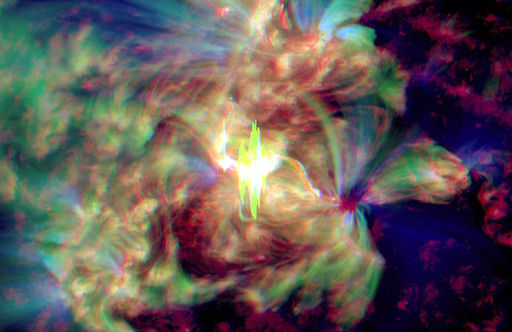
ADVANCING SUNSPOTS: A phalanx of sunspots is turning toward Earth. Their advance is documented in this two-day movie from the Solar Dynamics Observatory:

The large one in the middle, AR1401, has a “beta-gamma” magnetic field that harbors energy for M-class solar flares. At the moment it is unleashing one such flare every day, such as this flash recorded during the late hours of Jan. 19th. Eruptions from AR1401 will become increasingly geoeffective in the days ahead as the sun’s rotation aligns the active region with our planet.


fr/spaceweather.com

Solar Activity & SAT Debris

INCREASING SOLAR ACTIVITY CLEANS UP SAT-DEBRIS: Earth’s atmosphere has been puffing up in response to increasing levels of UV radiation from sunspots. This is good news for satellite operators, because a puffed up atmosphere helps clean up low-Earth orbit. “The number of cataloged debris in Earth orbit actually decreased during 2011,” reports Nick Johnson in NASA’s Orbital Debris Quarterlynewsletter. “[The figure below] illustrates how the rate of debris reentries from the Fengyun-1C anti-satellite test of January 2007 increased during the past year.”

“Even though only 6% of the total 3218 cataloged debris from the ill-advised engagement had reentered by the end of 2011, half of these debris fell out of orbit in the past 12 months,” he points out. “Likewise, many debris from the 2009 accidental collision of Cosmos 2251 and Iridium 33 are accelerating their departure from Earth orbit. In the absence of a new major satellite breakup, the overall orbital debris population should continue to decrease during 2012 and 2013.”

fr/spaceweather.com

Vaccinations and Pets

Vaccinating Unhealthy Pets: Beware Reactions & Vaccine Failure

by JAN RASMUSEN on JANUARY 16, 2012 · 0 COMMENTS

Despite the huge tumor on his mouth, this sweet dog was given 7 shots 4 weeks before this photo was taken. The tumor grew 10-15% after the shots.”

All vaccine labels and inserts state that vaccines are for use in “healthy dogs only.” Unfortunately, no one defines “healthy.”

Most knowledgeable vets agree that certain animals should NOT be vaccinated (absent proven, urgent need such as inevitable exposure to a life-threatening disease). These  include, but aren’t limited to, pets with autoimmune disease … pets undergoing chemo, radiation or surgery (even dental cleaning or neutering) … pets with autoimmune disease, cancer, severe allergies and skin diseases … pets fighting an illness or parasites … pets stressed from shipment or a move to a new home … malnourished pets … and dying housebound pets.  Assaulting the immune systems  of these animals with vaccination has been likened to throwing gas on a raging fire.

Vaccination is big business and an old habit.  Dogs and cats need an advocate with common sense (and a strong backbone) to stand up for their pets. That means you!

So why shouldn’t you vaccinate a sick, stressed or geriatric pet? For one thing, the pet may develop adverse reactions ranging from fever to seizures to autoimmune disease to anaphylactic shock  and even death. Furthermore,shots administered to an unhealthy animal may fail to provide immunity while giving you the false security that your dog is protected.  On top of that, the animal’s immune system, which should be fighting illness, may be diverted to handle the shot.

Vaccine manufacturer Pfizer states, regarding precautions when using their rabies vaccine:  “A protective immune response may not be elicited if animals are incubating an infectious disease, are malnourished or parasitized, are stressed due to shipment or environmental conditions, are otherwise immunocompromised….”

According to the University of Nebraska’s  “Understanding Vaccines”: “While it is common to vaccinate stressed animals, these animals are more susceptible to adverse vaccine reactions and frequently do not develop an adequate immune response. Immune stressed animals develop limited protection from vaccination.”

Drugs.com states, re the Rabies Vaccine Precautions:  ”… level of performance may be affected by conditions of use such as stress, weather, nutrition, disease, parasitism, other treatments, individual idiosyncrasies or impaired immunological competency.  These factors should be considered by the user when evaluating product performance or freedom from reactions.”

Even humans are at risk if a rabies shot fails and the animal becomes infected with rabies. So great is the danger of vaccinating sick and chronically-ill pets that many, if not most, state and local health authorities allow a temporary or permanent exemption from rabies vaccination for these pets. Click to learn how to apply for a rabies vaccination exemption.

I asked some veterinarian friends to share their opinions on this issue. (Note: bold blue type was done by me to emphasize important points.) Special thanks to over-vaccination activist Dr. Patricia Jordan for her help in rounding up responses and references.

From Tamara Hebbler, DVM, holistic consulting vet (San Diego):

The most disturbing, relatively routine, veterinary practice is vaccinating ill or compromised animals.  I am appalled that this is still happening yet I hear from my clients that it is more the norm than the exception.

Vaccinating a stressed or ill dog violates our Hippocratic Oath: Above All Do No Harm.  When an animal is going in for surgery or chemo, or has an autoimmune disease or neoplastic condition [a tumor], or even a chronic immune challenge such as allergies or endocrine/metabolic diseases, they are at a high increased risk to an adverse reaction to any vaccine. I liken such vaccination to playing Russian Roulette with an animal’s immune system — with 5 of the 6 barrels loaded, not just 1.

If negative reactions are severe enough, and immediate, most people will connect the reaction to the shot.  However, if the reaction develops over a few weeks or months, you may not tie it to the shot – and your vet probably won’t either. In standard veterinary practice, we have brief appointments and are very busy, I regret to say, treating many of the dis-ease states that we as a profession, with the help of the pet food industry, have created.  It is only through laborious record review that I made the connection.

Be bold and stand up for your pet especially when he or she is not feeling well. Just say NO to vaccinations and start researching and titer testing.

From Jean Hofve, DVM www.littlebigcat.com and www.spiritessence.com
Former Editor-in-Chief of the American Holistic Veterinary Medical Association Journal :

Vaccination puts a tremendous burden on the immune system to mount a protective response. If the response is to be adequate and provide protection against disease, there shouldn’t be any other immune-compromising stresses present. Clearly, an animal already fighting an infection, injury, or other illness is not going to have adequate resources to devote to the vaccine–and it could take away from its ability to fight what’s already there. Chemotherapy and steroids suppress the immune system and deplete its ability to produce a good vaccine response. Even something as seemingly benign as a bath or an elective surgery or dental procedure will reduce body temperature, a stress which can also inhibit the immune system. These are some of the reasons why the directions on every vial of vaccine say “for use in healthy animals only.”

from more comments, go to the source:   http://www.dogsnaturallymagazine.com/vaccinating-unhealthy-pets/

Evolution & Facial Features

Evolution Is Written All Over Your Face

ScienceDaily (Jan. 11, 2012) — Why are the faces of primates so dramatically different from one another?

Primates from Central and South America. (Credit: Image courtesy of University of California – Los Angeles)

UCLA biologists working as “evolutionary detectives” studied the faces of 129 adult male primates from Central and South America, and they offer some answers in research published Jan. 11, in the early online edition of the journal Proceedings of the Royal Society B. The faces they studied evolved over at least 24 million years, they report.

“If you look at New World primates, you’re immediately struck by the rich diversity of faces,” said Michael Alfaro, a UCLA associate professor of ecology and evolutionary biology and the senior author of the study. “You see bright red faces, moustaches, hair tufts and much more. There are unanswered questions about how faces evolve and what factors explain the evolution of facial features. We’re very visually oriented, and we get a lot of information from the face.”

Some of theprimate species studied are solitary, while others live in groups that can include dozens or even hundreds of others.

The life scientists divided each face into 14 regions; coded the color of each part, including the hair and skin; studied the patterns and anatomy of the faces; and gave each a “facial complexity” score. They studied how the complexity of primate faces evolved over time and examined the primates’ social systems. To assess how facial colors are related to physical environments, they analyzed environmental variables, using the longitude and latitude of primates’ habitats as a proxy for sun exposure and temperature. They also used statistical methods to analyze the evolutionary history of the primate groups and when they diverged from one another.

“We found very strong support for the idea that as species live in larger groups, their faces become more simple, more plain,” said lead author Sharlene Santana, a UCLA postdoctoral scholar in ecology and evolutionary biology and a postdoctoral fellow with UCLA’s Institute for Society and Genetics. “We think that is related to their ability to communicate using facial expressions. A face that is more plain could allow the primate to convey expressions more easily.

“Humans have pretty bare faces, which may allow us to see facial expressions more easily than if, for example, we had many colors in our faces.”

The researchers’ finding that faces are more simple in larger groups came as a surprise.

“Initially, we thought it might be the opposite,” Santana said. “You might expect that in larger groups, faces would vary more and have more complex parts that would allow one individual to identify any member of that group. That is not what we found. Species that live in larger groups live in closer proximity to one another and tend to use facial expressions more than species in smaller groups that are more spread out. Being in closer proximity puts a stronger pressure on using facial expressions.”

“This finding suggests that facial expressions are increasingly important in large groups,” said co-author Jessica Lynch Alfaro, associate director of the UCLA Institute for Society and Genetics. “If you’re highly social, then facial expressions matter more than having a highly complex pattern on your face. ”

The evolutionary biologists also found that when primates live in environment with more species that are closely related, their faces are more complex, regardless of their group size. This finding is consistent with their need to recognize individuals of other closely related species that live in the same habitat to avoid interbreeding, Santana said.

Santana, Lynch Alfaro and Alfaro present the first quantitative evidence linking social behavior to the evolution of facial diversity and complexity in primates, and they also show that ecology controls aspects of facial patterns.

As species live closer to the equator, the skin and hair around their eyes get darker, the biologists report. They also found that regions of the face around the nose and mouth get darker when species live in humid environments and denser forests and that facial hair gets longer as species live farther from the equator and the climate gets colder, which may be related to regulating body temperature.

“This is a good start toward understanding facial diversity,” Alfaro said. “There was not a good idea before about what aspects of faces were shaped by which evolutionary pressure. Sharlene [Santana] has been able to say what social complexity, social behavior and ecology are doing to faces.”

In the future, Santana, Lynch Alfaro and Alfaro may use computer facial-recognition software to help quantify the faces in a more sophisticated way. They also plan to study the faces of carnivores, including big cats.

Previous studies, they noted, have found that primate species with moustaches and beards (such as No. 11 and No. 9 in the accompanying image) tend to look poker-faced; they don’t move their faces much when they communicate, compared with other species (such as No. 4).

Alfaro praised Santana’s ability to answer some of these difficult evolutionary questions.

“Sharlene has tested ideas that have been virtually impossible to test before,” he said. “She has found a clever way to implicate the degree of sociality as contributing to the diversity of faces. Social behavior explains some aspects of facial diversity.”

Santana also devised a way to test a theory that has been in the biological literature for decades but had never been tested before. As a lineage diverges and species accumulate, a series of changes in facial coloration and body coloration emerges. The theory she was able to test suggests that once a species evolves to have a certain color, such as hair color, the change is irreversible and it cannot evolve back to a previous color in its lineage. Santana found this theory to be wrong.

“The idea in biology that evolutionary change is irreversible is rejected very strongly by our data,” Alfaro said.

Lessons for human faces?

Does the study have implications for the evolution of human faces?

The findings do suggest, Alfaro said, that an important factor in shaping human faces is the premium on making unambiguous facial expressions.

“Humans don’t have all these elaborate facial ornamentations, but we do have the ability to communicate visually with facial expressions,” Alfaro said. “Does reduced coloration complexity create a blank palate for visual expressions that can be conveyed more easily? That is an idea we are testing.”

Santana’s research is funded by fellowships from the National Science Foundation and UCLA’s Institute for Society and Genetics.

from:    http://www.sciencedaily.com/releases/2012/01/120111223744.htm

Images of Dark Side of the Moon

Dark Side of the Moon Revealed: Lunar Reconnaissance Orbiter’s LAMP Reveals Lunar Surface Features

e These images (insets) produced by the Lyman Alpha Mapping Project (LAMP) aboard NASA’s Lunar Reconnaissance Orbiter reveal features at the Moon’s northern and southern poles in the regions that lie in perpetual darkness. They shows many permanently shadowed regions, or PSRs, are darker at far-ultraviolet wavelengths (top) and redder than nearby surface areas that receive sunlight (bottom). The darker PSR regions are consistent with having large surface porosities — indicating “fluffy” soils — while the reddening is consistent with the presence of water frost on the surface. (Credit: Image courtesy of Southwest Research Institute)

ScienceDaily (Jan. 13, 2012) — New maps produced by the Lyman Alpha Mapping Project aboard NASA’s Lunar Reconnaissance Orbiter reveal features at the Moon’s northern and southern poles in regions that lie in perpetual darkness. LAMP, developed by Southwest Research Institute®(SwRI®), uses a novel method to peer into these so-called permanently shadowed regions (PSRs), making visible the invisible. LAMP’s principal investigator is Dr. Alan Stern, associate vice president of the SwRI Space Science and Engineering Division.

The LAMP maps show that many PSRs are darker at far-ultraviolet wavelengths and redder than nearby surface areas that receive sunlight. The darker regions are consistent with large surface porosities — indicating “fluffy” soils — while the reddening is consistent with the presence of water frost on the surface.

“Our results suggest there could be as much as 1 to 2 percent water frost in some permanently shadowed soils,” says author Dr. Randy Gladstone, an Institute scientist in the SwRI Space Science and Engineering Division. “This is unexpected because naturally occurring interplanetary Lyman-alpha was thought to destroy any water frost before it could accumulate.”

The LAMP team estimates that the loss of water frost is about 16 times slower than previously believed. In addition, the accumulation of water frost is also likely to be highly dependent on local conditions, such as temperature, thermal cycling and even geologically recent “impact gardening” in which micrometeoroid impacts redistribute the location and depth of volatile compounds.

Finding water frost at these new locations adds to a rapidly improving understanding of the Moon’s water and related species, as discovered by three other space missions through near-infrared emissions observations and found buried within the Cabeus crater by the LCROSS impactor roughly two years ago. During LRO’s nominal exploration mission, LAMP added to the LCROSS results by measuring hydrogen, mercury and other volatile gases ejected along with the water from the permanently shaded soils of the Moon’s Cabeus crater.

“An even more unexpected finding is that LAMP’s technique for measuring the lunar Lyman-alpha albedo indicates higher surface porosities within PSRs, and supports the long-postulated presence of tenuous ‘fairy-castle’ like arrangements of surface grains in the PSR soils,” says co-author Dr. Kurt Retherford, a senior research scientist also in SwRI’s Space Science and Engineering Division.

Comparisons with future LAMP maps created using data gathered from the Moon’s day side will prove helpful for revealing more about the presence of water frost, as well as the surface porosities of the darker surface features observed. The LAMP team is also eager to apply the Lyman-alpha technique elsewhere on the Moon and on other solar system objects such as Mercury.

LRO’s findings are expected to be valuable to the future consideration of a permanent Moon base. The permanently shadowed regions of the Moon are revealing themselves to be some of the most exotic places in the solar system, well worthy of future exploration, says Retherford. Any discovery of water frost and other resources in the area also could reduce the need to transport resources from Earth to a base at the pole.

from:    http://www.sciencedaily.com/releases/2012/01/120113210608.htm

Dog Behaviors, Triggers, and Training

Are You Making This Mistake When Your Pet Misbehaves?


Story at-a-glance

  • If your dog has a problem behavior, the first thing to do is identify what’s triggering it.
  • The next step is to figure out how to avoid the trigger so the problem doesn’t escalate (and so no one, including your pet, gets hurt).
  • Once your dog isn’t being triggered and he’s not responding from a place of fear, anxiety or aggression, he’ll be more receptive to behavior modification therapy.
  • Positive reinforcement behavior modification is the only effective way to alter your dog’s negative response to triggers. Punishment has no place in changing a dog’s behavior.
  • Setting realistic expectations for things your pet may and may never be comfortable doing will help you accept and adapt to your canine companion’s limitations.


By Dr. Becker

Most dog owners are at some point faced with a problem behavior in their otherwise adorable four-legged buddy.

When a troubling behavior arises in your pet, the first thing you should do is make an appointment with your vet to rule out an underlying physical cause for the behavior.

Pain can create or exacerbate undesirable behavior in animals.

So can a metabolic disorder, which is any disruption of the conversion of food to energy at the cellular level.

Examples of metabolic disorders include diabetes, Addison’s disease, Cushing’s syndrome, and hypo- or hyperthyroidism.

If a health problem is identified, it should of course be treated.

Only then will you know whether you’re dealing with a true behavior problem or behavior resulting from a physical cause.

Once medical problems are either ruled out or resolved, undesirable behaviors can be addressed.

Identifying the Problem Behavior and Its Triggers

The next step is to identify the problem behavior, how often it occurs, how severe it is, and what triggers it.

Let’s say your large dog gets very excited when guests come to visit and jumps up on them as his way of saying hello.

  • Problem behavior: jumping up on people.
  • Frequency: every time someone unfamiliar comes to the door.
  • Severity: dog cannot be restrained; guests are pawed, scratched, licked, in danger of being tripped or knocked down.
  • Trigger: visitors to your home.

Next Step: Avoiding the Triggers

Initially what you must do in a situation like the one above — since you can’t remove the trigger — is remove your dog from the triggering situation. This means you’ll need to put your dog in another room or the backyard before you open the door to guests.

This strategy as a first step helps your guests stay safe and stops the problem behavior from escalating.

The ultimate goal is to help your dog extinguish problem behaviors. But behavior modification training must be done when your pet is calm, because dogs don’t learn well in a highly aroused state. Initial behavior modification efforts should take place outside the presence of the triggering event.

In the meantime, your focus should be on avoiding the triggers that provoke your dog’s problem behavior so you can move forward safely and sanely with positive reinforcement behavior modification techniques.

Trigger Avoidance with Aggressive Dogs

If your pet is aggressive toward other dogs, places where lots of dogs gather should be avoided.

When you walk a dog-aggressive dog, try to steer clear of areas where there are other dogs, and pick times of day when few dogs are being walked. Find places to walk where you’re not apt to encounter other dogs. And make sure your own energy is calm and relaxed on walks, because your dog will pick up on your mood.

When you do come upon another dog, create space between your dog and the other one, and keep your dog in control. Head collars can help, and avoid retractable leashes. Use a set-length leash for improved control.

If your dog is aggressive toward you or other family members, the first order of business is to take common-sense steps to prevent injury to the humans involved.

Identifying which situations seem to trigger your pet’s aggressiveness is important. If your dog is aggressive at meal time, she should be fed in a quiet spot, and needless to say, she should not be disturbed while eating.

If she’s aggressive when awakened, don’t allow her to snooze on furniture, and if you need to wake her, call her from a distance.

If her aggression appears during a particular game you play with her, avoid the game.

If your dog is aggressive toward visitors, your first priority is to keep guests safe. Secure your dog in another area before allowing visitors into your home or yard. If you have a lot of visitors or your dog is hard to catch, leave a leash either by the door or on your pet to improve your control over the situation.

Trigger Avoidance with a Territorial Dog

If your dog snarls, growls or barks excessively looking out a window or door, or from behind your backyard fence, you’ll need to block either his visual or physical access.

Close the blinds, close the door, or restrict your pet’s access to the room or the fenced area where he becomes territorial.

If you have more than one dog and they fight, it’s often a territorial behavior problem. Separate the dogs at meal time and maintain control over toys and any other triggers you’ve identified.

You might also choose to use leashes or head collars at home to have better control when a fight starts.

Managing a Destructive Dog

First, remove all temptations (also known as avoiding triggers). If your dog gets into the garbage, place it behind a cabinet door with a lock or in another hard-to-reach spot.

If your dog counter surfs, make sure no food is left out. If she chews up shoes, items of clothing or other belongings, make sure she doesn’t have access to those things.

Provide your pet with plenty of exercise, attention, and toys that are mentally stimulating.

Crate train your dog and tuck her in there when there’s no one available to supervise her behavior.

If she’s eliminating indoors, review and implement house-training techniques.

Managing Your Own Response to Problem Behaviors

When your dog is actively engaged in a problem behavior, your response must be calm and controlled.

Try to remove your pet from the situation if it’s safe to do so, or remove the trigger. Failing that, calmly try to redirect your dog’s attention with a command he normally responds to, or attempt to distract him with a food treat, a favorite toy, a walk or a ride in the car.

Remember, you’re only using these diversionary tactics to avert potential disaster. Doing so at every turn will only reinforce the behavior you ultimately hope to extinguish.

All you want to do in the heat of the moment is not make the situation worse. When your dog is highly aroused, upset and reacting with undesirable behavior, it is not the time to attempt to train him.

Punishment Creates More Problems and Solves Nothing

If you find the evidence of a problem behavior after the fact, for example, a puddle on the carpet or a shoe chewed beyond recognition, the only productive thing to do is clean up the mess and vow to avoid the trigger in the future. Ask yourself how your dog was left unsupervised long enough to relieve herself on the floor or destroy footwear, and decide what steps you’ll take to avoid the problem next time.

Most importantly, you never want to respond to your dog’s undesirable behavior with aggression or punishment. Punishing your dog after the fact for a behavior you didn’t see happen can quickly turn her into a sneaky piddler or destroyer of belongings.

Being aggressive and punishing with a dog in a highly aroused, reactive state is a recipe for disaster. This type of response can cause the dog’s behavior to escalate, resulting in injury to one or both of you.

Punishing your dog can increase his anxiety, fear and aggressiveness, while making no change in his behavior. It can also sometimes stop only what you see on the outside, without improving your pet’s underlying emotional state. Often the result is a problem behavior that appears randomly, giving you no opportunity for trigger avoidance.

With all that said, you also don’t want to respond in a comforting way to a problem behavior. Your dog can easily mistake comforting words and touch for praise, which increases the likelihood he’ll continue to perform the undesired behavior.

The Goal of Trigger Avoidance and Control

The goal in managing your pet’s problem behavior is to keep it from escalating while you work with your dog toward a more permanent solution.

One of the main goals of positive reinforcement behavior therapy is to change the dog’s underlying emotional state. Once your pet is no longer aggressively aroused and full of fear, she is open to learning different responses.

If you feel changing your dog’s behavior is something you need help with, I recommend a consultation with a certified animal behavior specialist.

There are also some excellent online resources for dog parents who are looking for canine behavior and training tips. A few of my favorites include:

Setting Realistic Expectations

to read more, go to:   http://healthypets.mercola.com/sites/healthypets/archive/2012/01/05/how-to-get-the-wellmannered-dog-your-family-deserves.aspx?e_cid=20120115_SNL_TPA_1

Sunspot Activity

ACTIVE SUNSPOTS: Crackling with C-class solar flares, a pair of active sunspots is emerging over the sun’s northeastern limb. NASA’s Solar Dynamics Observatory photographed the pair during the early hours of Jan. 15th:

These sunspots have the potential for strong eruptions. Sunspot 1401 produced an M1-flare on Jan. 14th. Two days earlier, while it was still on the farside of the sun, sunspot 1402 produced a partially-eclipsed flare of uncertain magnitude that created waves of ionization in the atmosphere over Europe.

NOAA forecasters estimate a 30% chance of more M-flares during the next 24 hours

fr/spaceweather.com

White House Nixes SOPA, PIPA

White House Will Not Support SOPA, PIPA

White House Sopa

The Huffington Post    First Posted: 1/14/12 12:19 PM ET Updated: 1/14/12 01:58 PM ET

 Saturday marked a major victory for opponents of proposed anti-piracy legislation Stop Online Piracy Act (SOPA) and PROTECT IP Act (PIPA), which would target foreign-based websites violating U.S. copyrights.

House of Representatives bill SOPA and its Senate counterpart PIPA are designed to punish websites that make available, for example, free movies and music without the permission of the U.S. rights holders. Opponents of the bills, however, worry that the proposed laws would grant the Department of Justice too much regulatory power. Google Chairman Eric Schmidt has called the measures “draconian.” Other Internet giants who oppose the bill include Facebook, eBay, Mozilla, Twitter, and Huffington Post parent company AOL.

The White House on Saturday officially responded to two online petitions, “Stop the E-PARASITE Act” and “Veto the SOPA bill and any other future bills that threaten to diminish the free flow of information,” urging the President to reject SOPA and PIPA.

The statement was drawn up by Victoria Espinel, Intellectual Property Enforcement Coordinator at Office of Management and Budget, Aneesh Chopra, U.S. Chief Technology Officer, and Howard Schmidt, Special Assistant to the President and Cybersecurity Coordinator for National Security Staff. They made clear that the White House will not support legislation that disrupts the open standards of the Internet.

“While we believe that online piracy by foreign websites is a serious problem that requires a serious legislative response, we will not support legislation that reduces freedom of expression, increases cybersecurity risk, or undermines the dynamic, innovative global Internet,” the statement read in part.

The White House statement went on to say, however, that the Obama Administration believes “online piracy is a real problem that harms the American economy” and that 2012 should see the passage of narrower legislation that targets the source of foreign copyright infringement.

The letter also highlighted the following four points:

Any effort to combat online piracy must guard against the risk of online censorship of lawful activity and must not inhibit innovation by our dynamic businesses large and small. […] We must avoid creating new cybersecurity risks or disrupting the underlying architecture of the Internet. […] That is why the Administration calls on all sides to work together to pass sound legislation this year that provides prosecutors and rights holders new legal tools to combat online piracy originating beyond U.S. borders […] We expect and encourage all private parties, including both content creators and Internet platform providers working together, to adopt voluntary measures and best practices to reduce online piracy.

This is not the end of the debate, the White House statement emphasized. “Moving forward, we will continue to work with Congress on a bipartisan basis on legislation that provides new tools needed in the global fight against piracy and counterfeiting, while vigorously defending an open Internet based on the values of free expression, privacy, security and innovation,” the letter also read.

Following the release of the White House’s statement, SOPA sponsor and House Judiciary Chairman (R-Texas) Lamar Smith issued a statement of his own.

“I welcome today’s announcement that the White House will support legislation to combat online piracy that protects free speech, the Internet and America’s intellectual property,” Smith said,according to The Hill. “That’s precisely what the Stop Online Piracy Act does.”

On Friday, CNET reported that Smith said he will remove from the bill one of the most hotly contested provisions, Domain Name System requirements. Previously, SOPA had called for DNS blocking of infringing websites.

On Thursday, PIPA author Senator Patrick Leahy (D-Vermont) said that “more study” was needed to asses the bill’s DNS-blocking provision.

The White House’s statement condemned DNS blocking in regulatory efforts and said that it “pose[s] a real risk to cybersecurity and yet leave contraband goods and services accessible online. We must avoid legislation that drives users to dangerous, unreliable DNS servers and puts next-generation security policies, such as the deployment of DNSSEC, at risk.”

A House Oversight Committee hearing on SOPA’s DNS-blocking provision had previously been scheduled for January 18. However, according to Tech Dirt, Oversight Committee Chairman Darrell Issa (R-California) said that the hearing will be postponed for the time being and that the focus now should be placed on the Senate’s PIPA bill, which Senate Majority leader Harry Reid has committed to moving forward in the next two weeks.

from:    http://www.huffingtonpost.com/2012/01/14/white-house-sopa-pipa_n_1206347.html

5 Companies With Positive Effects in 2011

Five Companies Who Did Something Positive for the World in 2011

10th January 2012

By Lauren Kelley – alternet.org

While no company is perfect, it’s good to know that at least a few for-profit entities did some good things for the environment and society in 2011.

Occupy Wall Street has us all thinking about the bad things companies can do – and rightly so, because often those things are very, very bad. (The 2008 financial meltdown, anyone?How about the ongoing foreclosure crisis?) But sometimes some companies take steps in a positive direction, and it’s worth giving those efforts a look as well.

First, let me make one thing clear: a company’s inclusion on this list does not mean it is outstanding in every facet of its business. Quite the contrary. But each of these companies has done at least some things this year that are worthy of praise.


It’s also worth acknowledging that there are scores of companies that launched socially responsible initiatives in 2011, and many of them were surely commendable. But the purpose of this article isn’t to pat companies on the back for giving back to the world; really, every company should be doing that, at the bare minimum. Below you’ll find only companies that engaged in efforts that are changing – or at least have the potential to change – corporate America for the better. That’s a slippery metric, no doubt, but it offers a good starting point for examining corporate social responsibility.

1. Ben & Jerry’s

In October, when Occupy Wall Street was in its relative infancy, the Ben & Jerry’s board of directors recognized the power of the movement, and issued a letter of support. The letter, titled “We Stand With You,” read in part:

We, the Ben & Jerry’s Board of Directors, compelled by our personal convictions and our Company’s mission and values, wish to express our deepest admiration to all of you who have initiated the non-violent Occupy Wall Street Movement and to those around the country who have joined in solidarity. The issues raised are of fundamental importance to all of us. These include:

–The inequity that exists between classes in our country is simply immoral.

– We are in an unemployment crisis. Almost 14 million people are unemployed. Nearly 20% of African American men are unemployed. Over 25% of our nation’s youth are unemployed.

– Many workers who have jobs have to work 2 or 3 of them just to scrape by.

– Higher education is almost impossible to obtain without going deeply in debt.

–Corporations are permitted to spend unlimited resources to influence elections while stockpiling a trillion dollars rather than hiring people.

Ben & Jerry’s is known for having maintained its social and environmental standards even after “selling out” to Unilever. But still, it was a bold move for a corporation to throw its support behind a movement that is largely defined by its anti-corporatism.

The company also gave out free ice cream to protesters in New York and D.C., where the company’s founders, Ben Cohen and Jerry Greenfield, did a little ice cream scooping of their own.

Some protesters have expressed concerns about Ben & Jerry’s co-opting the Occupy movement, and that’s fair. They have reason to be skeptical. But it’s noteworthy that Ben & Jerry’s is the only major company to have explicitly endorsed Occupy Wall Street. In fact, it’s hard to imagine another large company that would.

2. Patagonia

Outdoor gear and clothing company Patagonia made waves towards the end of 2011 when it rolled out an anti-consumerist ad campaign featuring the slogan “Don’t buy this jacket.”

Introduced on Cyber Monday (the post-Thanksgiving shopping holiday), the ad campaign is tied to Patagonia’sCommon Threads Initiative to reduce excess consumption. The five tenets of the initiative are to:

–Reduce: make useful gear that lasts a long time

–Repair: help consumers patch up their Patagonia products

–Reuse: help shoppers find homes for gear that’s no longer needed

–Recycle: take back old products that are un-fixable

–Reimagine: “reimagine a world where we take only what nature can replace”

The initiative isn’t new, but the advertising tactic is – and it got a significant amount of attention. Not all of the attention was positive, but at the very least the ads sparked a conversation about consumerism.

Despite some reports to the contrary, Patagonia says it did not donate any gear to the Occupy movement; still, one has to wonder if the company’s latest ad campaign was influenced by Occupy’s anti-corporate message.

3. H&M

In the past, H&M has been targeted for doing a number of irresponsible things, from making “disposable” clothing to stealing designs and destroying perfectly good clothes that could have been donated to people in need. But this year the company did at least one positive thing: itannounced that it would aim to procure all of its cotton from sustainable sources by 2020, which is considered an ambitious goal among major retailers.

As part of its new focus on sustainability, H&M launched its “Conscious Collection” in April. The line is available worldwide and features more environmentally friendly materials like organic cotton and recycled fibers.

Also, by the end of this year H&M will have replaced most of its hangers with multi-function hangers that are meant to reduce waste in the long term. As for the old hangers, H&M claims that 85% of them have been recycled.

These steps may be relatively modest, but they’re significant within the “fast fashion” industry, which is notorious for its waste. The hope is that H&M’s efforts will become the industry standard, and chains like Forever 21 and Zara will be pressured to follow suit.

4. Hewlett-Packard

HP topped Corporate Responsibility magazine’s 2010 list of corporate citizens, in part because of the company’s instrumental role in leading the electronics industry away from the use of so-called conflict minerals – materials mined in areas where human rights abuses are rampant.

In partnership with the Electronics Industry Citizenship Coalition and the Global eSustainability Initiative Extractives Group, HP has lobbied for legislation to curb the use of conflict minerals, especially from the Democratic Republic of the Congo. Another result of HP’s lobbying efforts is that electronics companies now must report whether their products are manufactured using conflict minerals.

HP is recognized as a leader in this realm, in part because the company chose to dig deep into the conflict minerals issue even though a company review showed that its products could not be linked directly to conflict mineral sources. HP executive Zoe McMahon told CNET last year, “Because our suppliers are not using material from the DRC, that gave us some comfort. But to this day, there is still no certification mechanism that can assure us wholeheartedly that they are not sourced from the DRC. Once metals are with smelters, it’s difficult to know where the material comes from.”

Although HP’s conflict minerals efforts didn’t start in 2011, the company did advance its agenda by participating in the Organisation for Economic Co-operation and Development’s Due Diligence Guidance pilot program, which is focused on ensuring “responsible supply chains of minerals from conflict-affected and high-risk areas.”

5. Method

Since it was founded, Method Products has been recognized as a ground breaking sustainable home care company. This year the popular maker of soaps and home cleaning products continued to revolutionize the way sustainable products are sold by helping them reach a broader audience – the Walmart- and Target-shopping set.

Method’s popularity is thanks in large part to its marketing strategy. Rather than tout the environmental benefits of its products (of which there are many), the company focuses on “rid[ding] your home of toxic chemicals” – something people of all political persuasions can get behind, rather than just the liberal and environmentally-inclined. This strategy helped Method get its products on the shelves of major chain and grocery stores, thus helping bring sustainable products to many more consumers. And unlike Seventh Generation, Method’s leaders so far appear to remain committed to the company’s sustainability goals.

Now this is kind of cheating, because this product was launched in 2010, not 2011, but Method’s super-concentrated laundry detergent continued to have a positive impact on the detergent industry this year. While other companies have been filling shelves with 2x concentrated detergents (which are better for the environment and consumers than non-concentrated detergent), Method went six steps further, releasing an 8x concentrated detergent. As Fast Company notes, the product may be “the greenest laundry detergent to ever hit store shelves,” and the only reason other companies haven’t followed suit is because they’re focused on selling consumers more product – not doing what’s best for the environment.

While no company is perfect, it’s good to know that at least a few for-profit entities did some good things for the environment and society this year. May we see broader leaps in the new year.

About the Author

Lauren Kelley is an associate editor at AlterNet and a freelance writer and editor who has contributed to Change.org, The L Magazine and Time Out New York

from:    http://wakeup-world.com/2012/01/10/five-companies-who-did-something-positive-for-the-world-in-2011/