2012 Volcano Report fr/Erik Klemetti

2012 Volcanic Year in Review

The submarine eruption at El Hierro continued into 2011. Image: INVOLCAN

2012, for all the hype about apocalypse, was a volcanically-quiet year. No Eyjafjallajökulls, no Puyehue-Cordon Caulles, no Pinatubos. Sure, we had some notable eruptions, but most were small-to-moderate events that, many times, won’t even end up getting preserved in the geologic record. However, that didn’t stop me from posting way too much! No, really, it was still a great year for Eruptions, with decidedly more posts about the science of volcanoes when the actual volcanic events were low. Here is the 2012 Volcanic Year in Review!


January

The start of the year got us starting to wonder about potential eruptions that might follow — including heightened alert at Lascar (that didn’t lead anywhere) and increasing activity at Popocatépetl (that sort of led somewhere). We also saw some of the last gasps of the submarine eruption at El Hierro in the Canary Islands, but as you’ll see, it hasn’t stopped the island from rumbling.

However, the media was caldera crazy to start 2012. Maybe it was just the tip of the Maya iceberg, but the Daily Mail opened January with a terrible article about the supposed immediate threat that Laacher See posed to Europe. The newspaper had to rescind the article come February. I dissected some of the conspiracy theories surrounding Yellowstone and we had some rumblings of two active caldera systems: Santorini and Long Valley.

I also tackled your questions about my 2011 post on falling into lava, I put together a gallery of images related to some of the many volcano observatories around the world and looked that the supposed danger (and younger age) of Ubehebe Crater in California.

February

Probably the biggest show in February was the fire fountains and lava flows from Etna during one of its many paroxysms of 2012. Not only are Etna’s eruptions spectacular, but they occur in a highly populated area – unlike the periodic dome growth and explosions that occur at Alaska’s remote Cleveland volcano or Pagan in the Mariana Islands. These volcanoes require satellites to watch them carefully to see activity when there is no one on the ground to notice it happening. Two volcanoes had small eruptions that looked like they could be leading to larger events, but neither Kanaga nor Rincón de la Vieja had much to show for 2012 when all was said and done.

After feeling a little jaded about all the “bad journalism” posts I had to tackle, I decided instead to look at why I love volcanoes (much more satisfying). February also brought some great vistas from above, including a shot of the island of Java and a multitude of volcanoes from space. I tried to explain how bubbles in magma lead to explosive eruptions and Dr. Shan de Silva answered your questions about Andean calderas.

I also tackled a topic that came up repeatedly during the year – the missing eruptions in the ice cap record. Namely, the ice cores suggest a large eruption in 1258 AD, but no source has been definitively identified (although inroads have been made). Another mysterious caldera eruption, the Kuwae caldera eruption in the 1450s, was also examined about whether it actually occurred.

March

Etna kept up its pace with another paroxysm to start the month, but for me, the real news was the unrest at Colombia’s Nevado del Ruiz. By the end of March, INGEOMINAS was expecting an eruption of the volcano near my mother’s hometown in “days to weeks.” Iliamna in Alaska also began to show unrest, with elevated seismicity that has persisted throughout the year.

One of the perks of my job at Denison is the field trips — and 2012 was no exception as I got to take students through some of the volcanic landforms of the Owens Valley in California, including Coso and the Long Valley caldera. I also looked at how hurricanes might influence volcanic eruptions after some research on Pinatubo and other subtropical/tropical volcanoes. March also saw the 30th anniversary of the eruption of El Chichón in Mexico – I looked back on the event and what might be in store at the volcano.

A March 23 image of Askja in Iceland, whose crater lake melted earlier than expected. Image: NASA.

April

Another month, another paroxysm at Etna. What we didn’t know then is that after April, activity at Etna would drop significantly. We had a little mystery in Iceland, where the crater lake at Askja was unexpectedly ice free months ahead of usual. Meanwhile, Nevado del Ruiz continued to rumble in Colombia. However, the most eyes were trained on Mexico’s Popocatépetl, where continued small explosions and seismicity prompted increased worry that a major eruption was brewing. However, as much as the volcano rumbled, nothing big came during 2012.

I tried to answer a question I get frequently: can humans trigger a volcanic eruption (short answer: maybe, but it would be hard and pointless). I also took on the quacks who try to sell bogus earthquake/eruption predictions (with some amusing backlash in the comments). I offered up a challenge to the earthquake prediction crowd, include the quackiest of the bunch, Piers Corbyn, but no one took me up on it.

May

Fuego in Guatemala was the headliner for May, producing its largest eruption in years. We also had ash from Nevado del Ruiz fall on cities close to the volcano like Manizales and Pereira. Other eruptions were so remote that only satellites caught the action, like the plume from Curry in the South Sandwich Islands.

Without a lot of other volcanic news during May, I looked at a pile of volcanic research, including the timing of caldera-forming eruptions at Yellowstone, volcanic lightning, the fate of all that volcanic ash, what to expect from the Baekdu Caldera in China/North Korea and how crystals can unravel the subvolcanic magmatism at active volcanoes.

June

Both Popocatépetl and Nevado del Ruiz kept on producing small eruptions as we headed into June, while Cleveland in Alaska had a explosive eruption, likely due to collapse of the dome that had been growing in the crater since earlier in the spring. We also saw the alert status raised at El Hierro in the Canary Islands for the first time in months after an intense seismic swarm occurred — but this swarm didn’t lead to any new eruption.

June marked the 100th anniversary of the largest explosive eruption of the 20th century – the famed Novarupta/Katmai eruption that produced the Valley of 10,000 Smokes. It was also the 1st anniversary of another significant eruption, the Puyehue-Cordón Caulle eruption in Chile/Argentina. Speaking of volcanically-active area, I decided to take a look at volcanism on Io and just how hot the surface of Jupiter’s inner moon might be.

July

July wasn’t too eventful on the volcanic front — but it definitely kept me on my toes after the 2012 Derecho knocked power out in Granville for 10 days. However, in volcano news, we began to get signs that Tongariro in New Zealand might be up to something — seismic activity began to rise and volcanic gas emissions followed suit. Sakurajima, a fan favorite, also produced some of its larger explosions in the past few years.

I spent a lot of July on the road, mostly out in California doing labwork with my research student — but I did get to check out the Clear Lake area and saw some of California’s volcanic features from 30,000 feet. I also tackled why the volcanic rumblings in Colombia likely reflect more monitoring rather than more activity and how artificial volcanoes aren’t the cure-all for global warming.

A weather satellite image of the eruption plume from Tongariro in New Zealand. Image: NASA/NOAA/CIMSS

August

By the time August rolled in, it was becoming clear that 2012 was lining up to be a volcanically-quiet year (no matter what conspiracy fans tried to deny it). However, if you were in New Zealand in August, you wouldn’t have thought it was that quiet. Mere hours after I posted about the potential dangers of visiting White Island as a tourist, Tongariro had its first eruption on its main edifice in over 110 years. It turned out to be a minor, mostly steam-driven eruption. White Island also had a small explosive event to go with Tongariro’s … but that’s not all! A pumice raft was discovered in the Kermadec Islands north of New Zealand and eventually tracked back to a mid-July submarine eruption at the hitherto unrecognized seamount Havre. Sonar surveys later in the fall confirmed it as the source of the pumice raft as a new cone was imaged and all the pumice is still floating out in the western Pacific.

In other parts of the world, the Grozny Group in the Kuril Islands had a small explosive eruption while a small tephra cone was seen growing in the Buoco Nuovo crater at Etna.

September

Over the course of the fall, Nicaragua’s San Cristobal experienced eruptions large enough to prompt evacuations of people living near the volcano. Little Sitkin joined the parade of Alaskan volcanoes that showed signs of unrest, as a seismic swarm was noted at the remote volcano. We also saw ash from Anak Krakatau spread as far as 80 km from the island volcano — and I looked at how many people are displaced by volcanic activity in Indonesia. The future of Yellowstone caldera was the subject of a special paper in GSA Today (and guess what? It isn’t “end times”.)

In guest post at Lookout Landing, a blog about the Seattle Mariners, I discussed the potential volcanic threat Rainier poses to the Seattle/Tacoma area. I also took on the DOOOOOM that permeates media reports on volcano research — and lead me to write “A Media Guide to Volcanoes“.

October

I started October with one of my favorite satellite images of 2012 — a look down at the Three Sisters region in Oregon. In active volcanic events, the lava lake at the Halema’uma’u Crater on Kilauea reached a new high, while a new lava lake might have been spotted at the remote Indian Ocean volcano, Heard Island. We also saw a phreatic explosion at Poás in Costa Rica.

I talked about the great GSA Field Forum in the Sierra Nevada that I attended over at the GSA Speaking of Geoscience blog. My experiments with R produced a list of the most active volcanoes (in terms of >VEI 5 eruptions) during the last 10,000 years. I also looked at how to discuss models versus observations in science research and some fearmongering in the media over Salton Buttes and Newberry caldera. We also saw the unfortunate verdict of the l’Aquila trial in Italy, a verdict that could have ramifications in hazard monitoring for years.

The fissure vents from the late November eruption of Tolbachik. Image: KVERT.

November

November was the host to a number of eruptions, most prominently the second explosion of 2012 at New Zealand’s Tongariro. This came very soon after an alert from GNS Science about elevated temperatures at Ruapehu, Tongariro’s neighbor (and in all likelihood, a complete coincident). Volcanoes in Indonesia were as busy as ever while Santa Maria in Guatemala had some of its most vigorous activity in a while. A small plume was also spotted at Chirpoi in the Kuril Islands. However, the big action of November was just to the north of Chirpoi, on the Kamchatka Peninsula. In late November, Tolbachik, part of a complex of volcanoes that includes Bezymianny and Kliuchevskoi, had its first eruption in 36 years. It was an impressive fissure eruption that had produced lava flows that travels 10s of kilometers down the slopes of the volcano.

With all the excitement of the US Presidential election in early November, I looked at the perception of probability versus prognostication when it comes to volcanic mitigation. If you’re looking for a volcano movie to watch, I finally wrote up my guide to volcanic cinema and I described what a SHRIMP-RG is and how I use it in my research.

December

As 2012 drew to a close, we were greeted by the media frenzy about the supposed December 21 “Maya Apocalypse” and considering that you’re reading this, it is safe to say that the end of the world was not 12/21/12. The Tolbachik eruption went strong for much of the month, with some gorgeous lava flows that showed off all the textbook features we look for in these volcanic events. New Zealand’s White Island produced something that hasn’t been in any textbook: an odd looking spiky spine/dome in the central crater. We also got an impressive eruption from Ecuador’s Tungurahua and some evidence that active volcanism might be occurring on Venus. However, just as the year was coming to a close, Copahue on the Chile/Argentina surprised us with an unexpected eruption, sending a plume across southern South America. I closed out the year talking about why rocks melt on Earth — a useful thing to know if you’re into volcanoes!

So, there you have it. The Volcanic Year in Review … and hopefully 2013 will bring us more volcanic excitement.


Erik Klemetti

Erik Klemetti is an assistant professor of Geosciences at Denison University. His passion in geology is volcanoes, and he has studied them all over the world. You can follow Erik on Twitter, where you’ll get volcano news and the occasional baseball comment.

from:    http://www.wired.com/wiredscience/2013/01/2012-volcanic-year-in-review/#more-143110

Mediterranean Sea Earthquake 01/08

Earthquake in the Mediterranean Sea close to Turkey

Last update: January 8, 2013 at 3:29 pm by By

Screen Shot 2013-01-08 at 16.17.54

Update 14:49 UTC : USGS theoretical calculations are reporting a max. MMI of VII near the epicenter, but probably less on the islands. So far only a MMI V to VI has been seen which is a good sign. MMI V to MMVI (moderate to strong shaking) will lead to eventually minor damage like cracks in walls.

Update 14:46 UTC : The island of Lemnos, Greece is closest to the epicenter, but this does not mean that the strongest shaking will have been felt at Lemnos. It depends also of the propagation of the earthquake wave.  Too soon to find out, but if people living at Lemnos or close to the epicenter (radius of 40 to km) can tell us how the earthquake was felt, a lot will be clarified.

Update 14:34 UTC : ER calls this earthquake moderately dangerous for the islands in the direct area of the epicenter. Not strong enough for a tsunami. The earthquake was felt as far as Istanbul and Sofia

Update 14:25 UTC :  The earthquake struck in Mediterranean waters. Very close to Myrina island.

Update : the first preliminary reports are mentioning a M5.9 earthquake off the Turkey coast probably felt in many countries

Based on an increasing number of visitors joining us from Bulgaria, we believe that an earthquake was felt. When you are one of the people who experienced this earthquake, please fill in the form behind “I Felt A (not Listed) Earthquake”. Thank you.

Screen Shot 2013-01-08 at 15.28.08
Listen to the earthquake – Soundquakes by flyrok.org

Most important Earthquake Data:
Magnitude : Mw 5.7
UTC Time : 2013-01-08 14:16:09 UTC
Local time at epicenter : 2013-01-08 16:16:09 UTC+02:00 at epicenter
Depth (Hypocenter) : 9.9 km
Geo-location(s) :
Approx. 25 km from Lemnos, Greece
47km (29mi) WSW of Bozcaada, Turkey
67km (42mi) WSW of Ezine, Turkey
80km (50mi) NW of Mitilini, Greece
89km (55mi) SW of Canakkale, Turkey
246km (153mi) NE of Athens, Greece

for more informaitoin, go to:    http://earthquake-report.com/2013/01/08/strong-earthquake-in-the-eastern-mediterranean-sea-close-to-lemnos-and-the-turkish-coast-greece-turkey-bulgaria/

On Magnetic Fields & Shells

Magnetic shell provides unprecedented control of magnetic fields January 4, 2013 by Lisa Zyga feature
 The newly designed magnetic shell can either expel or concentrate magnetic energy.
A general property of magnetic fields is that they decay with the distance from their magnetic source. But in a new study, physicists have shown that surrounding a magnetic source with a magnetic shell can enhance the magnetic field as it moves away from the source, allowing magnetic energy to be transferred to a distant location through empty space. By reversing this technique, the scientists showed that the transferred magnetic energy can be captured by a second magnetic shell located some distance away from the first shell. The second shell can then concentrate the captured magnetic energy into a small interior region. The achievement represents an unprecedented ability to transport and concentrate magnetic energy, and could have applications in the wireless transmission of energy, medical techniques, and other areas.
The physicists, Carles Navau, Jordi Prat-Camps, and Alvaro Sanchez at the Autonomous University of Barcelona in Spain, have published their results on their new method of magnetic energy distribution and concentration in a recent issue of Physical Review Letters. “We have tried with this work to open new ways of shaping magnetic fields in space,” Sanchez told Phys.org. “Since magnetic fields are so crucial for so many technologies (e.g., almost 100% of the energy generated uses magnetic fields), finding these new possibilities may bring benefits.” The basis of the technique lies in transformation optics, a field that deals with the control of electromagnetic waves and involves metamaterials and invisibility cloaks. While researchers have usually focused on using transformation optics ideas to control light, here the researchers applied the same ideas to control magnetic fields by designing a magnetic shell with specific electromagnetic properties. The shell can be used to control magnetic fields in two ways, depending on its location relative to a magnetic source. When a magnetic source is placed inside the shell, the shell expels the magnetic energy outside. When the shell is placed near a magnetic source located outside the shell, the shell harvests and concentrates the magnetic energy from the source into a hole in the shell’s center. Magnetic shell provides unprecedented control of magnetic fields Enlarge
Magnetic shells can be used to increase the magnetic energy of multiple magnets: The four magnetic dipoles in (a) interact very weakly, even when they are moved closer together in (b). However, when all four dipoles are surrounded by a shell as in (c), their exterior fields become enhanced, yielding a stronger magnetic field in the center region. Credit: Carles Navau, et al. ©2012 American Physical Society
In both cases, the shell works by dividing the space into an exterior and interior zone and then transferring the magnetic energy completely into one domain or the other. This method differs from the way that superconductors and ferromagnets distribute magnetic energy, where the energy always returns to the domain where the magnetic sources are. Although no material exists that can perfectly meet the requirements for the magnetic shell’s properties, the physicists showed that they could closely approximate these properties by using wedges of alternating superconducting and ferromagnetic materials.
For practical purposes, this approximation is sufficient to work for a variety of potential applications, in which the magnetic shell’s two functions (transferring and concentrating) can be used together or independently. For instance, by surrounding two magnetic dipoles with their own shells, the magnetic coupling between them can be enhanced, which could be used to improve the efficiency of wireless power transmission between a source and a receiver. With its ability to concentrate nearby magnetic fields, a single magnetic shell could also be used to increase the sensitivity of magnetic sensors. The scientists demonstrated that a magnetic sensor placed inside the shell can detect a much larger magnetic flux from an external magnetic source than it would when using a typical concentration strategy involving superconductors. Magnetic sensors are often used in consumer electronics, factory automation, navigation, and many other areas. The magnetic shell could also have medical applications, such as for biosensors that measure the brain’s response in magnetoencephalography, a technique used for mapping brain activity. The physicists also showed that the shells can be used to surround multiple magnetic sources arranged in a circle, allowing them to concentrate magnetic energy in the center of the circle. This arrangement could be used in transcranial magnetic stimulation (TMS), a technique used to treat psychiatric disorders. While TMS generally targets regions near the brain’s surface, the magnetic shells could help extend the reach of magnetic fields to deeper targets. Magnetic energy also plays a vital role in power applications, such as in power plants, magnetic memories, and motors. All of these applications require magnetic energy to be spatially distributed or concentrated in a certain way. By enabling the control of magnetic energy in new ways, the magnetic shells could improve these applications and others due to their many possible configurations. “We are presently working on extending these ideas of applying transformation optics to the magnetic case into different directions, and see how future designs can be implemented in practice (in the present case, we suggested superconductors and ferromagnetic materials as a practical implementation of the magnetic shell),” Sanchez said. More information: Carles Navau, et al. “Magnetic Energy Harvesting and Concentration at a Distance by Transformation Optics.” PRL 109, 263903 (2012). DOI: 10.1103/PhysRevLett.109.263903

Read more & get images at: http://phys.org/news/2013-01-magnetic-shell-unprecedented-fields.html#jCp

Norma Gentile January Sound HEaling

January Sound Healing: Claritas Inspiravit - Clarity Inspires

January Sound Healing: Claritas Inspiravit – Clarity Inspires

Story by: Norma Gentile

 A live improvisation from Spirit

Norma Gentile, voice

Gordon Johnston, harp

Click to listen to sound healing

So often we are not sure of what to do or even how to figure out what to do.  Here is a song, drawn through both Gordon and myself as an improvisation during a live concert.  This song’s text calls upon Mary, an aspect of the Divine Feminine, for guidance to bring us clear vision so that we might know our next step.  Having this clarity of sight, we are able to align ourselves with the wisdom of Sophia, another aspect of Divine Feminine.

Clarity of Vision is usually associated with the Third Eye or 6th chakra.  Here it is the basis upon which inspiration takes place.  Rather than creating only an ability to see, this song helps the listener move through into acting upon their vision.

My blessings to all

Norma GentileNorma Gentile
Sound shaman, is a natural intuitive and channel for Mary, Archangel Michael and the Hathors. She trained as both a professional singer and energy worker. She maintains a private healing practice, offering sessions in English and Spanish, as well as singing healing concerts and teaching workshops. Her CD of live sound healings, Songs of Spirit, is available in the Maat Shop. Norma’s CD Songs of Spirit, is available in the Ma’at Shop or together with her other recordings at www.healingchants.com

from:    http://spiritofmaat.com/magazine/january-2013-the-new-time-issue/january-sound-healing-claritas-inspiravit-clarity-inspires/

January 6-12 Chromoscope

Overall Color for the Week:  Light Green

The theme for this week is Community.  There will be hints and even very obvious sightings of what community means for you, what it is for you.  This is not a time in which these things will pass you by.  There is a coming together that is part of the energy of the year, and it is starting now, only to grow stronger as the year progresses.

You can find yourself this week some what befuddled and confused by things happening around you.  There is an air of unreality that will pervade the early part of the week, only to dissipate later on into a sense of reality right in your face.  Along with these things, the energies will e growing as the week progresses.  This can lead to a desire to withdraw from everything that is around you, from everyone.  It will seem that things are just not related to each other, as though long term relationships are some what pointless, and as though stiff is meaningless. Hold on.  This is just an indication that your perception is changing.  This week, because the way the energies are clashing, it will be difficult to gain focus. This is not a week for worrying about things, even though it seems that stuff is getting out of hand.  This is a week for letting the patterns meld into the larger picture.  This is not a time for reaction, rather it is a time for stepping back and observing.  Much can be learned through this.  The end of the week will bring a feeling of lightness and a sense of accomplishment.  Hurray!  Oh, and there will be more of synchronicity happening this week.  Be aware of when things repeat.  There is a message in it.

On the larger scale, the relative quietude of the earth in terms of quakes and rifts will begin again this week.  There will be attempts to gloss over the importance of all of this, but t will not be successful. The shift has truly begun, and Gaia is making herself felt.  She allowed a respite over the holidays as she adapted to many of the new energies coming in, and now she is expressing her reactions through all the elements.  The animals, the birds, the creatures of the sea have awakened.  They have moved to a new level of spirit, of energy, of manifestation.  Look to what is going on in the natural world.  There are messages that are being spoken.  Take time this week to move out into Nature, and do not be surprised if old paths seem new.  There will be some more upheavals in governments this week as factions begin to make a play for more power.  This is not a time to buy into what is being said in the media, rather look beyond the words, investigate in other areas.  The governments will be reacting to some of the earth movements and they are feeling themselves out of power in relation to the earth in general.  Financial markets will be hit by some unexpected announcements this week.  There is also a sense that there will be a large catastrophic event that can effect what is going on there.  More and more people will begin to make themselves heard, asking for, even demanding change as things get out of control, particularly in the Middle East.  There can be sadness associated with this.  There is the sense of problems with travel and travel plans.  The Sun will begin a new phase this week, something totally unexpected, as though its spin has changed.  Meanwhile there will be signs in the skies of visitors from beyond.  This week, the theme of the unexpected begins.  This year is one that holds many, many surprises and anomalies.  You will see evidence of them this week. The nighttime sky will be different, as the galactic energy exerts its force.

Sunday, January 6:  Deep Straw Yellow

Three Kings Day and the end to the Holiday Season.  And it is time.  it is time for moving on.  2012 ended with a popping out of old stuff.  The Holiday Season was the time to begin to integrate into the new.  You are feeling this today.  You are sensing that there has been a change in things, likewise a change in you.  You are looking at things rom a new place.  There is nostalgia for what went before, and these can be some moments of melancholy, but as they pass, you will realize that you have gone forward.  There is support for you when you desire it.  Be open to the signs around you.  The world of Nature is in love with you.  Truly.  Today you will see hints of that.  The sense of the oneness of all is beginning to blossom, even now, in the depths of the winter.

Monday, January 7:    Cherry Yellow

The current energy favors getting things done, and that includes all those little niggling things that you have been putting off.  Once you get them out of the way, you will find yourself more open to entertain and begin new projects.  There is a feeling that your focus is shifting, and you will be finding in yourself hints of things that you are truly wanting to do and to be.  There can be some merriment associated with this, so when it comes, let yourself go.  You have been hiding behind something for quite some time now, and today you begin to move forward and into your own light.  Be aware of what others are saying, particularly in reference to how you are changing.  In their words, you can get a better sense of what is going on with you.  Sometimes we need the mirror of others to realize how far we have come.

(NOTE:   The daily updates are always available at Chromo Lady on Facebook.)

On Budding Sunspots

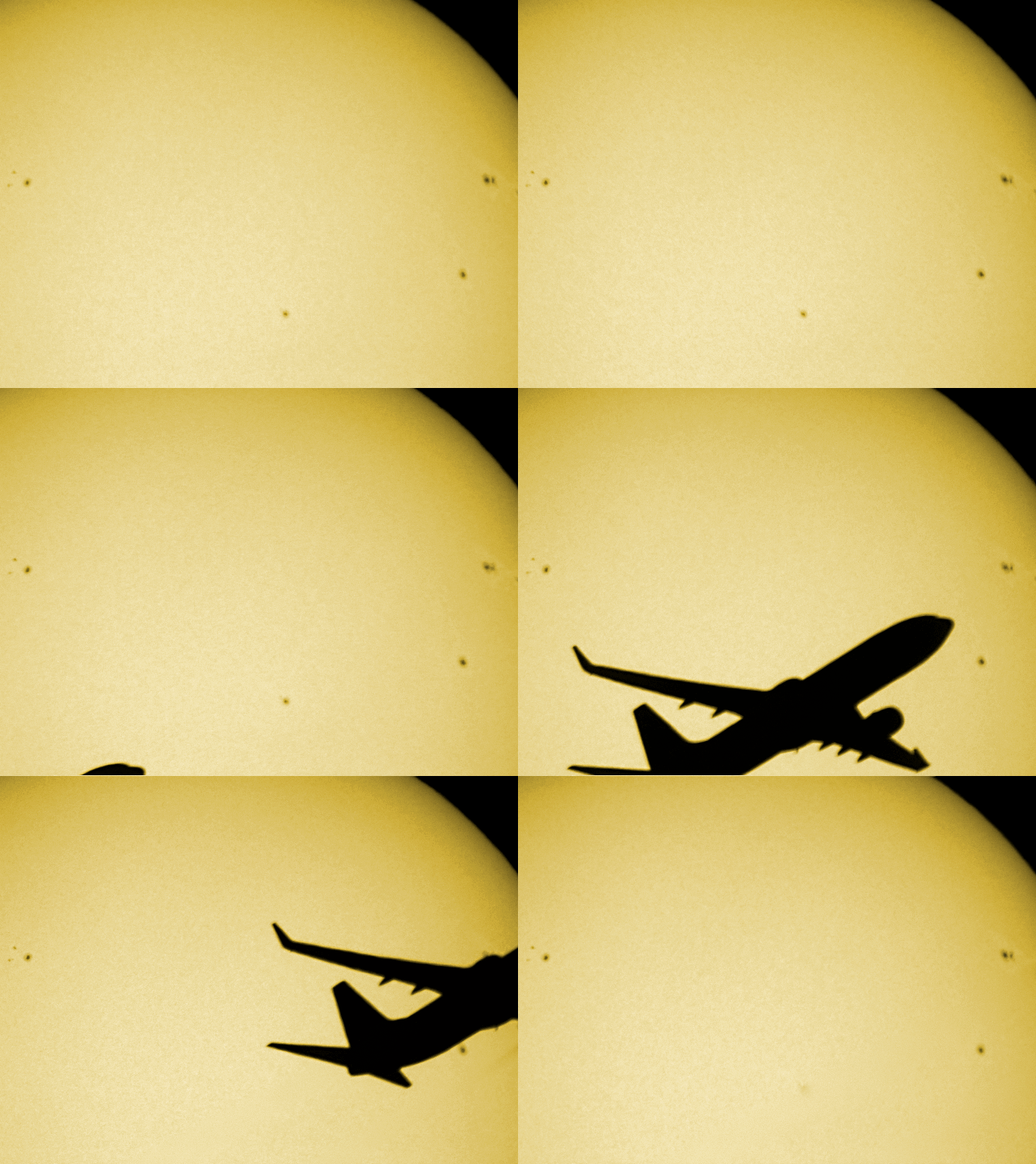
VERY SPOTTED SUN: Solar activity is still relatively low, but the appearance of the sun suggests the quiet might not last. Over the weekend, a profusion of new sunspot groups peppered the solar disk with dark cores–each one a potential source of eruptions. NOAA forecasters estimate a 35% chance of M-class flares and a 5% chance of X-flares during the next 24 hours. Solar flare alerts: text, voice.

There are so many spots on the sun, even a jumbo jet cannot hide them:

Raffaello Lena took the picture on January 5 not far from the international airport in Rome, Italy. “An animation of the flyby is available here,” he says.

fr/spaceweather.com

C. Burt on Recent Weather Extremes

Snow in Mexico and Southwest Texas, Record Heat in Australia

Published: 8:49 PM GMT on January 04, 2013

Snow in Mexico and Southwest Texas, Record Heat in Australia

El Paso, Texas picked up 3.0” of snow (officially at the NWS office) on Thursday and Friday this week and heavy snow fell in the city of Chihuahua, Mexico about 200 miles south of El Paso. How unusual is this?

The answer is that it is not unusual to see snowfall in Chihuahua (or El Paso). The city of Chihuahua (pop. 840,000) rests at an altitude of 4,600’ (1,400 meters) and is one of Mexico’s coldest cities during the winter. About 2” of snow fell there on Thursday and the temperature fell to 32°F (0°C) during the duration of the snowfall between 2p.m.-6p.m. On average Chihuahua can expect one or two days of measureable snow every winter. It’s greatest snowfall on record is apparently 40 cm (about 16”) at some undisclosed date in the past.

A deep snow (about 6-8”) blanketed Chihuahua, Mexico on Christmas Eve, 2004. Such events are not as uncommon as one might suppose. Photographer unknown.

Mexico’s coldest temperature on record was also recorded in the Chihuahua State at the village of Valerio when a reading of -28.5°C (-19.3°F) was measured on January 30, 1949.

A map shows Mexico’s absolute minimum temperatures for the POR of 1941-1977 in C°. Note the large area of below zero F° (-18°C or lower) isotherms that reach far south of the border and into the Chihuahua region. The map has an apparent error so far as the -14°C isothermal line is concerned. Map from the Mexican Meteorlogical Department.

El Paso, Texas normally sees a few snowfalls every winter as well, even though it is a bit lower than Chihuahua at 3,700’ (1,140 m) but, of course, much further north. El Paso’s greatest snowfall on record was 22.4” on December 13-15, 1987 (about the same as Chicago’s record!) of which 16.8” fell in one 24-hour period. During the great cold wave of January 1962 the temperature fell to an all-time record low of -8°F (-22.2°C) on January 11th.

Some elevated suburbs of El Paso received as much as 8” from the recent storm. Ironically, the official 3” at the NWS office means that the city has now had three times more snowfall this season than Chicago, which continues its record-breaking streak of snowless weather.

Hot in Australia

All-time record highs were broken at several Australian sites in Western Australia. Red Rocks Point topped the list off with a 48.6°C (119.5°F) reading on January 3rd. Eucla, which sits right on the coast of the Great Australian Bight, measured a record 48.2°C (118.8°F). Perth had its hottest New Year’s Eve on record (and 3rd warmest December day) when the heat peaked at 42.1°C (107.8°F) on December 31st. Temperatures are forecast to exceed 45°C (113°F) today (January 4th) in portions of South Australia and New South Wales. Australia’s hottest temperature on record is 50.7°C (123.3°F) at Oodnadatta, South Australia on January 2, 1960.

Hobart, Tasmania broke its all-time heat record on Friday with a 41.8°C (107.2°F) reading. The previous record was 40.8°C (105.4°F) set in January 1976. The POR for this site in Hobart is 126 years old.

A wild fire swept through the town of Dunalley in southeast Tasmania briefly heating the weather site’s thermometer to 59.9°C (140°F) at one point Friday afternoon (at 4:22 p.m.). Winds were gusting to 82 km/h at the time.

KUDOS:Howard Rainford for Australian temperatures.

Christopher C. Burt
Weather Historian

from:    http://www.wunderground.com/blog/weatherhistorian/article.html

Magnesium & Your Health

Magnesium’s Importance Far Greater Than Previously Imagined

4th January 2013

By Sayer Ji

Contributing writer for Wake Up World

Calcium deficiency is a common nutritional concern, but how many folks consider the vital importance of magnesium in human health and disease?

New research published in the journal BMC Bioinformatics indicates that magnesium’s role in human health and disease is far more significant and complicated than previously imagined.

While it is well known that all living things require magnesium, and that it is found in over 300 enzymes in the human body, including those enzymes utilizing or synthesizing ATP (the molecular unit of currency for energy transfer), the new studied titled, “3,751 magnesium binding sites have been detected on human proteins,” indicates that a deficiency of magnesium may profoundly affect a far wider range of biological structures than previously understood.[i]

The proteome, or entire set of proteins expressed by the human genome, contains well over 100,000 distinct protein structures, despite the fact that there are believed to be only 20,300 protein-coding genes in the human genome.

The discovery of the “magneseome,” as its being called, adds additional complexity to the picture, indicating that the presence or absence of adequate levels of this basic mineral may epigenetically alter the expression and behavior of the proteins in our body, thereby altering the course of both health and disease.

Indeed, modern medicine and nutrition fixates primarily on calcium deficiency (due, in part, to the WHO’s highly unscientific definition of osteoporosis), even in the face of accumulating peer-reviewed research indicating that excess calcium consumption can greatly increase cardiac morbidity and mortality.

Magnesium Research

Research relevant to magnesium has been accumulating for the past 40 years at a steady rate of approximately 2,000 new  studies a year. Our database project has indexed well over 100 health benefits of magnesium thus far.  For the sake of brevity, we will address seven key therapeutic applications for magnesium as follows:

  • Fibromyalgia: Not only is magnesium deficiency common in those diagnosed with fibromyalgia,[ii] [iii] but relatively low doses of magnesium (50 mg), combined with malic acid in the form of magnesium malate, has been clinically demonstrated to improve pain and tenderness in those to which it was administered.[iv]
  • Atrial Fibrillation: A number of studies now exist showing that magnesium supplementation reduce atrial fibrillation, either by itself, or in combination with conventional drug agents.[v]
  • Diabetes, Type 2: Magnesium deficiency is common in type 2 diabetics, at an incidence of 13.5 to 47.7% according to a 2007 study.[vi]   Research has also shown that type 2 diabetics with peripheral neuropathy and coronary artery disease have lower intracellular magnesium levels.[vii] Oral magnesium supplementation has been shown to reduce plasma fasting glucose and raising HDL cholesterol in patients with type 2 diabetes.[viii] It has also been shown to improve insulin sensitivity and metabolic control in type 2 diabetic subjects.[ix]
  • Premenstrual Syndrome: Magnesium deficiency has been observed in women affected by premenstrual syndrome.[x] It is no surprise therefore  that it has been found to alleviate premenstrual symptoms of fluid retention,[xi] as well as broadly reducing associated symptoms by approximately 34% in women, aged 18-45, given 250 mg tablets for a 3-month observational period.[xii] When combined with B6, magnesium supplementation has been found to improve anxiety-related premenstrual symptoms.[xiii]
  • Cardiovascular Disease and Mortality: Low serum magnesium concentrations predict cardiovascular and all-cause mortality.[xiv]  There are a wide range of ways that magnesium may confer its protective effects. It may act like a calcium channel blocker,[xv] it is hypotensive,[xvi] it is antispasmodic (which may protect against coronary artery spasm),[xvii] and anti-thrombotic.[xviii] Also, the heart muscle cells are exceedingly dense in mitochondria (as high as 100 times more per cell than skeletal muscle), the “powerhouses” of the cell,” which require adequate magnesium to produce ATP via the citric acid cycle.
  • Migraine Disorders: Blood magnesium levels have been found to be significantly lower in those who suffer from migraine attacks.[xix] [xx] A recent Journal of Neural Transmission article titled, “Why all migraine patients should be treated with magnesium,” pointed out that routine blood tests do not accurately convey the true body magnesium stores since less than 2% is in the measurable, extracellular space, “67% is in the bone and 31% is located intracellularly.”[xxi] The authors argued that since “routine blood tests are not indicative of magnesium status, empiric treatment with at least oral magnesium is warranted in all migraine sufferers.” Indeed, oral magnesium supplementation has been found to reduce the number of headache days in children experiencing frequent migranous headaches, [xxii] and when combined with l-carnitine, is effective at reducing migraine frequency in adults, as well.[xxiii]
  • Aging: While natural aging is a healthy process, accelerated aging has been noted to be a feature of magnesium deficiency,[xxiv] especially evident in the context of long space-flight missions where low magnesium levels are associated with cardiovascular aging over 10 times faster than occurs on earth.[xxv] Magnesium supplementation has been shown to reverse age-related neuroendocrine and sleep EEG changes in humans.[xxvi] One of the possible mechanisms behind magnesium deficiency associated aging is that magnesium is needed to stabilize DNA and promotes DNA replication. It is also involved in healing up of the ends of the chromosomes after they are divided in mitosis.[xxvii]

Best Sources of Magnesium In The Diet

The best source of magnesium is from food, and one way to identify magnesium-containing foods are those which are green, i.e. chlorophyll rich. Chlorophyll, which enable plants to capture solar energy and convert it into metabolic energy, has a magnesium atom at its center. Without magnesium, in fact, plants could not utilize the sun’s light energy.

Magnesium, however, in its elemental form is colorless, and many foods that are not green contain it as well. The point is that when found complexed with food cofactors, it is absorbed and utilized more efficiently than in its elemental form, say, extracted from limestone in the form of magnesium oxide.

The following foods contain exceptionally high amounts of magnesium. The portions described are 100 grams, or a little over three ounces.

  • Rice bran, crude (781 mg)
  • Seaweed, agar, dried (770 mg)
  • Chives, freeze-dried (640 mg)
  • Spice, coriander leaf, dried (694 mg)
  • Seeds, pumpkin, dried (535 mg)
  • Cocoa, dry powder, unsweetened (499 mg)
  • Spices, basil, dried (422 mg)
  • Seeds, flaxseed (392 mg)
  • Spices, cumin seed (366 mg)
  • Nuts, brazilnuts, dried (376 mg)
  • Parsley, freeze-dried (372 mg)
  • Seeds, sesame meal (346 mg)
  • Nut, almond butter (303 mg)
  • Nuts, cashew nuts, roasted (273 mg)
  • Soy flour, defatted (290 mg)
  • Whey, sweet, dried (176 mg)
  • Bananas, dehydrated (108 mg)
  • Millet, puffed (106 mg)
  • Shallots, freeze-dried (104 mg)
  • Leeks, freeze-dried (156 mg)
  • Fish, salmon, raw (95 mg)
  • Onions, dehydrated flakes (92 mg)
  • Kale, scotch, raw (88 mg)

Fortunately, for those who need higher doses, or are not inclined to consume magnesium rich foods, there are supplemental forms commonly available on the market. Keep in mind, for those who wish to take advantage of the side benefit of magnesium therapy, namely, its stool softening and laxative properties, magnesium citrate or oxide will provide this additional feature.

For those looking to maximize absorption and bioavailability magnesium glycinate is ideal, as glycine is the smallest amino acid commonly found chelated to magnesium, and therefore highly absorbable.

from:    http://wakeup-world.com/2013/01/04/magnesiums-importance-far-greater-than-previously-imagined/

Acupuncture, Qi, & You

Acupuncture & the Qi Phenomenon

6th January 2013

By Adam Cantor, MS, LAc

Guest Writer for Wake Up World

What is Qi and why has Western science failed to explain away this phenomenon?

Modern acupuncture research has tried to understand Qi but instead of coming away with one unifying theory, or perhaps even a way to flat out disprove its existence, science has posited several possibilities as to the biological manifestation or physiological occurrence that the Chinese refer to as Qi. What follows is my interpretation of Qi as it pertains to acupuncture as well as the practice of Qigong, a form of moving meditation that translates into “life energy cultivation”.

Chinese Medicine is really abstract, full of flowery imagery and concepts that are foreign to most of us in the West. In that sense, it’s quite different from Western medicine which is steeped in reductionism or the idea of breaking the body down into small isolated pieces in order to understand each component; this often leads to forsaking the forest for the trees. Perhaps this explains why biomedicine has such a disconnect between the mind and body.  There are specialists for just about every area and function of the human body and yet, only a select few physicians are able to see the way these disparate systems interrelate or connect. Conversely, Chinese medicine views the human being as an integrated whole, a divine cohesive unit that must be treated as such in both life and in medicine.

Is Qi really as esoteric as it sounds? Not really. I’ll give you some Western biomedical explanations of how it works. For starters, Qi is, for all intents and purposes, “matter on the verge of becoming energy or energy on the verge of materializing” (Kaptchuk, Web That Has No Weaver). Let’s put that into more Western terms: potential and kinetic energy. Everything in this world has either potential or kinetic energy and according to physics and the law of conservation, energy cannot be naturally created, only transferred from one state to another. With that in mind, Qi can be viewed as the manifestation of energy in a state of flux – somewhere between potential and kinetic. This is why, when we cut someone open, we can’t see their Qi, yet it’s something that everyone can feel in themselves (with training).

I practice Qigong regularly and am able to feel Qi movement in my body. I even notice differences from session to session, based on what’s going on with me at a given time, physically as well as emotionally. Qigong is essentially exercise, but instead of just building the muscles, it builds the mind as well; something modern science is just now beginning to understand with it’s extensive studies of neuroplasticity and meditation.  Keeping in mind that the body and mind are to be viewed as one, Qigong requires relaxation, breath work and an open yet disciplined state of consciousness. The mind guides and the Qi follows. If the mind isn’t open during practice, results are tempered. The stronger your mind, the easier it becomes to cultivate and guide the Qi. This doesn’t mean the smarter you are, the easier it becomes, but rather the more relaxed and receptive your mind is, the easier it will be to experience results. As traditional societies have known for quite some time with their own cultivation practices (i.e. Ayurvedic, Shamanic or Native American), the building and cultivation of ones self can only be truly achieved through meditation or meditative-like practices. The stresses of modern life such as smart phones and all of the other non-stop stimuli inundating our brains make such development and practice that much more important – and simultaneously, that much more difficult for the average person.

Qi has also been described and quantified in the West as our bioelectric charge. Bio-electromagnetism refers to the electrical and magnetic fields produced by living cells, tissues and organisms. During the electro-physiological research of the 1960′s, scientists proved that bones are in fact piezoelectric. This means that under mechanical stress, chemical processes convert energy to electric current. It is understood now however that the human body is constructed of many different electrically conductive materials, and that it forms a living electromagnetic field and circuit. All living things on this planet, large and small have some level of electric and/or magnetic charge. Humans and some plant cells, experience living “electrical events” known as action potentials, or nerve impulses, in which neurons, muscle cells and endocrine cells facilitate inter-cellular communication and activate intra-cellular processes. Electromagnetic energy is continuously being generated in the human body through biochemical reactions such as those we experience in assimilation of our food and air.

In addition, we are constantly being affected by external electromagnetic fields such as those of the Earth, moon and large bodies of water. Anyone who has ever practiced Qigong next to a river or ocean can attest to the difference!  Many acupuncturists use magnets or electricity in their treatments for this very reason. Dr. Robert O. Becker, author of The Body Electric, reports in his book that the conductivity of skin is significantly higher at acupuncture points. Dr. Becker’s book, as well as several other reports on the subject, confirm the notion of Qi is indeed both real and scientific.

Most people go about their daily lives with no sense of the Qi within them or around them. However, there are the naturally gifted few that are born with the innate wisdom and sensitivity to be able to see and work with these energetic fields. Again, these people are truly rare today and I believe that most who profess such skills are telling half-truths or flat out lies. That being said however, such individuals certainly exist and there is absolutely an aspect to energetic healing that is beyond the scope of modern medicines capability to explain. For the rest of us normal humans however, it requires extensive training and development of our minds and our nervous system to be able to get in touch with this field, let alone control it or yield it… but it is possible.

The ancient Chinese people had no knowledge of electricity, yet they knew that when an acupuncture needle was inserted into the body at a specific location, some form of energy other than heat was produced. In acupuncture theory, Qi ‘flows’ through the body via channels or meridians that connect our entire structure. These meridians, although not identifiable formations by Western biomedicine, have been mapped, described in detail and utilized by Chinese medical practitioners for thousands of years. Meridians contain ‘gates’ or points along their pathway where manipulation of the energy or Qi that flows through them is possible and particularly effective. By manipulating these points, one can influence the flow of Qi along the meridian in order to help the patient regain health and wellness. That’s the acupuncturists’ job, to transmit the message to the patient’s body in order to allow them to regain balance. The healing isn’t in the needle itself, but rather it’s in the practitioner’s ability to read the patient and transmit the correct message to them at the correct time in order to facilitate that person’s natural ability to heal and self-regulate. In that respect, true wellness is actually up to the patient and their ability to receive that message.

Western medical research has determined that acupuncture points are locations of fascial bundling. Our fascia is a seamless web of connective tissue that covers and connects the muscles, organs, and skeletal structures in our body — it’s absolutely everywhere! While much of the incredible healing power of acupuncture is still being researched, acupuncture points have been found to mostly lie along fascial planes, between muscles or between a muscle and bone or tendon. Fascia envelops the smallest fiber of muscle, every bone and joint and holds us together, in effect, supporting our structure and giving us our shape.

So what does Qi have to do with fascia?

A blockage of Qi can be viewed as an alteration in fascial composition and the majority of acupuncture points correspond to the sites where fascial networks converge. Thus, manipulation of an acupuncture needle produces change that can propagate along the fascial network and communicate with our entire body since everything is connected via this massive web of tissue. Think of fascia like a spider web; when something hits the web, the spider doesn’t have to see it, it just knows exactly where it is because of the vibrations. Similarly, when acupuncture needles enter the fascial web, it propagates a signal to our nervous system and our neurochemistry responds accordingly. A 1995 study by H. Heine, a German MD, documented the existence of perforation points in the fascia. He found that the majority (82%) of these perforations are topographically identical with the 361 classical acupuncture points of Chinese medicine.

I’m going to get a bit more in depth so bear with me if you can, because this is really interesting stuff!

Fascia is densely innervated by mechanoreceptors, also known as golgi bodies. These receptors influence local fluid dynamics of the tissue and their activation triggers the autonomic nervous system to change the local pressure in blood vessels. Strongly stimulated fascial fibers can even influence the extrusion of plasma from blood vessels into the interstitial fluid matrix, thus changing the viscosity of the extracellular environment. The interstitial mechanoreceptors can also trigger an increase in vagal tone or impulses from the vagus nerve, which leads towards more trophotropic tuning of the hypothalamus. In other words, the parasympathetic (rest and digest) aspect of our nervous system increases, our muscles relax, our adrenals close up shop for a while and our body essentially down-regulates into a deeply relaxed state — all from a properly inserted acupuncture needle!

Qi is absolutely real and cannot only be felt but it can be measured.  While acupuncture has been the focus of roughly 1,000+ scientific studies around the world over the past five years, Qigong has earned only a fraction of that attention.  Interesting considering Qigong practices are thought to pre-date acupuncture, a healing modality dated somewhere between 2,000 and 3,000 years old.

Although the aforementioned studies have shed a great deal of light on the Qi phenomenon, there are still several questions left unanswered. For example, how can the mind generate a force in order to circulate the Qi of the body (as in Qigong)? How are we as humans affected by the electromagnetic fields that surround us in our environments? What about our daily use of electronics; how does that impact us? How do the fields of other people affect us? Why is it that you can be at a party and when someone walks into the room that is upset or angry, even without seeing them, you can sense it in your body? How do we quantify those things?

Nanotechnology is beginning to help us address some of these queries. But the future of Qi research and our exploration of the internal is going to be quite an adventure.

from:    http://wakeup-world.com/2013/01/06/acupuncture-the-qi-phenomenon/