Jon Stewart on the GOP

Jon Stewart Mocks Indecisive GOP Base: ‘Maybe Your Candidates Aren’t The Problem, Maybe It’s You’ (VIDEO)

Jon Stewart

The Huffington Post      First Posted: 9/27/11 09:29 AM ET Updated: 9/27/11 11:04 AM ET

As we grow closer to the one-year mark until the 2012 Presidential election, the crop of Republican candidates is ever expanding with a new frontrunner every month. At first it seemed like Michele Bachmann could be the right person for the job, and then Mitt Romney, but that was before Rick Perry came on the scene. Now even the straight shooter from Texas’ popularity might be fading, thanks to his performance at the last debate.

On Monday night’s “Daily Show,” before his lengthy interview with Congressman Ron Paul, Jon Stewart mocked the muddled GOP field, particularly the prospect of New Jersey Governor Chris Christie now joining the race. Stewart provided an excellent metaphor: that The GOP race is now a season of “American Idol” in reverse, with more and more unqualified people being added every week instead of elimnated (and when he shows a particular Christie clip you’ll see exactly what he means).

Considering that perhaps it’s not the candidates who are the problem, but the GOP base, Stewart’s “Indecision 2012” moniker is more appropriate than ever. Conservatives are typically pro-life, yet they cheered for death during the debate. “They want someone who’ll roll up their sleeves, but not show their arms,” Stewart joked. “You guys need to talk a long, hard look in the mirror and not come away thinking, ‘There’s something wrong with this mirror.”

video link:   http://www.thedailyshow.com/watch/mon-september-26-2011/indecision-2012—the-great-right-hope—the-gop-finds-another-ideal-candidate

article from:   http://www.huffingtonpost.com/2011/09/27/jon-stewart-mocks-indecisive-gop-candidates-look-in-the-mirror_n_982836.html

Super Moon 9/27

A waxing crescent moon seen from Logan Pass in Montana.

A crescent moon is barely visible as the sun sets over Montana in a 2008 picture.

Photograph by Michael Melford, National Geographic

Andrew Fazekas

for National Geographic News

Published September 26, 2011

Tomorrow night the new moon will make a close approach to Earth, giving rise to the second supermoon of the year—but this one will have the power of invisibility.

Because the moon’s orbit is egg shaped, there are times in the roughly monthlong lunar cycle when the moon is at perigee—its closest distance to Earth—or at apogee, its farthest distance from Earth.

“A supermoon occurs when the moon is at perigee and it’s in either a full or new phase,” said Raminder Singh Samra, an astronomer at the H.R. MacMillan Space Centre in Vancouver, Canada.

In March sky-watchers were treated to a full moon at perigee, which made for the biggest full moon seen in 18 years.

A new moon happens when the lunar orb positions itself between Earth and the sun, so that the side of the moon that faces Earth is unlighted.

“The upcoming moon on September 27, 2011, is set to be at perigee and at the new phase,” Samra said, “so we won’t be able to witness the event, as the moon and sun will be in the same region of the sky” and the lunar disk will be entirely dark.

Supermoon to Affect Earth’s Tides?

Because the size of the moon’s orbit also varies slightly, each perigee is not always the same distance from Earth.

When at perigee, the moon is about 18,640 miles (30,000 kilometers) closer to Earth than its average distance of roughly 240,000 miles (385,000 kilometers). When perigee occurs during a full moon, the lunar disk can appear about 14 percent bigger in the sky, Samra said.

Tuesday’s dark supermoon will be just 222,175 miles (357,557 kilometers) away from Earth.

Some people have speculated that this lunar proximity can have unusual gravitational effects on Earth, triggering dramatic events such as earthquakes.

But the truth is that there’s only a very small correlation between full or new moons and seismic stresses, said Jim Todd, planetarium manager at the Oregon Museum of Science and Industry.

“Stronger tidal forces caused by the alignment of the sun and moon may put added stress on tectonic plates,” Todd said.

“However, seismologists have found no evidence connecting lunar perigees to heightened seismic activity. Instead the Earth constantly stores up energy and releases it any time the built-up energy becomes too great.”

Lunar close encounters are well known to cause slightly higher ocean tides, so any localized flooding during a supermoon would be most noticeable around beaches and other low-lying areas.

But linking the supermoon to effects beyond that is far-fetched, the H.R. MacMillan Space Centre’s Samra said.

“While the supermoon is thought to provoke various natural disasters on the Earth,” he said, “such claims are exaggerations, as there is simply no scientific evidence for them.”

from:    http://news.nationalgeographic.com/news/2011/09/110926-new-moon-closest-earth-dark-supermoon-dark-space-science/

Dead Sea Scrolls Online

Dead Sea Scrolls Get New Life Online

Charles Choi, LiveScience Contributor
Date: 26 September 2011 Time: 05:45 PM ET
digitized image of the Dead Sea Scroll called the Temple Scroll


The Temple Scroll consists of 18 sheets of parchment, each of which has three or four columns of text; the lengthy scroll, spanning 26.74 feet (8.15 meters) and considered the largest scroll ever discovered in the Qumran caves, is now digitized online with English translations.
CREDIT: Israel Museum

The oldest known biblical manuscripts in existence, the Dead Sea Scrolls, are now online to everyone in the world with the aid of the Israel Museum in Jerusalem and Google.

The Dead Sea Scrolls were written between the first and third centuries B.C. They were hidden in 11 caves in the Judean desert on the shores of the Dead Sea in 68 B.C. to protect them from approaching Roman armies. They were not unearthed again until 1947, when a Bedouin shepherd of the Ta’amra tribe threw a rock in a cave and realized something lay inside.

Most of the scrolls are parchment, or specially prepared animal skins, although some are papyrus. Most are written in Hebrew, although some are in Aramaic or Greek

Since 1965, the scrolls have been on exhibit at the Israel Museum. They have offered critical insights into life and religion in ancient Jerusalem, including the birth of Christianity.

“They are of paramount importance among the touchstones of monotheistic world heritage,” said James Snyder, director of the Israel Museum.

Nearly all the books of the Hebrew Bible are present, with the exception of Nehemiah and Esther. Copies of works that are not part of the biblical canon were discovered as well — some of these had previously been known only in ancient translations, such as Tobit, Jubilees, and 1 Enoch, while others were completely new to researchers, such as the Genesis Apocryphon or the Temple Scroll. [Gallery of Dead Sea Scrolls]

“They are really foundation stones to modern Western thought in the Judeo-Christian world in the same way that the ‘Mona Lisa’ was to development of art,” Snyder told LiveScience. “If you think of certain phrases that we all know, such as ‘turning swords to plowshares,’ meaning ‘to not go to war anymore,’ that comes from the Book of Isaiah, which we have in the Dead Sea Scrolls.” [Science as Art: A Gallery]

Now, as the new year approaches on the Hebrew calendar, anyone can view, read and interact with five digitized Dead Sea Scrolls, the most complete of the eight the Israel Museum has in its collection. These five include the Great Isaiah Scroll, the only completeancient copy of any biblical book in existence, and the Temple Scroll, the thinnest parchment scroll ever found among the Dead Sea Scrolls. Snyder noted the museum has also digitized the other three scrolls, and is now working on making them available in an easily readable form.

“What we’ve just done with Google is to bring these treasures to as broad an audience worldwide as might possible be interested in tapping into them,” Snyder said.

The project involves ultra-high-resolution photographs that include up to 1,200 megapixels in detail, nearly 200 times more than the average consumer digital camera. As such, viewers can see even the most minute features of the material they are written on. Readers can also click on the text and get an English translation, and leave a comment for others to see.

“All this was accomplished in just six months,” Snyder said.

to read more, go to:    http://www.livescience.com/16240-dead-sea-scrolls-life-online.html

Sikkim Earthquake Update 9/27

Nepal / Sikkim Himalaya earthquake – extended September 27 overview – slow rescue due to bad weather

Last update: September 27, 2011 at 11:08 am by By 

With thanks to Ashish Khanal (Nepal)

The overview below is compiled from many different sources in all the 5 countries (Tibet, India, Bangladesh, Nepal and Bhutan)


Image courtesy and copyright chinadaily.com.cn

Nepal September 27 update
The inhabitants of Olangchungkhola and Ghunsa ( epicenter area, Nepal)  haven’t received any relief yet.
Actual destruction report from that area is not yet received ( till Tuesday morning). The Nepal government has managed the relief distribution from Lelep for that very two areas. Lelep is in one day walking distance from Olangchungkhola and Ghunsa one and half day. Both places are remote areas of Nepal. The main reason that people aren’t coming to grant relief amount may be due to the erosion. Due to which the roads are blocked and even bridges are collapsed. Nepal Police and rescue teams are unable to go to these areas.


Continuous rain since Sunday is turning the living conditions of the homeless into a hell in the hilly districts of Panchthar, Taplejung, Ilam, Terhathum and Sankhuwasabha.
Additionally a lot of buildings are unstable (badly damaged) and can eventually collapse with a serious aftershock.
People are now mainly living in sheds.
There are also fears that continuous rains may trigger landslides, forcing them all to leave their birthplace for good.

India – Sikkim  September 27 update
Authorities are saying that part of the slow response is due to the very bad weather making aerial relief operations very difficult.
On Monday helicopters could not fly to the badly damaged and sometimes still inaccessible North Sikkim villages.
Authorities are claiming that any connection in between the earthquake and the Teesta hydro-electric project is untrue.

for more, go to:    http://earthquake-report.com/2011/09/27/nepal-sikkim-himalaya-earthquake-extended-september-27-overview-slow-rescue-due-to-weather/


Geomagnetic Storm

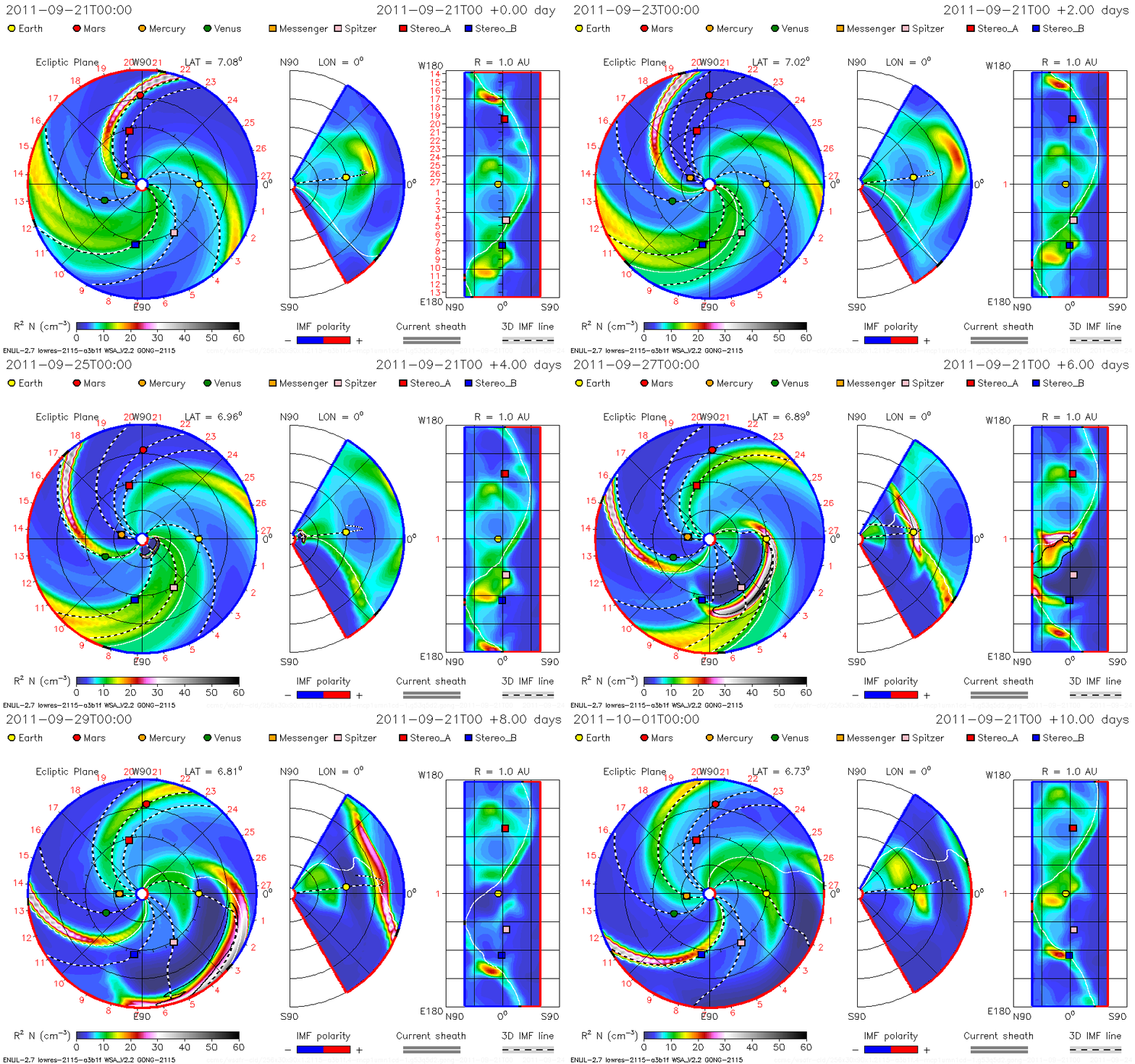
GEOMAGNETIC STORM: A strong-to-severe geomagnetic storm is in progress following the impact of a coronal mass ejection (CME) at approximately 12:15 UT on Sept. 26th. The Goddard Space Weather Lab reports a “strong compression of Earth’s magnetosphere. Simulations indicate that solar wind plasma [has penetrated] close to geosynchronous orbit starting at 13:00UT.” Geosynchronous satellites could therefore be directly exposed to solar wind plasma and magnetic fields. High-latitude sky watchers should be alert for Northern and Southern Lights after nightfall.

fr/spaceweather.com

Winter Forecast fr/Storm Central

2011-2012 Winter Weather Forecast (NEW)

Posted: September 25, 2011 by Storm Central in Uncategorized

:…

Storm Central is predicting a big year once again. This years winter will include both the Moderate and Weak Blocking Pattern with timing being forecast later. The La Nina pattern will be in full force this year.

Here are the Monthly Forecasts:
Important Key You Need To Know!

Precipitation Graphical Forecast: 
-Dark Green= Way Above Average Precipation
-Light Green= Above Average Precipation
-Gray= Average Precipitation
-Light Brown/Orange=Just Below Average Precipation
-Dark Brown=Way Below Precipitation

Temperatures Graphical Forecast:
-Dark Blue=Below Average Temperatures
-Light Blue=Just Below Average Temperatures
-Gray=Average Temperatures
-Light Brown/Orange=Just Above Average Temperatures
-Dark Brown= Way Above Average Temperatures 

 November^ (Precipitation)- November was a fairly east month to do with this years winter forecasts. The La Nina pattern will begin to get it’s act together greater starting in November. With the Greenland Blocking situation in November, Models consitanly to show weak blocking which would keep the cold air and moisture to the north where the Jet Stream is. That means most of the United States would be dry. Drier than a usual November in Texas and the South as November will not be providing relief to you guys down south. The Jet Stream would stretch into the upper North East so some areas would see rain but just above average rainfall. November is not looking like a major month for big winter storms but Alberta Clippers would produce precipitation to the North.

November (Below) Temperatures- Since the Blocking will be up north, Only those areas will see slightly below tempertures. Other areas to the south will see normal to way above average temperatures for the Month of November. The Southeast will contie to stay warm and areas that are not normally warm or average in November will be this year.

December ^ (Precipitation)- Oddly enough I am forecasting December to be allot like November. Cool pool only coming a bit farther south with the blocking to IL and some moisture to those areas. Texas and other areas will still be way below average with Tempatrues and so will California. As for Seattle the main machine begins to kick in for the rest of the Winter. Alberta Clippers will be the main threat for December with their little moisture.

December (Below) Temperatures- As you can see the cool pool is to the north and spreading just into the northern portions of the North East. Nebraska and Kansas will be above average and California and New Mexico will be Way Above Average for the Temperatures.

Way Above Average for the Temperatures.
January ^ (Precipitation)- This is where things begin to take a turn for the worse as the greenland block shifts to Moderate and the storms begin to move more southerly that could pick up moisture come the middle to end of January. That could spread snow into KY, IL, IN, OH and up the east coast come January. Clippers won’t be as big come January as mild to big storms will be more of an inportance. We could see 1 or 2 blizzards or big storms out of this pattern that could dump snow on areas that are not used to it. As for the West it will stay dry and so will the south as this pattern will not bring a huge amount of moisture to the south or the west.

January (Below) Temperatures- With this pattern comes the cold weather which could very well be strong in Wisconsin and Minnesota along with New York State and Portions of the North East. As for the middle of the Country, Normal to just below depending on your location. All depends on this moderate blocking I am expecting in January. West will stay warm and at times very warm.


February ^ (Precipitation)- This is when I am expecting to get hit with a rock so to speak with system after system. Still a moderate blocking pattern so the precipation train will as followed through the center of the country. A big point to notice in Feburay as Wisconsin and Minnesota will be just below average for Febuary. I am forecasting the major storms to stay south of their and the clippers will be sporadic.  West will contuie to be warm but a little more precipation with the more active moderate blocking pattern. Note how Texas could get some precipation from the southerly storm tracks that choose to make a run and grab mositure and pull northward. This would be the month where many big storms could be an affect to the country from Iowa to as far south as Tennesse with Wintery Precipitation.

February (Below) Temperatures- February will also be the most extreme month for cold tempartures as the cool pool with be a bit farther south. Chicago will be cold from Late January to Feburary. Cool air could even get into MS and AL as a brief spell of a Strong Blocking Pattern could take effect and send some coolrer than average temperatures or just around average to those areas. West will stay warm as the block will have virtully no affect on them.

PLEASE NOTE SOME AREAS OF LARGE STATES WILL HAVE DIFFERENT CLIMATES IN DIFFERENT PORTIONS OF THE STATE
________________________________________________________________________________________________________
Overall Storm Central Winter Forecast (For the Ones that Don’t Like to Read) :) 
The above is official to Storm Central along with all the other outlook graphics. Note the key on the side, it’s very basic. Let me do some more explaining.
-Dark Blue: South and North Dakota as well as the U.P. Of Michigan along with other areas will be very cold this winter. Snow will be a big deal come December and January but should lay off a bit over February when storm tracks should stay south or a stray one could go northward. 
-Light Blue: Looks like the worst of winter could actually be in this area at one point in time as that will be the average area per month for the Storm Tracks. A few Blizzards and big storms could affect these areas in light blue that could produce massive storm fall precipitation all the way to the East Coast. Temperatures will be from average to just below average for most of these areas through the months of November through February (Check Monthly Forecast Above).
-Red: Ice Storms could make an impact to these areas as the block will shift south. Snowfall could also occur if location is cold enough.
-Light Brown/Orange: Above average winter for most of these areas as well as below average precipitation (Depends on month). 
-Dark Brown: A really dry and warm winter for you. 

Overall: This winter will be a harsh one. One that will be a cold one for some areas or could be a warm one in others.

to read more and see more maps, go  to:    http://centralstorm.wordpress.com/2011/09/25/2011-2012-winter-weather-forecast-new/

Static from the Sun

SOLAR STATIC: Active sunspot 1302 has turned the sun into a shortwave radio transmitter. Shock waves rippling from the sunspot’s exploding magnetic canopy are exciting plasma oscillations in the sun’s atmosphere. The result: Bursts of static are issuing from the loudspeakers of shortwave radios on Earth. Amateur radio astronomer Thomas Ashcraft recorded this sample from his backyard observatory in New Mexico on Sept. 24th:


Dynamic spectrum: The horizontal axis is time (h:m:s), the vertical axis is frequency (MHz). Image credit: Wes Greenman

“Saturday was a super-strong solar day with near continuous flaring and radio sweeps,” says Ashcraft. “The sound file (above) corresponds to an M3 flare at 1918 UTC. It was the strongest radio sweep of the observing day.”

“Try listening to the radio bursts in stereo,” he advises. “I was recording on two separate radios at 21.1 MHz and 21.9 MHz, and I put each one into its own channel of the audio file. This gives a spatial dimension as the bursts sweep down in frequency.”

fr/spaceweather.com

Spontaneous Human Combustion

Coroner Concludes Irishman Died of Spontaneous Human Combustion

Benjamin Radford, Life’s Little Mysteries Contributor
Date: 25 September 2011 Time: 03:54 AM ET
burning candles
Credit: Dreamstime

Can people suddenly and inexplicably explode into a ball of fire?

It sounds like something in a horror film, but some people believe it happens. It’s also what an Irish coroner recently concluded about the death of Michael Faherty, a 76-year-old Irishman who burned to death in his home in December 2010. There were scorch marks above and below the body, but no evidence of any gasoline, kerosene, or other accelerant. The coroner, Ciaran McLoughlin, reported: “This fire was thoroughly investigated and I’m left with the conclusion that this fits into the category of spontaneous human combustion, for which there is no adequate explanation.”

Usually, of course, fires do not start on their own. When investigators are searching for the cause of forest fires they don’t assume that the flame ignited itself, but instead that it was probably caused by a careless camper or a lightning strike. Though rare, spontaneous combustion has long been known to occur. Under the right circumstances many things can self-ignite on a hot day, including used rags containing oil or gasoline and piles of compost. Coal dust can also spontaneously ignite, one of many dangers that miners face.

But the claim that people can suddenly burst into flames for no apparent reason is a whole different matter. The best-known case of spontaneous human combustion (SHC) is actually fictional: in Charles Dickens’s 1853 novel “Bleak House” a character explodes into fire. The phenomenon has also appeared in movies and on TV shows like “The X-Files.”

But are there any confirmed real-life cases?

to read more, go to:    http://www.livescience.com/16215-spontaneous-human-combustion-real.html

Sunspot Report

fr.spaceweather.com

GEOMAGNETIC STORM WARNING: A pair of closely-spaced CMEs propelled by explosions of sunspot AR1302 on Sept. 24th are heading not-quite directly toward Earth. A significant glancing blow to our planet’s magnetic field is possible on Sept. 26th around 14:00 UT (+/- 7 hours). NOAA forecasters estimate a ~25% chance of geomagnetic storms when the clouds arrive. [CME forecast track] Aurora alerts:text, voice.

STRONG SOLAR ACTIVITY: Having already unleashed two X-flares since Sept. 22nd, sunspot AR1302 appears ready for more. The active region has a complex “beta-gamma-delta” magnetic field that harbors energy for strong M- and X-classeruptions. Flares from AR1302 will become increasingly geoeffective as the sunspot turns toward Earth in the days ahead.

Marko Posavec of Koprivnica, Croatia, photographed the behemoth sunspot between flares on Sept. 24th:


Photo details: Olympus E-510, Sigma 50-500mm lens (at 500mm), 1/640 sec. exposure, f/18, ISO 100

“Sunspot complex 1302 is incredibly easy to spot at sunrise or sunset,” says Posavec. “Be careful, though. Even the low-hanging sun is bright enough to damage your eyes if you look at it through optics of any kind.”

Sikkim Earthquake

Deadly earthquake Himalaya : 20 minutes news compilation video

Last update: September 26, 2011 at 12:47 am by By 

September 26, 2011 By 

The 20 minute video shows the many faces of the earthquake, the damage inflicted to buildings, the landslides, interviews with local people and specialists.  The CNN-IBN video is the best we have seen so far.
Watch how the magnitude 6.9 earthquake that struck Sikkim on September 18 changed lives there

here is the link to the video on youtube:     http://www.youtube.com/watch?v=VcBriFR3KEQ&feature=player_embedded

to read more, go to:    http://earthquake-report.com/2011/09/26/deadly-earthquake-himalaya-30-minutes-news-compilation-video/